

Every baker knows the intoxicating aroma of melting butter transforming in a pan. However, understanding the precise brown butter baking substitution ratio applications is what truly separates amateurs from culinary professionals. You are not just altering flavor when you brown butter. Instead, you are fundamentally changing its chemical composition.
Many bakers attempt a simple 1:1 swap in their favorite recipes. As a result, they pull dry, crumbly cookies or dense cakes from the oven. Therefore, this comprehensive guide will teach you exactly how to fix this. You will learn to navigate the Maillard reaction, compensate for moisture loss, and harness nutty flavour development baking fat in any recipe. Whether you want a chewy cookie or a rich cake, you will master the science of beurre noisette today.
How to Substitute Brown Butter
You cannot use a direct 1:1 volume swap to substitute brown butter for regular butter. During the browning process, butter loses approximately 20% of its volume as water evaporates. To compensate, you must weigh your butter before browning. Next, add 20 grams (about 1.5 tablespoons) of liquid—like milk or water—for every 100 grams of browned butter. Ultimately, this restores the recipe’s original moisture balance.
The Science of Beurre Noisette: Maillard Reaction & Moisture Loss
To use brown butter correctly, you must first understand the chemistry in the pan. Commercial American butter usually contains 80% butterfat, 16-18% water, and 1-2% milk solids.
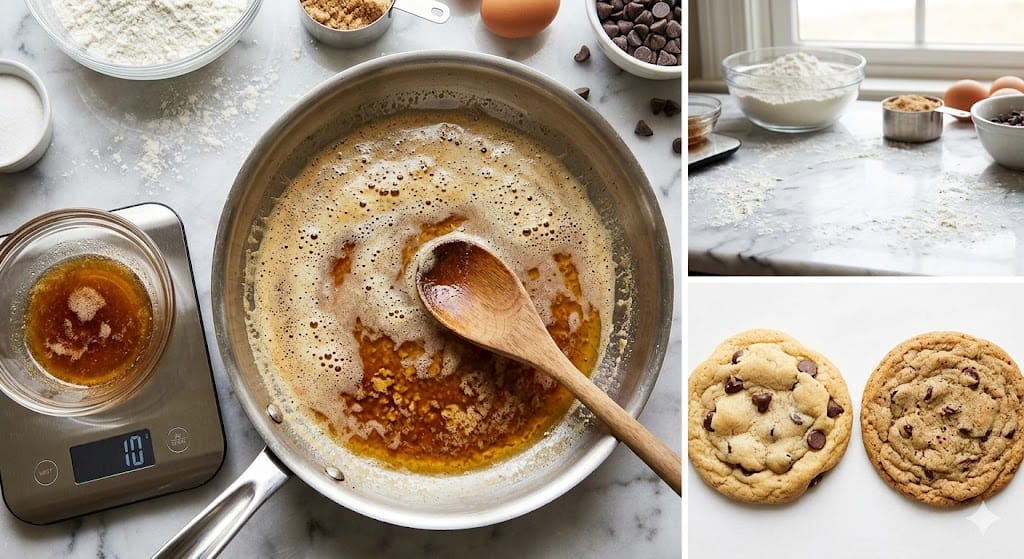
First, the Maillard reaction butter browning process begins when you apply heat. The water content starts to boil and evaporate. Consequently, you hear bubbling and sputtering. Once the water cooks off entirely, the fat temperature rises rapidly. This heat toasts the milk solids (proteins and sugars). Ultimately, this toasted sediment provides that signature deep, caramel-like aroma.
However, losing that water creates a massive beurre noisette yield loss moisture deficit. Many recipes rely on that 18% water for gluten development or steam generation. Therefore, removing it will drastically alter the structural integrity of your bake.
The Brown Butter Moisture Compensation Method
You must use the brown butter moisture compensation method to prevent dry bakes. Pastry chefs use this exact formula to stabilize the hydration of a dough or batter.
The 20% Rehydration Formula
When converting a standard recipe, use the adjustment chart below. This ensures you add the correct amount of liquid back into your fat.
| Original Butter Weight | Expected Brown Butter Yield | Liquid Required to Compensate | Best Liquid Choices |
| 100g (approx. 7 tbsp) | 80g | 20g (1.5 tbsp) | Water, Milk, Buttermilk |
| 113g (1 stick / 8 tbsp) | 90g | 23g (1.5 tbsp + 1 tsp) | Heavy Cream, Espresso |
| 226g (2 sticks / 1 cup) | 181g | 45g (3 tbsp) | Water, Bourbon, Apple Cider |
| 452g (4 sticks / 2 cups) | 362g | 90g (6 tbsp) | Milk, Water, Citrus Juice |
Pro Tip: Always weigh your butter in grams using a digital scale. This guarantees precise baking hydration.
Brown Butter Baking Substitution Ratio Applications
Different baked goods require distinct approaches. Here is how you should handle brown butter baking substitution ratio applications across various categories:
1. Cakes and Cupcakes
The Swap: 1:1 ratio by weight (post-browning) plus 20% moisture compensation.
Application: Cakes need precise hydration for a soft crumb structure. If you replace creamed butter, you must chill the brown butter first. Wait until it reaches a room-temperature solid form before creaming it with sugar. Liquid butter will not aerate.
2. Breads and Yeast Doughs
The Swap: 1:1 ratio by weight. Furthermore, moisture compensation remains critical.
Application: Yeast needs moisture to thrive, and gluten needs water to form. Add your compensation liquid directly to the wet ingredients of your dough. This guarantees a soft, tender crumb in brioche or rolls.
Brown Butter Cookies vs Regular Texture
Bakers most commonly use this technique for chocolate chip cookies. Yet, the brown butter cookies vs regular texture debate remains highly misunderstood.
Regular Butter: Creaming solid butter creates micro-air pockets. This leads to a thicker, fluffier cookie. The trapped water turns to steam in the oven, which creates lift.
Brown Butter (Uncompensated): This creates a denser, chewier, and flatter cookie. Less water simply means less steam and less gluten development.
Brown Butter (Compensated & Chilled): You can get the best of both worlds. First, replace the water. Next, chill the butter back to a solid state before creaming. This gives you a fluffy cookie with a complex, toffee-like flavor.
Flavour-Intensity Rating & Baking Fat Development
How far should you push the browning process? Nutty flavour development baking fat actually occurs in distinct stages. Refer to this decision matrix below to find the right level for your recipe:
| Browning Stage | Visual Cue | Flavor Profile | Best Used For |
| Light Golden | Foamy, light yellow specks | Mild, buttery, slightly sweet | Vanilla cakes, shortbread, delicate pastries |
| Medium Amber | Golden brown flecks, clear fat | Rich, hazelnut, caramel notes | Chocolate chip cookies, blondies, pie crusts |
| Dark Noisette | Dark brown espresso-like specks | Intense, savory, deep toffee | Savory breads, dark chocolate brownies, frostings |
Expert Recommendations for Bakers
Use a Light-Colored Pan: Always cook with a stainless steel or light enamel pan. Dark pans hide the changing color of the milk solids. As a result, you increase the risk of burning.
Use the Ice Bath Trick: Transfer the butter to a heat-proof bowl immediately after it reaches your desired color. A hot pan will continue cooking the butter and turn it bitter in seconds.
Include Every Speck: The flavor lives in the brown flecks at the bottom of the pan. Make sure you scrape every toasted bit into your recipe.
Common Mistakes to Avoid
Ignoring the Water Loss: The biggest mistake bakers make is ignoring evaporation. You cannot swap melted brown butter for solid regular butter without replacing the 20% lost water.
Rushing the Temperature: Pouring hot butter directly into eggs will scramble them. Therefore, always let your fat cool to room temperature first.
Skipping the Chill: You cannot use liquid fat if a recipe calls for creaming butter and sugar. You must chill it until solid, or your bake will flatten completely.
Conclusion
Mastering brown butter baking substitution ratio applications will transform your baking entirely. First, you must understand the Maillard reaction. Second, you must account for the 20% moisture loss. Finally, you must use the correct compensation liquids. By following these steps, you can add a complex, nutty flavor to delicate cakes and chewy cookies alike. Stop guessing, weigh your ingredients, and bake like a professional today.
Frequently Asked Questions (FAQs)
1. How do you substitute brown butter for regular butter?
Start by using the original butter weight your recipe requires. However, browning removes 20% of its weight in water. You must add back 20 grams of liquid (like water or milk) for every 100 grams of browned butter to maintain hydration.
2. Does browning butter change the texture of cookies?
Yes, it does. Uncompensated brown butter makes cookies denser and flatter because it lacks water. To bake thick cookies, replace the lost water and chill the butter until solid before creaming it with sugar.
3. What is the moisture loss when browning butter?
Commercial butter contains roughly 18-20% water. This water completely evaporates during the browning process. Therefore, you experience a 20% yield loss in volume and weight.
4. Can I use brown butter in cakes?
Absolutely. It adds a wonderful caramel flavor to cakes. Because cakes require precise hydration, you must replace the evaporated water with milk. Additionally, you must chill the butter until spreadable if the recipe requires creaming.
5. How long does brown butter last?
Once cooled, you can store it in an airtight container in the refrigerator for two weeks. Alternatively, you can freeze it for up to three months. It lasts slightly longer than regular butter because it lacks water.
6. Do I need to chill brown butter before baking?
This depends heavily on your recipe. You can use it liquid if the recipe calls for melted butter. Conversely, if the recipe calls for softened butter, you must chill the brown butter until it becomes solid again.
7. What is the Maillard reaction in baking?
The Maillard reaction is a chemical reaction between amino acids and reducing sugars. It creates distinctive flavors in browned food. In butter, the heat toasts the milk solids, creating a complex, nutty taste.
8. Can I add milk to brown butter to replace lost moisture?
Yes, milk serves as an excellent compensation liquid. It restores the lost hydration effectively. Furthermore, it adds extra milk solids and subtle sweetness that perfectly complement the toasted flavors.