


In 2026, preventative wellness is more integrated into everyday living with cycle tracking wearables, telehealth hormone visits, home lab kits, and more patient advocacy in clinical health environments. Still, symptoms of low estrogen can be easy to misread because they often arrive gradually, mixed with stress, aging, sleep debt, or medication changes. Estrogen affects the brain, bones, skin, heart, urinary tract, and reproductive system, so changes deserve context rather than quick self-diagnosis.
Why Estrogen Changes Get Missed
Estrogen does not fall in one tidy pattern. It can fluctuate during perimenopause, drop after ovary removal, shift during breastfeeding, or decline earlier because of intensive training, eating disorders, pituitary problems, chemotherapy, or certain medications.
Good care reviews age, cycle pattern, pregnancy status, family history, medication use, and timing before treatment starts. Board-certified gynecologists, endocrinologists, menopause specialists, and credentialed functional medicine clinicians with IFM training may support care, but credentials and scope matter.
How Low Estrogen Symptoms Usually Show Up
The familiar pattern includes hot flashes, night sweats, vaginal dryness, irregular periods, and sleep disruption. Estrogen also influences collagen, bone turnover, neurotransmitters, pelvic tissue, and lipid metabolism. That is why one person may notice painful sex first, while another comes in with anxiety, headaches, or slower exercise recovery.
The key is clustering. When several changes appear together and last for weeks, the body may need a fuller review.
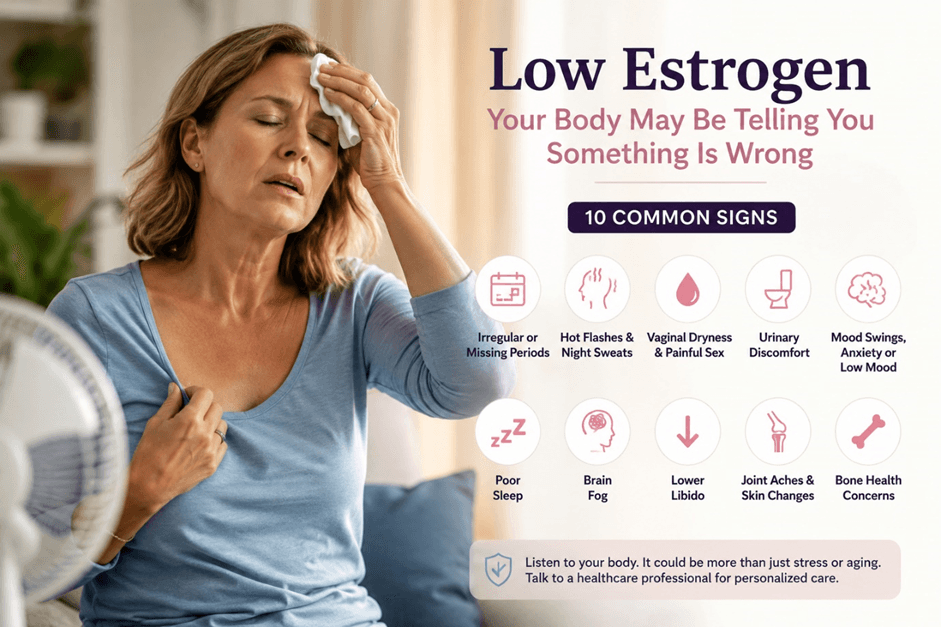
Ten Signals Worth Taking Seriously
- Irregular, Lighter, or Missing Periods: The first thing people usually notice is a change in periods. The cycle can be late, lighter, skip a month, or stop for longer periods, especially in perimenopause, intense training, stress, or low energy intake.
- Hot Flashes and Night Sweats: A hot flash can be sudden and hard to control. Some people have heat rising through the chest, neck, and face. Night sweats can break sleep and leave the body feeling tired the next morning.
- Vaginal Dryness or Painful Sex: Low estrogen can make the vaginal tissue drier, thinner, and more prone to irritation. That can make it burn, feel sore, have tiny tears, and cause pain during sex, which many people misdiagnose as a short-term infection.
- Recurrent Urinary Discomfort: With estrogen support falling, the urinary tract may become more sensitive. You might also have urgency, burning, urination at night, or recurrent urinary tract infections, as well as vaginal dryness or pelvic discomfort.
- Mood Swings, Anxiety, or Low Mood: Hormonal changes affect mood, patience, and emotional stability. Someone may feel more anxious, tearful, irritable, or low than usual for no obvious external reason.
- Poor Sleep: Your sleep is often changed by estrogen levels. Night sweats can wake you up, but even if you’re not sweating, some people notice lighter sleep, early waking, or a lingering tired feeling that sticks with them through the day.
- Brain Fog: Brain fog can feel like slower recall, a weaker focus, or losing words mid-sentence. It’s often clearer when poor sleep, stress, and hormone changes happen at the same time.
- Lower Libido: Desire for sex can go down when you’re dry, uncomfortable, or tired, your mood changes, or you’re on some medicines. It may not be the only cause, but low estrogen can make intimacy less comfortable.
- Joint Aches and Skin Changes: Estrogen supports collagen, skin hydration, and connective tissue. When levels drop, some people get dry skin, new stiffness, body aches, or slower recovery after exercise.
- Bone Health Concerns: Bone loss typically doesn’t show early warning signs. Long periods of low estrogen can weaken bone density over time if you’ve had early menopause, ovary removal, or months of missed periods.
Testing And Care Pathways In 2026
Testing should match the life stage. During perimenopause, hormone levels may swing, so one blood test rarely tells the whole story.
| Care step | What it may include | Practical reality |
| Basic visit | Symptom review, cycle history, pregnancy test when relevant | Often covered with copays |
| Hormone labs | Estradiol, FSH, LH, thyroid, prolactin when indicated | Coverage depends on diagnosis |
| Bone review | Vitamin D, calcium intake, DEXA for higher risk patients | Usually needs criteria |
| Telehealth follow-up | Symptom tracking and medication review | Convenient for stable cases |
These estrogen deficiency symptoms should not be treated through guesswork. Heavy bleeding, new pelvic pain, chest pain, fainting, pregnancy concerns, or severe depression need prompt medical care.
Treatment Choices Without The Hype
The treatment is customised to cause, age, risks and goals. The options might include sleep support, strength training, nutrition changes, vaginal moisturisers, pelvic floor therapy, nonhormonal medicines, or local vaginal estrogen. People with a uterus generally need progesterone with systemic estrogen.
Insurance may cover hormone therapy and testing. Boutique menopause clinics, lab panels, nutrition programs, and coaching often require payment. Patient advocacy matters. Ask who reviews the labs, what board certification applies, which risks are screened, and how follow-up works.
Many hormonal imbalance symptoms improve when care addresses sleep, protein intake, resistance exercise, alcohol use, stress load, and medication side effects, along with hormone status.
When To Ask For Specialist Support
Seek higher-level review when symptoms begin before age 40, periods stop without pregnancy, hot flashes disrupt work, sex becomes painful, urinary infections repeat, or fractures occur with minor strain. Low estrogen in women can reflect natural menopause, but it can also signal primary ovarian insufficiency, endocrine disease, or medical treatment effects.
Final Perspective
Low estrogen is not a lifestyle trend or a diagnosis to claim from a single online checklist. It is a clinical pattern that deserves context, careful testing when indicated, and shared decision-making. Understanding symptoms of low estrogen helps people act earlier, protect bone and pelvic health, and choose treatment that fits their risk profile. My Healthy Topics allows readers to learn at their own pace, compare qualified care options, and discover more evidence-informed wellness resources.