


Starting a weight loss journey is an exciting and life-changing decision. However, if you are using modern weight-loss medications, you might be facing a hidden concern. Specifically, many patients are increasingly worried about GLP-1 agonist muscle mass loss. You want to shed stubborn fat, but you certainly do not want to sacrifice your hard-earned strength.
Unfortunately, rumors and headlines often cause panic without providing clear, actionable solutions. The fear of losing strength and damaging your metabolism is incredibly valid.
Therefore, understanding how to navigate this challenge is crucial for your long-term health. In this comprehensive guide, we will explore exactly what the latest clinical studies reveal about these medications.
More importantly, we will provide you with evidence-based strategies to ensure you are losing fat, not muscle. Let’s dive into the science of protecting your body while achieving your weight loss goals.
What Are GLP-1 Drugs?
Glucagon-like peptide-1 (GLP-1) receptor agonists are a revolutionary class of medications. Initially, doctors prescribed them primarily to manage type 2 diabetes.
However, they have recently become massively popular for chronic weight management. Brand names like Ozempic, Wegovy, and Mounjaro dominate the current health landscape.
So, how exactly do they work? Primarily, semaglutide and similar compounds mimic a naturally occurring hormone in your body.
Consequently, they send powerful signals to your brain to reduce your appetite. In addition, they significantly slow down gastric emptying, keeping you full for hours.
Because you feel satiated much faster, you naturally consume far fewer calories. As a result, patients often experience rapid and sustained weight loss.
Can a GLP-1 Agonist Cause Muscle Mass Loss?
This brings us to the most pressing question: can a GLP-1 agonist cause muscle mass loss? The direct answer is yes, but it requires important medical nuance.
Whenever your body enters a severe caloric deficit, it looks for energy anywhere it can find it. Ideally, it burns stored body fat.
Unfortunately, your body will also break down muscle tissue if it feels starved. Therefore, the medication itself does not directly attack or dissolve your muscles.
Instead, the extreme reduction in calorie intake triggers this biological response. Consequently, the distinction between fat loss and lean mass loss becomes incredibly critical.
If you lose too much lean body mass, your basal metabolic rate drops significantly. Ultimately, this makes long-term weight maintenance much more difficult once you stop the medication.
What Current Studies Show (2024–2025 Research)
Medical understanding of body composition changes with GLP-1 therapies has evolved rapidly. Recent clinical trials from 2024 and 2025 offer vital clarity on this issue.
Specifically, studies published in respected journals like JAMA and the New England Journal of Medicine highlight a consistent trend. Researchers found that during rapid weight loss, roughly 20% to 40% of the total weight lost comes from lean body mass.
For instance, when studying Wegovy muscle loss, trial data revealed significant reductions in fat-free mass alongside fat mass. However, experts note that losing some lean mass is entirely normal during any significant weight loss, regardless of the method.
The concern arises when the percentage of muscle lost exceeds normal physiological ratios. Furthermore, recent data indicates that patients who do not actively resistance train experience the highest rates of muscle degradation.
Therefore, clinical guidelines are shifting rapidly to address this specific side effect. Doctors are now prioritizing comprehensive lifestyle interventions alongside the prescriptions.
Why Muscle Loss Happens During Rapid Weight Loss
Understanding the root cause is the first step toward effective prevention. Several compounding factors contribute to muscle breakdown during GLP-1 therapy.
Severe Calorie Deficit: As mentioned, eating far less forces the body to catabolize existing tissues for fuel.
Low Protein Intake: Because these medications cause nausea and early satiety, patients often fail to eat enough protein. Protein is the fundamental building block required to maintain muscle.
Lack of Resistance Training: Muscle operates on a “use it or lose it” principle. Without the stimulus of lifting weights, your body has no biological reason to keep metabolically expensive muscle tissue.
Aging and Sarcopenia: As we age, we naturally lose muscle mass. Rapid weight loss accelerates this process, increasing the risk of semaglutide sarcopenia in older adults.
Signs You May Be Losing Muscle Instead of Fat
How can you tell what kind of tissue you are actually shedding? Relying solely on the bathroom scale is a terrible strategy.
Instead, you must pay attention to specific physical and functional markers.
Decreased Strength: If your normal workout weights suddenly feel incredibly heavy, you are likely losing muscle.
Constant Fatigue: Feeling chronically lethargic and weak doing daily chores is a major red flag.
A “Skinny Fat” Appearance: You may look smaller in clothes, but your body feels softer and less toned than before.
Slower Metabolism: If your weight loss stalls completely despite eating very little, your metabolism may have adapted to a lower muscle mass.
How To Preserve Muscle While Taking GLP-1 Drugs
Fortunately, you have massive control over your body composition. GLP-1 muscle preservation is entirely possible if you follow specific, proactive strategies.
Prioritize High Protein Intake
First and foremost, you must prioritize protein intake on semaglutide. Aim for 1.2 to 1.6 grams of protein per kilogram of your target body weight daily. Because your appetite is low, consume your protein first during every meal.
Commit to Resistance Training
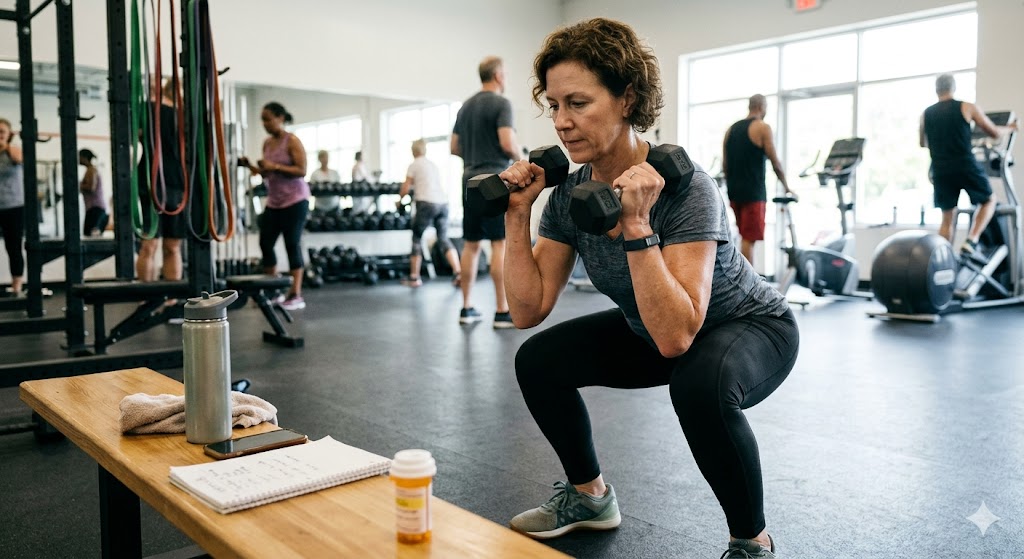
Cardio alone will not save your muscles. You must engage in resistance training at least two to three times a week. Lifting weights sends a crucial “keep this tissue” signal to your nervous system.
Prioritize Sleep and Recovery
Muscle is not built in the gym; it is built in bed. Therefore, you must secure 7 to 9 hours of quality sleep every night. Poor sleep drastically increases cortisol, which breaks down muscle tissue.
Maintain Proper Hydration
Water comprises roughly 75% of your muscle tissue. Consequently, mild dehydration can significantly impair muscle function and recovery. Drink at least 80 to 100 ounces of water daily.
Target Gradual Weight Loss
Faster is not always better. Aiming to lose 1 to 2 pounds per week is the scientifically proven sweet spot for preserving muscle during weight loss.
Work with Professionals
Finally, consider hiring a registered dietitian and a certified personal trainer. They can tailor your macros and programming to ensure you maintain your lean body mass effectively.
Best Foods for Muscle Preservation During GLP-1 Therapy
Because your stomach fills up quickly, every single bite must count. You need nutrient-dense, high-protein foods that do not trigger severe nausea.
Greek Yogurt: An excellent, easily digestible source of casein and whey protein.
Lean Poultry: Chicken breast and turkey offer massive protein payloads with very few calories.
Eggs and Egg Whites: Highly bioavailable protein that is easy to prepare in small portions.
Protein Shakes: When you simply cannot stomach solid food, a high-quality whey or plant-based protein isolate is a lifesaver.
Cottage Cheese: A versatile snack packed with slow-digesting protein to keep your muscles fed overnight.
Exercise Recommendations While on Semaglutide
Pairing semaglutide and strength training is the ultimate defense against muscle wasting. However, if you are a beginner, you must start slowly to avoid injury.
Beginner-Friendly Protocol
Initially, focus on mastering bodyweight movements. Master the squat, push-up, glute bridge, and modified plank. Perform these exercises with slow, controlled tempos to build a mind-muscle connection.
Weekly Workout Suggestions
For optimal results, aim for three full-body strength sessions per week.
Monday: Squats (3 sets of 10), Dumbbell Rows (3 sets of 12), Planks (3 sets of 30 seconds).
Wednesday: Romanian Deadlifts (3 sets of 10), Push-ups (3 sets to near failure), Lunges (3 sets of 10 per leg).
Friday: Leg Press (3 sets of 12), Overhead Dumbbell Press (3 sets of 10), Lat Pulldowns (3 sets of 12).
Always allow at least 48 hours of rest between targeting the same muscle groups.
Common Mistakes to Avoid
Many patients accidentally sabotage their own success by falling into common dietary traps.
Firstly, avoiding all carbohydrates is a massive mistake. Your muscles need glycogen to perform effectively during resistance training.
Secondly, doing hours of chronic, steady-state cardio will actively strip away your muscle tissue. While heart health is important, cardio should not replace lifting weights.
Thirdly, ignoring your baseline nutrition because the medication “does the work” is dangerous. You must actively manage your diet, even when you are not hungry.
Who Is Most at Risk for Muscle Loss?
While everyone should be mindful, certain demographic groups face a much higher risk of muscle degradation.
Older adults over the age of 60 are incredibly vulnerable to accelerated sarcopenia. Because their bodies are already naturally losing muscle, GLP-1 drugs can compound the issue dangerously.
Additionally, post-menopausal women face unique hormonal challenges that make retaining lean mass difficult.
Finally, individuals with a history of yo-yo dieting often have depressed metabolic rates and lower starting muscle mass. These individuals must be hyper-vigilant with their protein and lifting regimens.
Expert Opinions and Clinical Insights
Leading endocrinologists and obesity medicine specialists are changing how they prescribe these drugs.
Dr. Peter Attia and other longevity experts emphasize that the scale is a terrible metric for success. Instead, they urge patients to undergo DEXA scans before and during treatment.
A DEXA scan provides a precise breakdown of your bone density, fat mass, and lean tissue.
Furthermore, clinical dietitians stress that the drug should act as training wheels. It helps control the food noise, allowing you the mental space to build lifelong habits in the kitchen and the gym.
What is the Latest Research on GLP-1 Agonist Muscle Mass Loss?
Current clinical data universally agrees that proactive lifestyle management completely mitigates the risks. The medication is a tool, not a magic wand. If you use the tool correctly, you can achieve a spectacular, lean, and strong physique.
Frequently Asked Questions (FAQ)
Does Ozempic cause muscle loss?
Ozempic itself does not directly dissolve muscle. However, the extreme calorie deficit it creates can lead to muscle loss if you do not consume adequate protein and engage in strength training.
Can you build muscle on semaglutide?
Yes, it is possible to build muscle while on semaglutide. You must maintain a slight caloric surplus on training days, eat high protein, and progressively overload your muscles in the gym.
How much protein should I eat on GLP-1 drugs?
Experts recommend consuming between 1.2 to 1.6 grams of protein per kilogram of your goal body weight. This ensures your body has the amino acids required to protect your lean tissue.
Is muscle loss reversible?
Fortunately, yes. By increasing your daily protein intake and starting a consistent resistance training program, you can rebuild the lean mass you may have lost.
Should older adults worry more about sarcopenia?
Absolutely. Older adults naturally lose muscle mass due to aging. Therefore, combining weight-loss medications with a lack of strength training severely increases the risk of sarcopenia and frailty.
Will I regain the weight if I stop the medication?
If you lose significant muscle mass while on the drug, your metabolism will slow down. Consequently, if you stop the medication without having built healthy dietary and exercise habits, weight regain is highly likely.
Conclusion:
Navigating the complexities of modern weight loss medications requires education and proactive effort. The fear of GLP-1 agonist muscle mass loss is valid, but it is entirely preventable.
Ultimately, these drugs offer an incredible opportunity to reclaim your health and vitality. However, they demand that you step up and manage your nutrition rigorously.
By prioritizing a high-protein diet and committing to a consistent resistance training program, you can safeguard your metabolism. You do not have to choose between losing fat and staying strong.
Always consult with your medical team to monitor your body composition. With the right strategy, you can build a resilient, healthy body that lasts a lifetime.