


The wellness shelf is crowded in 2026, but the body still speaks in plain patterns. Signs of poor gut health often appear before anyone orders a stool test or buys another probiotic, usually through bloating, bowel changes, reflux, pain, food reactions, fatigue, or unexplained weight shifts. The problem is not a lack of products. It is the habit of treating repeated symptoms like background noise. The gut is not a wellness slogan. It is a working system with limits.
The Gut Does Not Whisper Forever
Most people normalize digestive discomfort until it starts ruining the day. A little gas after beans or a heavy meal does not prove disease. Pain that returns every week is different. So is diarrhea that interrupts work, constipation that lasts, or reflux that pushes someone toward antacids every night.
Gut care in 2026 sits between two worlds. Clinics handle blood work, stool testing, imaging, and colonoscopy referrals. Cash-pay wellness brands sell broad panels, supplement stacks, and coaching packages before a doctor reviews anything.
Use board-certified gastroenterologists for ongoing symptoms. Registered dietitians can guide food changes. IFM-trained clinicians may add lifestyle context, but patients should still ask who carries clinical responsibility.
Common Signals People Brush Aside
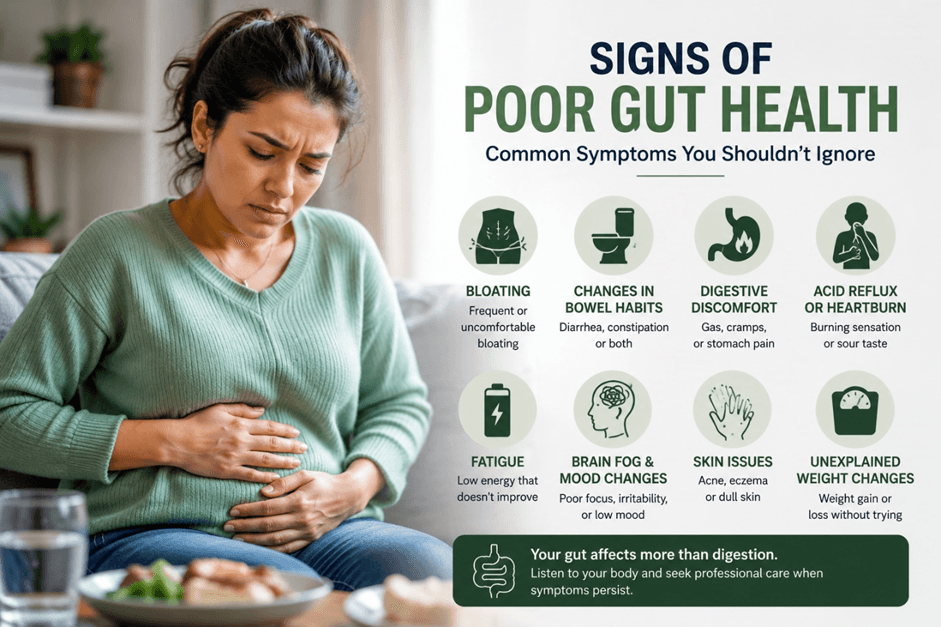
The most familiar unhealthy gut symptoms are bloating, excess gas, abdominal cramps, diarrhea, constipation, nausea, reflux, and irregular stools. The pattern matters more than one bad day.
Track timing, food triggers, stool appearance, pain location, stress load, medications, antibiotics, travel, and weight change. Bring that record to a clinician. It beats guessing from a social media checklist.
Bloating That Feels Disproportionate
The Bloating after a large meal can be ordinary. Bloating that arrives after modest meals, causes pain, changes clothing fit, or appears with diarrhea or constipation needs a closer look. Possible causes include IBS, food intolerance, constipation, celiac disease, inflammatory bowel disease, bacterial overgrowth, or medication effects.
Bowels That Keep Changing
Some people swing between loose stools and constipation. Others feel like they don’t completely empty, or feel a sense of urgency, or have long periods of time between bowel movements. If you have these gut health warning signs that persist, especially with pain, fatigue, blood, fever, anaemia or nighttime diarrhoea, it is worth a review.
Red Flags Need Real Care
| Symptom pattern | Why it matters | Next step |
| Blood in stool or black stools | May signal digestive bleeding | Seek medical advice quickly |
| Unexplained weight loss | Can point beyond indigestion | Book a clinical evaluation |
| Ongoing diarrhea | Raises dehydration concerns | Ask about stool tests and labs |
| New symptoms after 50 | Needs stricter screening | Discuss colon evaluation |
| Severe pain, fever, vomiting | Not a supplement problem | Get urgent care |
The Microbiome Is Not a Magic Word
The gut microbiome includes bacteria, fungi, viruses, and other organisms that interact with digestion, immunity, metabolism, and the nervous system. The marketing often runs ahead of the evidence. Many digestive health issues require this slower approach, not a shopping cart.
Commercial stool reports may list organisms and diversity scores, but many mainstream clinicians do not use consumer microbiome tests to diagnose routine complaints. A better first step includes symptom history, medication review, diet pattern, basic labs, and targeted testing.
Not every probiotic fits every person. Strain, dose, condition, and product quality matter. Fiber diversity, hydration, movement, sleep, and treatment of the actual diagnosis often do more than a random capsule.
Beyond the Bathroom
Poor gut function can appear as fatigue, skin flares, headaches, sleep disruption, low appetite, or mood changes. These signs do not prove a gut disorder alone. They still belong in the symptom record.
When the Pattern Looks Like Imbalance
People often use poor gut microbiome symptoms for bloating, irregular stools, cravings, fatigue, and skin changes. Clinically, the phrase stays messy because symptoms overlap with infections, IBS, thyroid disease, coeliac disease, medication reactions, gallbladder problems, inflammatory bowel disease, and stress physiology.
If symptoms last more than a few weeks, return repeatedly, or interfere with work, meals, sleep, or weight stability, ask for a structured review.
What Actually Helps First
Most care plans start with boring steps because boring steps work more often than expensive guesses. Eat more varied plant foods if tolerated. Increase fibre slowly. Drink enough water. Move daily. Review alcohol, ultra-processed foods, late-night meals, and NSAID use. Sleep matters.
The clearest gut imbalance signs improve when the cause is named, and the plan fits the person. That may mean constipation treatment, reflux care, IBS nutrition therapy, coeliac testing before cutting gluten, infection testing, or referral for endoscopy.
Final Perspective
Gut health deserves less hype and better observation. The strongest evidence still favors pattern tracking, red-flag awareness, credentialed care, cautious supplement use, and practical nutrition changes over expensive guesswork. My Healthy Topics supports readers who want plain health literacy, better questions, and less noise, without turning care into theatre. More wellness resources are ready when useful, especially for readers learning with steadier judgment to recognize signs of poor gut health.