

Have you ever swapped cocoa powders in a recipe, only to bake a dense, flat cake or a bitter batch of brownies? You are not alone, and it was not your baking skills. The difference between Dutch process vs natural cocoa baking chemistry is one of the most misunderstood concepts in the kitchen.
When a recipe fails after a cocoa swap, the problem is usually the baking powder or baking soda. These two cocoa powders might look exactly the same in your pantry. However, they act like completely different ingredients in your mixing bowl.
Natural cocoa is acidic. This acidity interacts with your leavening agents (baking soda and powder) to make your cakes rise. If you change the cocoa, you change the chemistry. In this guide, we will explain exactly how this works, show you how to safely swap cocoa types, and help you bake the perfect cake every single time.
Swapping cocoa powders without changing your baking soda or baking powder will ruin your recipe. Natural cocoa is acidic and needs baking soda to help the batter rise. Dutch-process cocoa is neutral and needs baking powder. If you use Dutch cocoa with baking soda, the cake will not rise and will taste like soapy metal.
1. The Core Difference: Acidity vs. Alkalinity
To understand why your bake failed, we need to look at how cocoa powder is made. Both types start the exact same way: cocoa beans are roasted and pressed to remove the fat (cocoa butter). The leftover solids are ground into powder.
The big difference is their pH level.
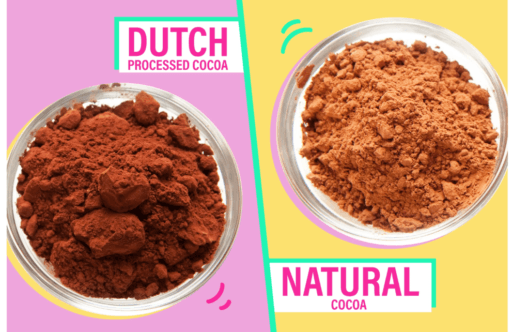
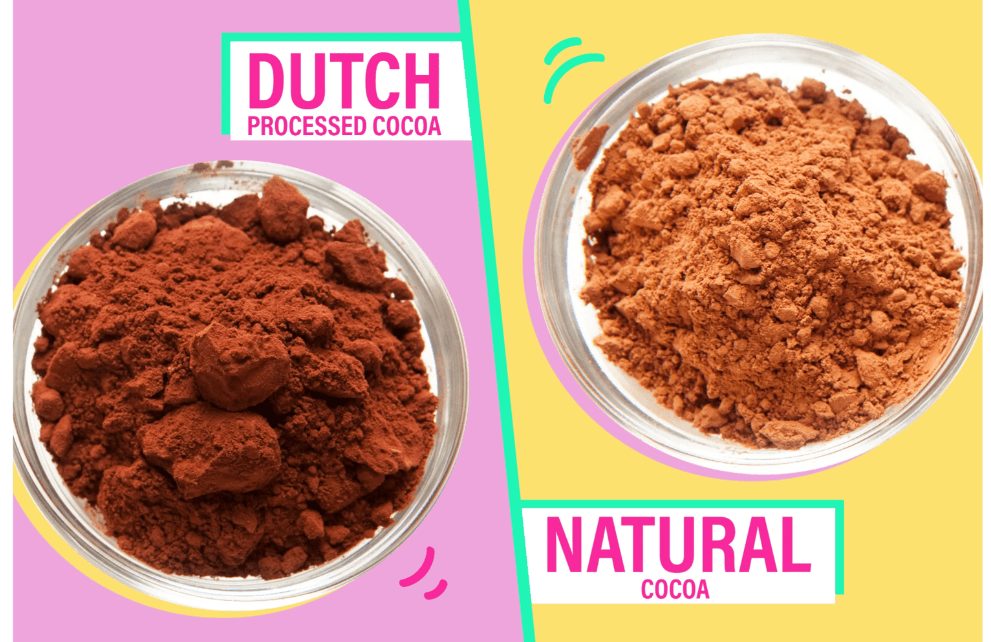
Natural Cocoa Powder: This powder is completely unprocessed after grinding. It is highly acidic, much like lemon juice or coffee. It has a sharp, fruity flavor and a lighter, reddish-brown color.
Dutch-Process Cocoa Powder: This powder is washed in a safe alkaline solution. This “Dutching” process removes the acid and makes the powder neutral. It creates a darker, earthier, and much smoother chocolate flavor. It also dissolves much easier in liquids.
2. Baking Chemistry 101: How Cocoa Makes Things Rise
In baking, cocoa powder is not just a flavor. It is a working ingredient that builds the structure of your cake. Its acid level decides which chemical powder it must pair with to create the bubbles that make your batter rise.
The Baking Soda Rule
Baking soda is a base. To create bubbles and lift the cake, it must mix with an acid. Natural cocoa provides that acid. When they mix, they create carbon dioxide bubbles and balance each other out perfectly.
The Baking Powder Rule
Baking powder is a complete package. It already contains both baking soda and a dry acid. It only needs liquid and oven heat to work. Because it has its own acid, it pairs perfectly with the neutral Dutch-process cocoa.
If you use Dutch-process cocoa in a recipe that only uses baking soda, nothing triggers the soda. Your baked good will stay flat, and the leftover baking soda will leave a terrible, soapy taste in your mouth.
3. The Leavening Chemistry Table
Use this simple reference chart to see exactly what happens when you mix different cocoa powders and leaveners.
| Cocoa Type | pH Level | Best Paired With | What Happens in the Oven? | Taste Result |
| Natural Cocoa | Acidic | Baking Soda | Excellent rise. The soda neutralizes the acid. | Bright, fruity chocolate notes. |
| Dutch-Process | Neutral | Baking Powder | Excellent rise. The powder works on its own. | Smooth, earthy chocolate notes. |
| Natural Cocoa | Acidic | Baking Powder | Okay rise. The extra acid is left behind. | Very sharp, slightly sour taste. |
| Dutch-Process | Neutral | Baking Soda | FAILURE. Flat cake. The soda never activates. | Heavy, dense, metallic aftertaste. |
4. The Simple Swap Guide
If you are halfway through a recipe and realize you have the wrong cocoa powder, do not panic. Follow these exact math rules to save your bake.
If you have Natural Cocoa, but the recipe calls for Dutch-Process:
Use the exact same amount of natural cocoa called for in the recipe.
Find the baking powder measurement in the recipe.
Replace the baking powder with half the amount of baking soda. For example, swap 1 teaspoon of baking powder for 1/2 teaspoon of baking soda.
If you have Dutch-Process, but the recipe calls for Natural Cocoa:
Use the exact same amount of Dutch-process cocoa called for in the recipe.
Find the baking soda measurement in the recipe.
Replace the baking soda with twice the amount of baking powder. For example, swap 1 teaspoon of baking soda for 2 teaspoons of baking powder.
Note: Does your recipe skip baking soda and baking powder entirely? Things like hot chocolate, pudding, or dense brownies can use either cocoa type without changing the recipe.
5. Expert Recommendations for the Perfect Bake
Professional bakers follow a few simple rules when choosing ingredients. Here is how to bake like a pro:
Stick to Natural Cocoa for Classic American Recipes: Traditional chocolate chip cookies and devil’s food cakes were invented using natural cocoa and baking soda.
Use Dutch-Process for European Pastries: Dutch cocoa dissolves easily and tastes incredibly smooth. It is the best choice for ice cream, mousse, frosting, and dark, fudgy brownies.
Always “Bloom” Your Cocoa: Mix your cocoa powder with hot water, hot coffee, or melted butter before adding it to your main bowl. The heat wakes up the flavor and makes your chocolate taste much richer.
6. Common Mistakes to Avoid
Forgetting the Dairy: Does your recipe call for buttermilk, yogurt, or sour cream? If so, that dairy is the acid activating the baking soda. In this case, you do not need to change the baking soda, even if you swap the cocoa.
Using “Black Cocoa” incorrectly: Black cocoa (used in Oreo cookies) is heavily processed and has zero fat. If you swap it completely for natural cocoa, your cake will be totally dry. Always mix it half-and-half with standard Dutch cocoa.
Getting confused by labels: “Unsweetened” does not mean “Natural.” Both types are unsweetened. Look closely at the ingredients. If it says “processed with alkali,” it is Dutch-process.
7. Frequently Asked Questions
Can I use natural cocoa instead of Dutch process?
Yes, but you must adjust your recipe. Because natural cocoa is acidic, you need to replace the baking powder with half the amount of baking soda to make sure your cake rises properly.
What happens if I use Dutch process with baking soda?
Your baked goods will come out flat and dense. Dutch process cocoa has no acid, which means it cannot activate the baking soda to create bubbles.
Why does my chocolate cake taste soapy?
A soapy or metallic taste means you have leftover baking soda in your batter. This happens when you use Dutch-process cocoa instead of natural cocoa, leaving the baking soda with no acid to react with.
Is Hershey’s regular cocoa natural or Dutch?
Standard Hershey’s Unsweetened Cocoa (the classic brown tub) is natural cocoa powder. Hershey’s “Special Dark” is a mix of both natural and Dutch-process cocoas.
Does the type of cocoa matter in brownies without baking powder?
If a recipe does not use baking soda or baking powder, you can safely use either cocoa type. Dutch process will make a darker, fudgier brownie, while natural cocoa will make a brighter, fruitier brownie.
Why does red velvet cake require natural cocoa?
Red velvet cake relies on a chemical reaction between natural cocoa, acidic buttermilk, and baking soda. This mix brings out the natural red colors hidden in the cocoa powder.
Can I just add vinegar if I use Dutch cocoa?
Yes. If you must use Dutch cocoa in a baking soda recipe, you can add a splash of vinegar or lemon juice to your wet ingredients. This adds the missing acid needed to trigger the baking soda.
8. Conclusion & Key Takeaways
The great debate over Dutch process vs natural cocoa baking chemistry is all about acid. Cocoa powder is not just there to taste good; it physically builds your cake.
Remember these three rules:
Natural Cocoa: Acidic. Best with baking soda. Tastes fruity and bright.
Dutch-Process Cocoa: Neutral. Best with baking powder. Tastes earthy and smooth.
The Swap: Swap baking powder for half as much baking soda. Swap baking soda for twice as much baking powder.
By learning this simple baking science, you can confidently swap ingredients and bake perfectly fluffy cakes every single time.