

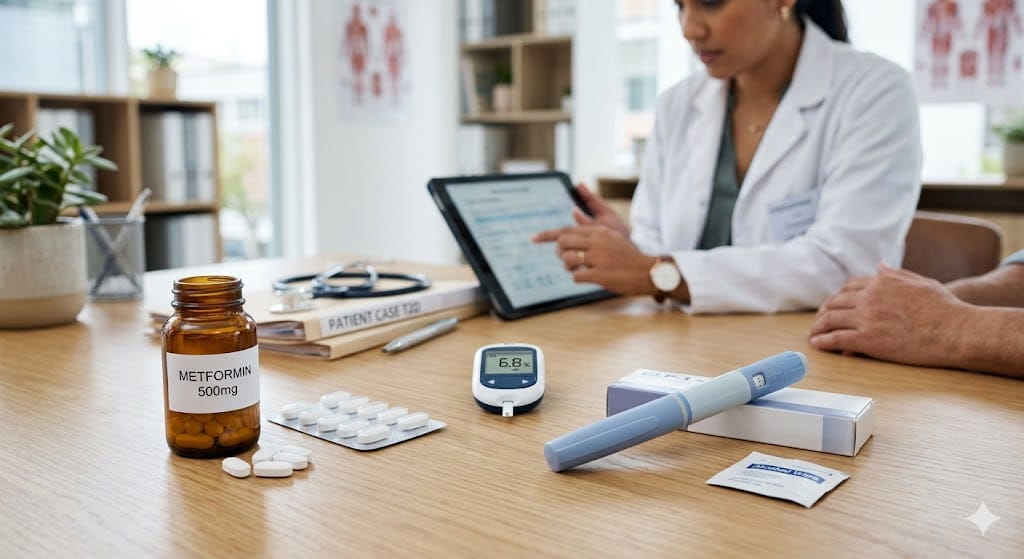

Choosing the right medication for Type 2 diabetes can feel overwhelming. You want a treatment that effectively manages blood sugar without disrupting your daily life. Historically, doctors prescribed one primary medication to almost every newly diagnosed patient. Today, the landscape has dramatically changed.
Understanding the debate between metformin vs GLP-1 agonist type 2 diabetes treatments is crucial for your health. Metformin remains a trusted, affordable cornerstone for blood sugar management. Meanwhile, GLP-1 receptor agonists like Ozempic and Trulicity are rapidly gaining popularity. These newer injectable medications offer profound benefits for weight loss and heart health.
Why does this comparison matter? Your ideal treatment depends entirely on your unique medical profile. In this comprehensive guide, we will break down how these medications work. We will also explore clinical outcomes and review what the ADA 2025 Standards of Care recommend. By the end, you will understand exactly how these treatments compare, empowering you to have an informed discussion with your endocrinologist.
What Is Metformin?
Metformin is an oral anti-diabetic medication belonging to the biguanide class. Doctors have prescribed it globally for decades. It is widely considered the foundation of type 2 diabetes treatment.
First, metformin lowers blood glucose by decreasing the amount of sugar your liver produces. Second, it reduces the amount of sugar your intestines absorb. Finally, it improves insulin sensitivity. This means your body uses its natural insulin more effectively.
Healthcare providers frequently prescribe metformin because it is highly effective and incredibly affordable. Furthermore, it boasts a decades-long safety record. Most patients tolerate it well, and it does not typically cause weight gain. Cost considerations also make it highly accessible, as generic versions cost only pennies per pill.
What Are GLP-1 Receptor Agonists?
GLP-1 (glucagon-like peptide-1) receptor agonists represent a newer class of diabetes medications. Rather than coming in pill form, most GLP-1s are administered via subcutaneous injection.
These medications work by mimicking a natural hormone in your body. When you eat, GLP-1 agonists stimulate your pancreas to release insulin. Simultaneously, they block glucagon, a hormone that raises blood sugar. Furthermore, they slow gastric emptying. This process keeps you feeling full longer and dramatically suppresses appetite.
Popular medications in this class include Semaglutide (Ozempic, Wegovy), Dulaglutide (Trulicity), and Liraglutide (Victoza). They are gaining massive attention worldwide. This surge in popularity stems from their dual ability to manage blood sugar and drive significant weight loss. Additionally, they offer proven cardiovascular protection for high-risk patients.
Metformin vs. GLP-1 Agonists: Key Differences
When comparing diabetes medication options, a side-by-side view helps clarify the distinct advantages of each class.
| Feature | Metformin | GLP-1 Agonists |
| HbA1c Reduction | 1.0% to 1.5% average drop | 1.0% to 2.0%+ average drop |
| Weight Loss | Neutral or mild (1-3 lbs) | Significant (up to 15% body weight) |
| Cardiovascular Benefits | Potential historical benefit | Strong, proven risk reduction |
| Administration | Oral pill (1-2x daily) | Injection (daily or weekly) |
| Cost | Very low ($4-$10/month) | Very high ($900+/month without insurance) |
| Insurance Coverage | Universally covered | Often requires prior authorization |
| Side Effects | Diarrhea, nausea, B12 deficiency | Nausea, vomiting, delayed gastric emptying |
| Hypoglycemia Risk | Very low | Low (unless combined with insulin) |
| Kidney Considerations | Adjust dose based on eGFR | Safe; slows kidney disease progression |
| ADA 2025 Position | Core therapy for many | Preferred for high CVD risk or obesity |
HbA1c Reduction Comparison
Lowering HbA1c is the primary goal of diabetes management. Both medications achieve this effectively, but they work at different magnitudes.
Metformin reliably lowers HbA1c by 1.0% to 1.5% in most patients. Clinical evidence strongly supports its efficacy as an initial therapy. Patients with mild to moderate insulin resistance often achieve their target blood sugar levels using metformin alone.
Conversely, a direct HbA1c reduction comparison reveals that GLP-1s often provide stronger glycemic control. High-dose GLP-1 agonists can lower HbA1c by 1.5% to over 2.0%. Patients struggling with severely elevated blood sugar often benefit most from these injectables. The potent insulin-stimulating effect ensures rapid and sustained glucose management.
Weight Loss: Metformin vs Semaglutide
Obesity and diabetes treatment frequently overlap. Excess weight directly worsens insulin resistance.
When evaluating weight loss metformin semaglutide data, the clinical trial findings are striking. Metformin is weight-neutral. Some patients experience a mild weight loss of 2 to 5 pounds, mostly due to initial gastrointestinal side effects. It does not actively drive massive fat reduction.
In contrast, semaglutide produces profound weight loss. Clinical trials demonstrate that patients on weekly semaglutide injections can lose up to 15% of their total body weight. Real-world outcomes consistently mirror these clinical findings. The medication directly targets appetite centers in the brain. Therefore, patients naturally eat less, making GLP-1s vastly superior for dedicated weight management.
Cardiovascular Outcomes Diabetes Drugs Comparison
Cardiovascular disease remains the leading cause of mortality in patients with type 2 diabetes. Modern treatment focuses heavily on heart protection.
Our cardiovascular outcomes diabetes drugs comparison heavily favors GLP-1 agonists. Extensive clinical trials prove that medications like Ozempic and Trulicity reduce the risk of major adverse cardiovascular events (MACE). They actively lower the rates of heart attacks, strokes, and cardiovascular deaths.
While historical data suggested metformin offered some heart protection, modern trials show GLP-1s are definitively superior. Consequently, ADA recommendations specifically prioritize GLP-1s for any diabetic patient with established heart disease, regardless of their current baseline A1c.
Side Effects and Safety Considerations
Every medication carries potential risks. Understanding these side effects helps you prepare and adjust your treatment plan safely.
Metformin Side Effects
Gastrointestinal distress is the most common complaint. Up to 30% of patients experience diarrhea, nausea, or abdominal cramping. Fortunately, taking the extended-release version with meals usually resolves these issues. Long-term use can also cause Vitamin B12 deficiency, requiring periodic blood tests and potential supplementation.
GLP-1 Side Effects
GLP-1 receptor agonists heavily impact the digestive tract. Nausea is the most prevalent side effect, especially when starting the medication. Patients also report vomiting, constipation, and acid reflux. Because these drugs slow digestion, eating large meals can cause severe discomfort. Doctors mitigate these issues by slowly titrating the dose over several months.
Serious Risks and Contraindications
Both medications require medical supervision due to rare but serious risks.
Renal impairment: Metformin carries a risk of lactic acidosis in patients with severe kidney failure. Doctors must monitor eGFR and adjust doses accordingly.
Thyroid cancer warnings: GLP-1s carry a black-box warning for thyroid C-cell tumors based on rodent studies. Patients with a personal or family history of Medullary Thyroid Carcinoma (MTC) or Multiple Endocrine Neoplasia syndrome type 2 (MEN2) cannot use them.
Pancreatitis concerns: GLP-1s present a rare risk of acute pancreatitis. Patients with a history of pancreatic disease should use them with extreme caution.
Pregnancy considerations: Neither drug is typically recommended during pregnancy. Insulin remains the standard of care for gestational diabetes.
Cost Comparison and Insurance Coverage
Treatment efficacy matters little if a patient cannot afford the medication. The financial divide between these two therapies is massive.
Generic metformin is incredibly affordable. A month’s supply rarely exceeds $10, even without insurance. It provides long-term affordability and universal accessibility. There are virtually no insurance hurdles or prior authorizations required.
Branded GLP-1 agonists present significant financial challenges. Without insurance, they routinely cost over $900 per month. Even with insurance, coverage varies wildly. Many plans mandate strict prior authorizations. Some insurers require patients to fail metformin therapy before they will approve a GLP-1. Consequently, accessibility remains a major barrier for many patients needing GLP-1 therapy.
Who Should Consider Metformin?
Metformin remains an outstanding choice for millions of patients. It may be the preferred starting point if you meet specific criteria.
Patients newly diagnosed with mild type 2 diabetes.
Individuals seeking a low-cost, highly affordable treatment.
Patients who prefer an oral pill over weekly injections.
Those with normal kidney function and no established heart disease.
Individuals whose primary issue is fasting blood sugar elevation.
Who May Benefit More From GLP-1 Therapy?
GLP-1 medications offer distinct advantages for high-risk profiles. You might be an ideal candidate if you fit these scenarios.
Patients needing significant, sustained weight loss.
Individuals with established cardiovascular disease or high heart attack risk.
Patients who struggle with severe appetite control and overeating.
Those who have not reached A1c targets using metformin alone.
Patients seeking to slow the progression of diabetic kidney disease.
ADA 2025 Standards of Care: Current Recommendations
The American Diabetes Association continuously updates its guidelines based on emerging clinical data. The ADA 2025 Standards of Care reflect a highly personalized approach to first-line therapy for type 2 diabetes.
Previously, the ADA mandated metformin as the universal first-line drug. Today, the guidance has shifted. Metformin remains a highly recommended initial therapy for general blood glucose control. However, the ADA explicitly recommends starting a GLP-1 agonist (or an SGLT2 inhibitor) independently of baseline A1c for specific high-risk groups.
If a patient has established atherosclerotic cardiovascular disease, heart failure, or chronic kidney disease, GLP-1s are prioritized. Furthermore, for obesity and diabetes treatment, the ADA strongly endorses high-efficacy GLP-1s to drive weight loss.
Metformin vs. GLP-1 Agonist Type 2 Diabetes: Which Is Better?
When answering the ultimate question—metformin vs GLP-1 agonist type 2 diabetes: which is better?—there is no single universal winner. The “better” medication depends entirely on your specific biological profile and lifestyle constraints.
Metformin wins on cost, accessibility, and decades of proven long-term safety. It is the ultimate foundation for standard insulin resistance treatment.
Conversely, GLP-1s win on overall clinical impact. They lower blood sugar more aggressively, facilitate life-changing weight loss, and actively protect the heart.
Your doctor will evaluate your weight goals, cardiovascular risk, kidney function, financial situation, and personal preferences. Frequently, the answer is not choosing one over the other. Many patients achieve exceptional metabolic control by combining both medications safely.
Frequently Asked Questions
Can I take Metformin and Ozempic together? Yes, healthcare providers frequently prescribe them together. They work through different mechanisms. Metformin stops the liver from making excess sugar, while Ozempic boosts insulin production and slows digestion.
Is GLP-1 better than Metformin? Neither is universally “better.” GLP-1s offer superior weight loss and cardiovascular protection. Metformin offers better affordability, long-term safety data, and oral convenience.
Which lowers HbA1c more? Generally, GLP-1 receptor agonists provide a stronger reduction in HbA1c. High-dose GLP-1s can lower A1c by over 2%, whereas Metformin typically lowers it by 1% to 1.5%.
Which helps more with weight loss? GLP-1 medications (like Semaglutide) are significantly superior for weight loss. Patients can lose up to 15% of their body weight, whereas Metformin is generally weight-neutral.
What do ADA 2025 guidelines recommend? The ADA recommends a patient-centered approach. Metformin is excellent for general glycemic control. However, GLP-1s are strongly recommended first-line for patients with heart disease, kidney issues, or obesity.
Does Metformin protect against heart disease? Metformin may offer mild cardiovascular benefits, but modern clinical trials prove that GLP-1 agonists provide far superior, targeted protection against heart attacks and strokes.
Do I have to take these medications forever? Type 2 diabetes is a progressive, chronic condition. While significant lifestyle changes can sometimes lead to remission, most patients require long-term medication to maintain safe blood sugar levels.
Will my insurance cover GLP-1 medications? Insurance coverage for GLP-1s is highly variable. Most plans cover them for diagnosed Type 2 diabetes, often requiring a prior authorization. Coverage for weight loss alone is much harder to secure.
Conclusion
Navigating the choices between a metformin vs GLP-1 agonist type 2 diabetes treatment plan requires careful consideration. The medical landscape has evolved dramatically. You no longer have to rely on a one-size-fits-all approach.
Metformin remains a reliable, cost-effective, and safe foundational therapy. It tackles insulin resistance efficiently and will remain a staple in diabetes care for the foreseeable future. However, the rise of GLP-1 receptor agonists has revolutionized modern endocrinology. By offering unmatched weight loss and proven cardiovascular protection, drugs like semaglutide treat the root causes and deadly complications of diabetes simultaneously.
Ultimately, your personal health markers—specifically your heart health, weight goals, kidney function, and financial resources—dictate the right path. Both medications align perfectly with the ADA 2025 Standards of Care when prescribed to the right patient.
We encourage you to use this comprehensive medication comparison as a starting point. Take these insights to your next medical appointment. Discuss your A1c targets, your heart disease risks, and your lifestyle preferences with your healthcare provider. Together, you can design a tailored treatment plan that effectively manages your diabetes and enhances your overall quality of life.