

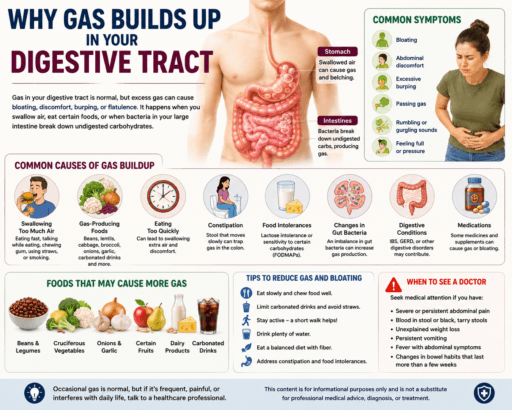
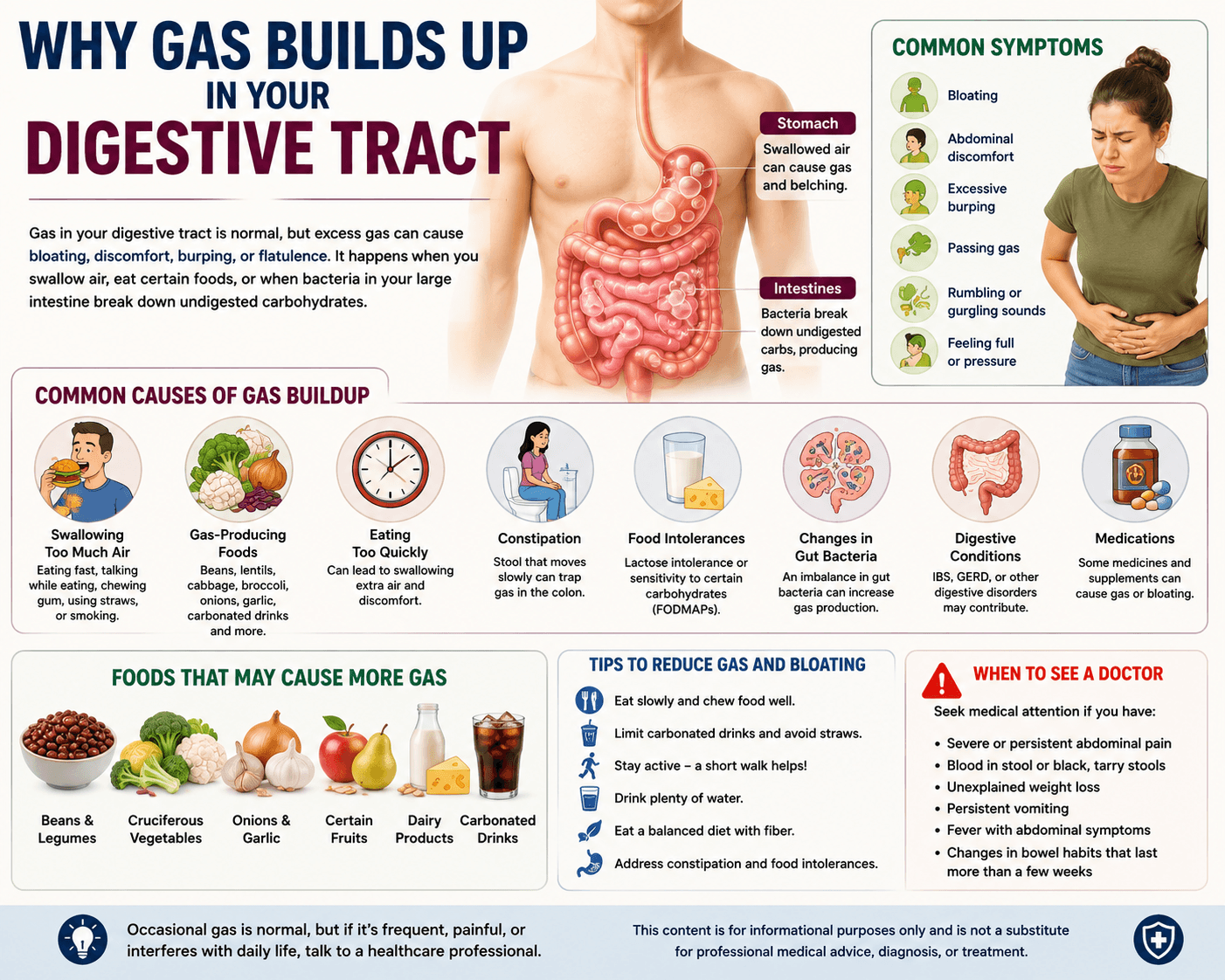

Gas buildup in the digestive system is pretty normal and doesn’t usually mean you have a serious health issue. We all produce gas when our body breaks down food, but sometimes this gas can get stuck in our stomach or intestines, leading to bloating, burping, and discomfort in our abdomen, or even really bad flatulence. This can be uncomfortable and embarrassing, especially if it happens a lot. But for most people, it’s not a sign of anything serious. Our body just makes gas as it digests food, and sometimes this gas can build up and cause problems.
Gas can build up when you swallow air, when bacteria in your large intestine break down certain carbohydrates, or when digestive conditions affect how food moves through your gastrointestinal tract.
This article explains why gas builds up in your digestive tract, common causes of excessive gas, symptoms, foods that may contribute to gas, and when you should talk with a healthcare professional.
Note :that this article is meant to educate and isn’t a substitute for a doctor’s advice. If you have bad digestive symptoms that won’t go away, or if they’re really severe or weird, you should go see a doctor who can help figure out what’s going on. They can give you a proper diagnosis and tell you what to do next.
What Causes Gas to Build Up in the Digestive Tract?
Gas in the digestive tract mainly comes from two sources: swallowed air and the normal breakdown of food by bacteria in the large intestine.
When gas does not move through the digestive system normally, it can accumulate and create pressure or discomfort.
Common causes include:
Swallowing too much air
Eating certain foods
Eating too quickly
Constipation
Food intolerances
Changes in gut bacteria
Irritable bowel syndrome (IBS)
Gastroesophageal reflux disease (GERD)
Difficulty digesting certain carbohydrates
Certain medications
Other digestive conditions
1. Swallowing Too Much Air
One of the simplest explanations for gas buildup in the digestive tract is swallowing air.
You may swallow more air when you:
Eat or drink quickly
Talk while eating
Chew gum
Drink through a straw
Drink carbonated beverages
Suck on hard candy
Smoke or use certain tobacco products
Most swallowed air is released through burping. Some can travel through the digestive tract and eventually be passed as intestinal gas.
2. Eating Gas-Producing Foods
Certain foods are more likely to cause intestinal gas and bloating because they contain carbohydrates that are not completely digested in the small intestine.
When these carbohydrates reach the large intestine, gut bacteria break them down through fermentation. Gas is produced as a natural result.
Foods that may contribute to gas include:
Beans and lentils
Broccoli
Cabbage
Cauliflower
Brussels sprouts
Onions
Garlic
Some fruits
Whole grains
Certain dairy products
Carbonated drinks
Not everyone reacts to these foods in the same way.
3. Eating Too Quickly
Eating quickly can contribute to gas and bloating because you may swallow more air while eating.
Large meals may also leave you feeling overly full and uncomfortable.
Try slowing down during meals, chewing food thoroughly, and paying attention to how your body responds to different portion sizes.
4. Constipation
Constipation and gas buildup often occur together.
When stool remains in the colon for longer than usual, it can become harder to pass. This may make it more difficult for gas to move through the digestive tract comfortably.
Constipation can cause:
Abdominal bloating
Feeling overly full
Abdominal discomfort
Fewer bowel movements
Hard or difficult-to-pass stools
A feeling that you have not completely emptied your bowels
Addressing constipation may help reduce associated gas and bloating.
5. Lactose Intolerance
Lactose intolerance occurs when the body does not produce enough lactase, the enzyme needed to digest lactose, the natural sugar found in milk.
Undigested lactose reaches the large intestine, where bacteria ferment it and produce gas.
Symptoms may develop after consuming dairy products and can include:
Bloating
Gas
Abdominal cramps
Diarrhea
Stomach discomfort
The severity of symptoms can vary depending on how much lactose a person consumes.
6. Other Food Intolerances
Lactose is not the only carbohydrate that can cause digestive symptoms.
Some people have difficulty digesting or absorbing certain carbohydrates, including fermentable carbohydrates commonly grouped under the term FODMAPs.
Foods high in certain FODMAPs may cause gas and bloating in susceptible people.
A healthcare professional or registered dietitian can help determine whether a structured dietary approach may be appropriate if food-related symptoms are frequent.
7. Changes in Gut Bacteria
Your large intestine contains trillions of microorganisms that help break down food.
These bacteria naturally produce gas during fermentation. Changes in the composition or activity of gut bacteria may influence how much gas a person produces and how strongly they experience bloating.
Factors that can affect the gut microbiome include:
Diet
Illness
Antibiotic use
Changes in bowel habits
Other digestive conditions
Having gas in your intestines doesn’t always mean that the bacteria in your gut are out of balance.
8. Irritable Bowel Syndrome
Irritable bowel syndrome, or IBS, is a pretty common problem that affects the digestive system, and it can lead to stomach pain and changes in how often you go to the bathroom.
People with IBS may experience:
Bloating
Excessive gas
Abdominal discomfort
Diarrhea
Constipation
Alternating diarrhea and constipation
Some people with IBS are particularly sensitive to normal amounts of gas or intestinal stretching, which can make bloating and discomfort feel more pronounced.
If you regularly experience abdominal pain and changes in bowel habits, discuss your symptoms with a healthcare professional.
9. Gastroesophageal Reflux Disease
GERD occurs when stomach contents frequently flow back into the esophagus.
Although GERD is primarily associated with heartburn and regurgitation, some people may also experience increased belching or abdominal discomfort.
Swallowing air while trying to relieve these symptoms can sometimes contribute to additional belching.
10. Certain Medications Can Cause Gas
Some medicines and supplements can contribute to gas, bloating, constipation, or diarrhea.
Examples can include certain:
Laxatives
Antacids
Diabetes medications
Fiber supplements
Pain medications
Antibiotics
If you think a medicine you’re taking is causing stomach problems, don’t just stop taking it. Talk to your doctor or pharmacist about what’s going on. They can help you figure out what to do next. It’s always better to get their advice before making any changes to your medication.
What Does Gas Buildup Feel Like?
The symptoms of gas buildup in the digestive tract can vary from person to person.
Common symptoms include:
Feeling bloated
Abdominal fullness
Burping
Passing gas
Abdominal pressure
Cramping
Rumbling or gurgling sounds
Temporary abdominal discomfort
Gas-related discomfort may occur in different areas of the abdomen and can sometimes feel like pressure or cramping.
Why Does Gas Get Trapped?
Sometimes gas does not move through the intestines as easily as usual. This can create a sensation of trapped gas.
Constipation, changes in intestinal movement, eating habits, and certain digestive disorders can contribute.
The sensation may improve after:
Passing gas
Having a bowel movement
Walking or moving around
Changing position
Allowing time for digestion
Persistent or severe abdominal pain should not automatically be attributed to gas, however.
Foods That May Cause More Gas
Some foods are more likely to produce gas than others.
Common gas-producing foods include:
Beans and legumes
Kidney beans
Black beans
Chickpeas
Lentils
Vegetables
Broccoli
Cabbage
Cauliflower
Brussels sprouts
Onions
Fruits
Apples
Pears
Certain dried fruits
Dairy
Milk
Ice cream
Some soft cheeses, particularly in people with lactose intolerance
Drinks
Soda
Sparkling water
Beer and other carbonated alcoholic beverages
You don’t have to cut out all these foods, just figure out what bothers you personally and go from there. It’s all about finding what triggers your issues, not about limiting your diet too much.
How to Reduce Gas and Bloating
If gas buildup is causing mild discomfort, several simple strategies may help. Also reference to John’s Hopkins guide
-Eat More Slowly
Take your time during meals and chew your food thoroughly. Slower eating may reduce the amount of air you swallow.
-Limit Carbonated Drinks
Carbonated beverages introduce additional gas into the digestive system and may increase belching or bloating in some people.
-Exercise Regularly
Walking and other forms of physical activity can support normal movement through the digestive tract.
A short walk after eating may be helpful for some people.
-Drink Enough Fluids
Adequate fluid intake can support normal bowel function, particularly when constipation contributes to bloating.
People who have been advised to restrict fluids because of a medical condition should follow their healthcare professional’s recommendations.
-Identify Food Triggers
Keep a food and symptom diary for a few weeks. Record what you eat and when symptoms occur.
This may help identify patterns involving particular foods.
Address Constipation
If you’re having trouble with constipation, it can make gas and bloating worse. So, finding ways to have regular bowel movements might really help with those issues.
Adding more fiber to your diet can be helpful, but be careful not to do it too quickly. If you suddenly add a lot of fiber, you might get more gas for a little while. So, it’s better to increase your fiber gradually. Also, make sure to drink plenty of fluids, unless your doctor or healthcare provider has told you something different. This will help your body get used to the extra fiber and reduce the chance of discomfort.
Is Gas Buildup a Sign of Something Serious?
Normally, having gas isn’t a sign that something is seriously wrong. It’s pretty common to have gas, burp, or feel bloated – these things just happen when your body is digesting food.
But if you have gas all the time and it’s accompanied by other symptoms, you should probably see a doctor to get it checked out.
Talk with a healthcare professional if you have ongoing:
Abdominal pain
Bloating
Diarrhea
Constipation
Unexplained weight loss
Changes in bowel habits
Blood in your stool
Repeated vomiting
Loss of appetite
These symptoms can have many possible causes, so proper evaluation is important.
When Is Gas-Related Abdominal Pain an Emergency?
Severe or sudden abdominal pain should not automatically be assumed to be gas.
See a doctor right away if you have a bad stomach ache and it comes with other symptoms like:
Severe or rapidly worsening abdominal pain
Persistent vomiting
Blood in vomit or stool
Black, tarry stools
A swollen or very tender abdomen
Inability to pass stool or gas accompanied by significant abdominal pain or vomiting
Fever with severe abdominal symptoms
Fainting or severe weakness
Chest pain or difficulty breathing
These symptoms may indicate a condition requiring prompt medical evaluation.
Frequently Asked Questions About Gas Buildup
Why does gas build up in my stomach?
Gas can enter the digestive tract when you swallow air while eating or drinking. Carbonated beverages and certain eating habits can increase swallowed air. Gas can also be produced when bacteria in the intestines break down undigested carbohydrates.
also reference to Migraine Phase 1: Prodrome Symptoms, Causes & What It Means
What causes excessive gas in the intestines?
Excessive intestinal gas may be related to certain foods, food intolerances, constipation, swallowing air, changes in gut bacteria, IBS, or other digestive conditions.
How do you get rid of trapped gas?
Moving around gently, like taking a walk, can help with gas. So can avoiding fizzy drinks and eating slowly. If you’re constipated, taking care of that can make a difference too. But if you’re often feeling like you have gas stuck in your body or you’re having a lot of abdominal pain, you should talk to a doctor or nurse about it. They can help figure out what’s going on and find a way to make you feel better.
Does constipation cause gas buildup?
Yes. Constipation can contribute to gas and bloating because stool remains in the colon longer and may make it harder for gas to move through the digestive tract.
Can drinking water help with gas?
Staying adequately hydrated can support normal digestion and bowel movements, particularly when constipation is contributing to bloating. However, drinking large amounts of water does not necessarily eliminate gas immediately.
Why do I have gas every day?
Daily gas can occur as part of normal digestion, but frequent or bothersome symptoms may be related to diet, food intolerance, constipation, IBS, or another digestive issue. A food and symptom diary can help identify patterns.
The Bottom Line
Gas buildup in the digestive tract is a common digestive issue and is usually caused by normal processes such as swallowed air and bacterial fermentation of undigested carbohydrates.
Eating quickly, drinking carbonated beverages, consuming certain foods, constipation, lactose intolerance, IBS, and some medications can all contribute to gas and bloating.
For mild symptoms, eating slowly, staying adequately hydrated, exercising regularly, identifying personal food triggers, and managing constipation may help.
However, persistent or severe digestive symptoms should not simply be blamed on gas. If gas occurs with severe abdominal pain, vomiting, blood in the stool, unexplained weight loss, or other concerning symptoms, seek medical advice
Thank you for reading until the end bookmark myhealthytopicsto avoid missing out on our next health update






I like this