

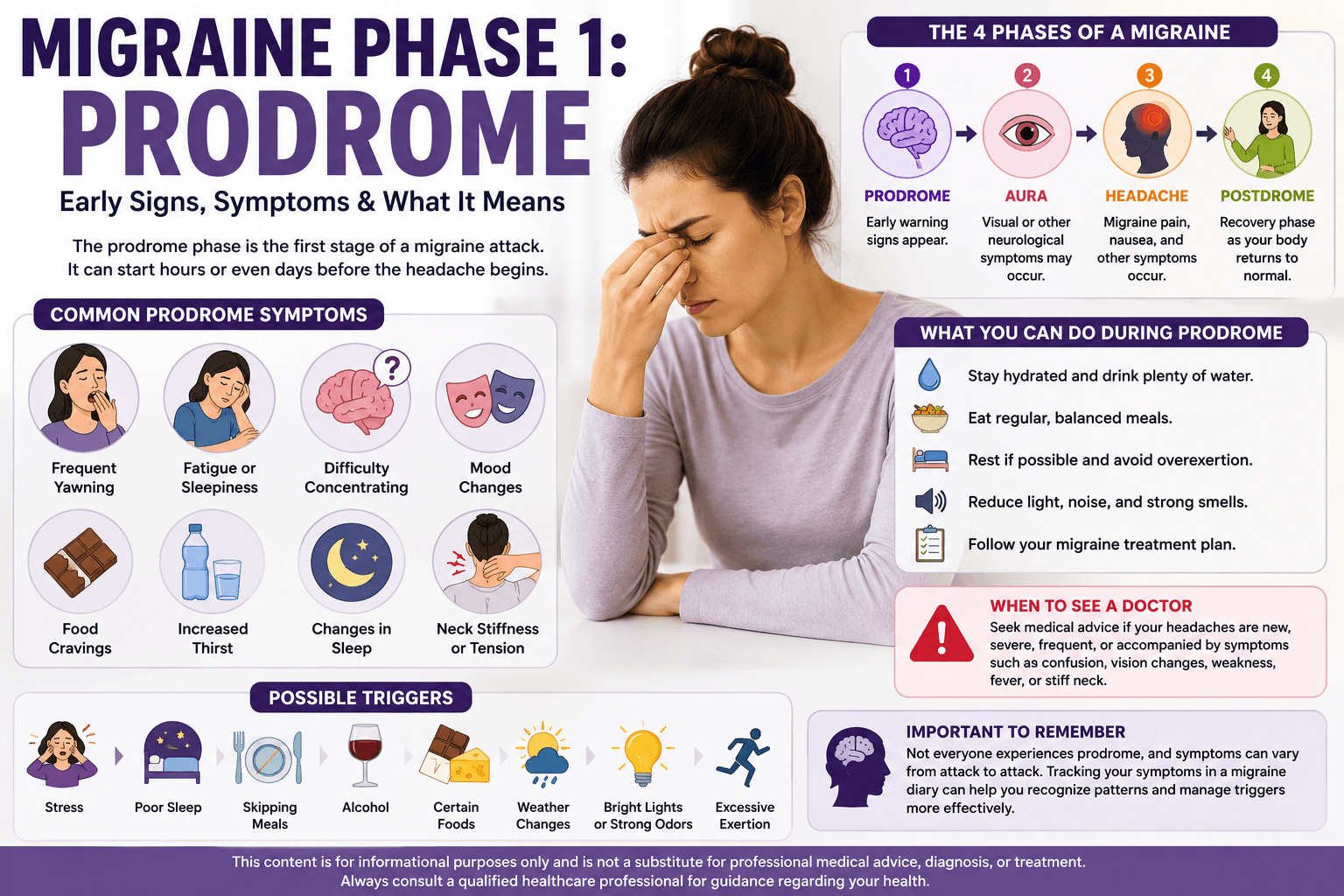

Migraine phase 1 prodrome, known as the prodrome phase, is the earliest stage of a migraine attack. It can begin several hours or sometimes up to a couple of days before the main headache develops. Recognizing migraine prodrome symptoms may help you understand your migraine pattern and prepare for the next stages.
Migraines can be different for everyone, and not everyone gets a warning sign before the headache starts. For some people, they might feel a little off before the pain begins – their mood might change, they might have more or less energy, or they might feel hungrier or thirstier than usual. They might even have trouble focusing. But these signs can be really subtle, and they can be different from one migraine to another.
This guide explains migraine phase 1 prodrome, common symptoms, possible triggers, how it differs from the migraine aura phase, and what you can do when you recognize the early warning signs.
Note that this: article is meant to educate and isn’t a replacement for a doctor’s advice. If you’re getting really bad headaches or ones that are unusual, you should talk to a healthcare professional who can help you figure out what’s going on.
What Is Migraine Phase 1 Prodrome?
Migraine phase 1 prodrome is the premonitory stage of a migraine attack. It occurs before the headache phase and may begin hours or even days before the pain becomes noticeable.
The word “prodrome” refers to early symptoms that can signal that a condition is developing.
During migraine prodrome, changes can occur in the nervous system and other body processes. These changes may affect mood, energy, appetite, sleep, concentration, and other functions.
It’s worth noting that prodrome and aura are two different things. Some people get both, but a lot of people who get migraines don’t get auras.
The Four Phases of a Migraine Attack
A migraine attack is commonly described as having up to four stages:
Prodrome – the early warning stage
Aura – a temporary neurological stage that may occur before or during the headache
Headache – the phase in which migraine pain and other symptoms occur
Postdrome – the recovery stage after the headache
Not everyone experiences all four phases.
Some people might get a warning sign that a migraine is coming, this is called the prodrome phase, it’s like the first hint that an attack is on its way.
Common Migraine Prodrome Symptoms
The symptoms of migraine prodrome can be subtle. Some people may not initially recognize them as part of a migraine.
Common symptoms include:
Frequent yawning
Fatigue or unusual tiredness
Difficulty concentrating
Mood changes
Irritability
Increased sensitivity to light or sound
Food cravings
Changes in appetite
Increased thirst
Frequent urination
Constipation
Neck stiffness
Muscle tension
Changes in sleep
Feeling unusually energetic or restless
A person does not need to experience all of these symptoms. Your own migraine prodrome symptoms may be different from those experienced by someone else.
1. Yawning
Repeated or excessive yawning can be an early migraine prodrome symptom.
Some people notice that they begin yawning more frequently several hours before their migraine headache. If yawning repeatedly occurs before your headaches, keeping a migraine diary may help you identify the pattern.
2. Fatigue and Sleepiness
Feeling unusually tired or sleepy is another common feature of migraine phase 1 prodrome.
You may feel as though you need to rest or sleep even when you have not had an unusually demanding day.
Some individuals actually feel really energetic or restless right before an episode, which is kind of the opposite of what you’d expect.
3. Mood Changes
Changes in mood can occur during the prodrome phase.
You may experience:
Irritability
Anxiety
Low mood
Restlessness
Increased excitement
Difficulty relaxing
It’s easy to overlook these changes, thinking they’re just normal mood swings, especially if the headache doesn’t show up until much later.
4. Food Cravings
Cravings for certain foods can be a warning sign that a migraine is on the way.
Some people may crave particular foods, especially sweet or carbohydrate-rich foods. Others may experience increased or decreased appetite.
Because food cravings can also occur for many unrelated reasons, this symptom alone cannot confirm that a migraine is coming.
5. Increased Thirst
Some people experience increased thirst during the early stages of a migraine attack.
You might find yourself drinking a lot more water than you normally do, or you could be feeling really thirsty all the time.
However, excessive thirst can have many causes, so persistent or unexplained thirst should be discussed with a healthcare professional.
6. Difficulty Concentrating
Brain fog or difficulty concentrating can occur during migraine phase 1 prodrome.
You might find it harder than usual to:
Focus on work
Read
Remember information
Make decisions
Follow conversations
This can be frustrating, particularly when you do not yet realize that a migraine may be developing.
7. Neck Stiffness
During the early stages of some illnesses, people may feel stiffness or discomfort in their neck, which can be a sign that something is wrong.
When you’re having a migraine, you might also get symptoms in your neck. If you can figure out when these neck symptoms happen, it can help you understand what’s going on with your migraines and when they’re likely to strike.
8. Changes in Sleep
Sleep changes can be part of migraine prodrome symptoms.
You may feel unusually sleepy, sleep longer than usual, have difficulty falling asleep, or notice changes in your normal sleep pattern.
Because sleep changes can also trigger migraines, maintaining consistent sleep habits may be useful for people who are prone to migraine.
How Long Does Migraine Prodrome Last?
Migraine prodrome is a phase that can happen before a migraine headache. It can last for a few hours, and for some people, it can even go on for a couple of days. During this time, people may feel some symptoms that signal a migraine is coming.
The duration is different for everyone.
For some people, symptoms can show up just a few hours before a headache hits, but others might notice warning signs a whole day earlier.
Keeping track of the timing of your symptoms can help you identify your individual pattern.
What Causes Migraine Prodrome?
The exact mechanisms behind migraine phase 1 prodrome are not completely understood.
Migraine involves complex changes in the nervous system. Researchers believe that changes in brain activity and signaling pathways may contribute to the symptoms experienced before, during, and after a migraine attack.
Lots of things can affect whether you get a migraine or not.
Potential migraine triggers include:
Stress
Changes in sleep
Skipping meals
Dehydration
Hormonal changes
Alcohol
Certain foods
Bright or flashing lights
Strong odors
Changes in weather
Excessive physical or mental exertion
Triggers differ from person to person. Something that triggers a migraine for one individual may not affect another person.
Migraine Prodrome vs. Migraine Aura
Migraine prodrome and migraine aura are not the same thing.
Prodrome is generally the earlier phase and can involve changes in mood, appetite, energy, concentration, and other body functions.
Aura is a condition that affects the brain and can cause some weird symptoms. These symptoms can come on slowly, over a few minutes, and might include things like seeing strange lights or shapes. But it’s not just about vision – some people might feel sensations like numbness or tingling, or have trouble speaking.
Common aura symptoms may include:
Seeing flashing lights
Zigzag lines
Blind spots
Tingling or numbness
Difficulty speaking
Temporary changes in sensation
Not everyone with migraine experiences aura.
If you’re experiencing neurological symptoms for the first time, and they’re severe, you should get medical help right away. This is especially true if you have sudden weakness, trouble speaking, confusion, or vision loss. These symptoms can be signs of other serious health problems, so it’s crucial to see a doctor as soon as possible. Don’t wait, because getting help quickly can make a big difference in figuring out what’s wrong and getting the right treatment.
Signs of Poor Gut Health: Common Symptoms You Shouldn’t Ignore
What Should You Do During Migraine Phase 1?
Recognizing migraine phase 1 prodrome can give you an opportunity to take practical steps that may make the upcoming attack easier to manage.
Stay hydrated
Drink fluids regularly, especially if you have not been drinking enough.
Eat regular meals
Skipping meals can be a migraine trigger for some people. Try to maintain a consistent eating schedule.
Rest if possible
When you start to feel tired or notice other early signs, it might be a good idea to take a step back and rest for a bit, especially if you’ve been doing things that are really taxing on your body.
Reduce sensory stimulation
If you’re sensitive to light or noise, it might be helpful to get to a quieter and more comfortable space, as this can make it easier to deal with the symptoms when they first start.
Follow your treatment plan
If your doctor has given you a plan to treat your migraines, make sure to follow it. Some medicines for migraines work better if you take them at a certain time when you’re having an attack.
Do not start, stop, or change prescription medication without discussing it with your healthcare professional.
Can You Prevent Migraine Prodrome?
Migraine prodrome can’t really be prevented, and that’s because there are so many things that can trigger a migraine. It’s not just one thing, but lots of different factors that can contribute to the problem.
Figuring out what sets off your migraines can really help cut down how often you get them.
Consider keeping a migraine diary and recording:
When symptoms began
What symptoms appeared first
What you ate and drank
Sleep duration and quality
Stress levels
Physical activity
Menstrual or hormonal changes, when relevant
Weather changes
Medication use
When the headache started
How long the attack lasted
Over time, this information may help you and your healthcare professional recognize patterns.
When Should You See a Doctor?
If you get migraines from time to time, you might be able to control them with a treatment plan that you and your doctor have worked out. But it’s really important to see a doctor if you start getting headaches that are new, or if they’re changing, happening a lot, or getting in the way of your daily life.
Talk with a healthcare professional if:
Your headaches are becoming more frequent
Your migraine symptoms are changing
Your headaches are interfering with work or daily activities
Your current treatment is no longer helping
You frequently need pain-relieving medication
You are unsure whether your symptoms are migraine-related
When Is a Headache an Emergency?
Seek urgent medical attention for a headache that:
Begins suddenly and reaches severe intensity very quickly
Occurs after a significant head injury
Is accompanied by new weakness or paralysis
Causes new difficulty speaking
Causes severe confusion or loss of consciousness
Occurs with a high fever and significant neck stiffness
Is associated with a new seizure
Causes sudden or significant vision loss
These symptoms don’t always mean you have a migraine, so it’s a good idea to get them checked out right away, Also check out at American Migraine foundation for more
Frequently Asked Questions About Migraine Phase 1 Prodrome
What is the first phase of a migraine?
The first phase is generally called the prodrome phase. It occurs before the headache and can cause symptoms such as yawning, fatigue, mood changes, food cravings, thirst, neck stiffness, and difficulty concentrating.
How do you know if you are in the migraine prodrome phase?
You may recognize migraine prodrome symptoms based on a recurring personal pattern. For example, you might notice unusual yawning, tiredness, food cravings, or mood changes several hours before your headache.
How long does migraine prodrome last?
The phase before a migraine, known as the prodrome phase, can last anywhere from a few hours to a couple of days. It’s worth noting that the timing of this phase can be quite different from one person to another, and even from one migraine attack to another in the same person.
Is migraine prodrome the same as aura?
Migraines have different phases, and prodrome and aura are two of them. The prodrome phase usually happens first, and it can include symptoms like feeling tired, yawning a lot, mood swings, and craving certain foods. On the other hand, the aura phase involves temporary neurological symptoms, and these can often be related to vision, such as seeing things differently. These phases are distinct and can help us understand what’s happening during a migraine.
Can you have migraine prodrome without a headache?
Some people may experience premonitory symptoms without developing the typical headache they associate with migraine. However, repeated or unusual symptoms should be discussed with a healthcare professional to determine what is causing them.
Can you stop a migraine during the prodrome phase?
There is no guaranteed way to stop every migraine during prodrome. However, recognizing your early symptoms may allow you to follow your healthcare professional’s migraine treatment plan promptly and avoid known personal triggers.
Thank you for reading to the end , You can subcribe to myhealthytopics to be receiving update on our latest update and post in your email