

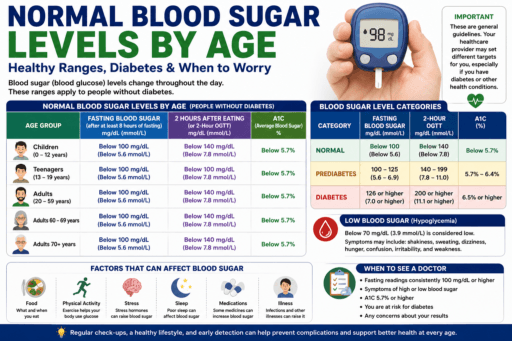
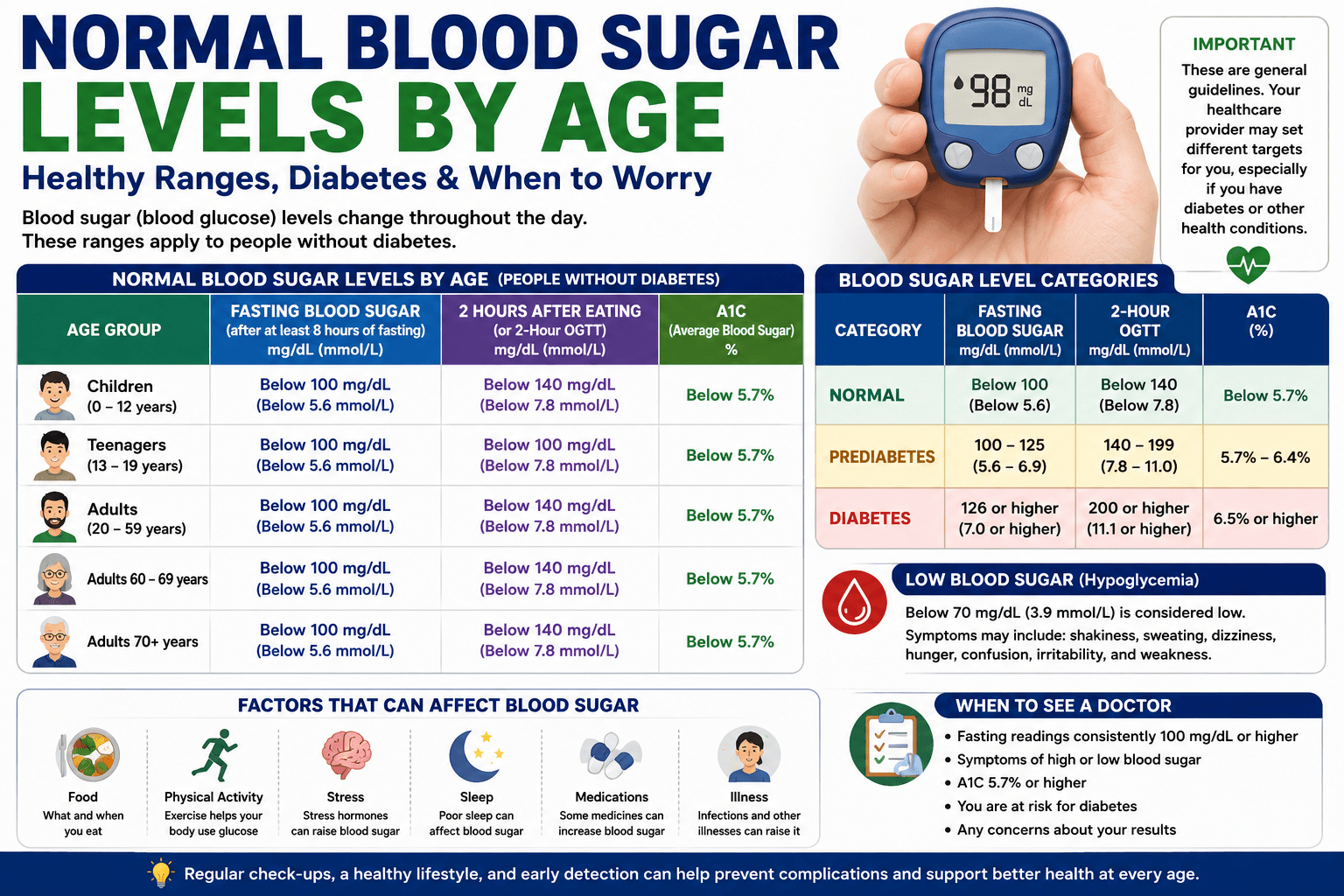

Understanding normal blood sugar levels by age can help you make sense of glucose test results and recognize when further evaluation may be appropriate. Blood sugar, also called blood glucose, naturally changes throughout the day depending on when you eat, exercise, sleep, and other factors.
When it comes to blood sugar levels, people often wonder if there’s a different “normal” range for each age group. But here’s the thing: the standard thresholds for diagnosing diabetes don’t actually change just because someone gets older. That being said, if you already have diabetes – especially if you’re an older adult – your doctor might set individualized targets for your blood sugar levels. This is because what’s considered “normal” can vary from person to person, and your doctor will take into account your specific needs and health status to determine the best targets for you. read to the end of this post to know how to differentiate.
This guide explains normal blood sugar levels by age, fasting and after-meal ranges, diabetes and prediabetes levels, and what different test results can mean.
Note: This information is for learning purposes only. It’s not meant to diagnose or replace advice from a doctor. If you get unusual blood sugar results or have symptoms of high or low blood sugar, talk to a healthcare expert.
What Is a Normal Blood Sugar Level?
A normal blood sugar level depends on when the measurement is taken and which glucose test is being used.
For someone who does not have diabetes, commonly used diagnostic reference points include:
Blood glucose test Normal range/result Prediabetes Diabetes
Fasting blood glucose Below 100 mg/dL 100–125 mg/dL 126 mg/dL or higher
2-hour oral glucose tolerance test (OGTT) Below 140 mg/dL 140–199 mg/dL 200 mg/dL or higher
Random blood glucose No single “normal” diagnostic cutoff — 200 mg/dL or higher with classic symptoms can indicate diabetes
Blood glucose can also be reported in mmol/L. To convert approximately:
70 mg/dL = 3.9 mmol/L
100 mg/dL = 5.6 mmol/L
126 mg/dL = 7.0 mmol/L
140 mg/dL = 7.8 mmol/L
200 mg/dL = 11.1 mmol/L
A diabetes diagnosis is generally confirmed with appropriate testing rather than based on one unexpected result alone, unless the clinical situation clearly meets diagnostic criteria. You can also visit pubmed for more insight
Normal Blood Sugar Levels by Age
When it comes to blood sugar levels, it’s crucial to know that the thresholds for diagnosing diabetes are pretty much the same across the board, whether you’re a kid, a teenager, or a grown-up. This means that doctors use similar guidelines to determine if someone has diabetes, regardless of their age.
Blood Sugar Levels by Age Chart
Age group Typical fasting level considered normal General interpretation
Children Below 100 mg/dL Generally considered normal
Teenagers Below 100 mg/dL Generally considered normal
Adults Below 100 mg/dL Generally considered normal
Adults 60–69 Below 100 mg/dL Generally considered normal
Adults 70+ Below 100 mg/dL Generally considered normal
When it comes to understanding diabetes and prediabetes, there are certain values that doctors use to make a diagnosis. But remember, everyone’s situation is unique, so these values are just a guide. They’re used for people who haven’t already been diagnosed with diabetes, to help figure out if they might be at risk.
Why Doesn’t the Normal Range Simply Increase With Age?
It is common to see online charts claiming that older adults should naturally have much higher “normal” fasting blood sugar. That is an oversimplification.
Age can influence glucose metabolism and the risk of developing diabetes, but age alone does not mean that a fasting glucose of 120 or 130 mg/dL should automatically be considered normal.
If you don’t have diabetes, having a fasting glucose level of 126 mg/dL or higher is a sign that you might have a problem. This is a common cutoff point that labs use to decide if you need more testing. When your glucose level is this high, it’s a good idea to get some follow-up tests to figure out what’s going on.
Normal Fasting Blood Sugar Levels
A fasting blood sugar test measures glucose after you have not eaten for at least eight hours, although water is generally allowed.
For adults and children who are not pregnant:
Below 100 mg/dL (5.6 mmol/L): generally considered normal
100–125 mg/dL (5.6–6.9 mmol/L): consistent with prediabetes
126 mg/dL (7.0 mmol/L) or higher: consistent with diabetes when confirmed appropriately
A single elevated reading does not necessarily establish a diagnosis.
Factors such as illness, stress, medications, sleep, and other circumstances can influence blood glucose.
Normal Blood Sugar After Eating
When you eat, your blood sugar levels usually go up. This happens because carbs in your food get broken down into glucose, which then gets absorbed into your bloodstream.
There is no single universal “normal” home glucose reading that applies to every person at every point after eating.
For diagnostic purposes, a 2-hour oral glucose tolerance test is different from simply checking your blood sugar two hours after a normal meal.
During an OGTT, a person drinks a measured glucose solution and blood glucose is checked after two hours.
The commonly used interpretation is:
Below 140 mg/dL: normal glucose tolerance
140–199 mg/dL: prediabetes
200 mg/dL or higher: diabetes
If you are checking your glucose at home after meals, interpret the result according to your healthcare professional’s recommendations rather than automatically applying OGTT thresholds to every home reading.
Normal Blood Sugar Levels for Children
Kids can get diabetes too, even type 1, so if their blood sugar levels are off, it’s not something to brush off just because of their age.
When it comes to diagnosing diabetes, the levels of glucose in the blood that are used to make a diagnosis are pretty much the same for kids and grown-ups.
A child with symptoms such as:
Excessive thirst
Frequent urination
Unexplained weight loss
Unusual tiredness
Increased hunger
Blurred vision
should be evaluated by a healthcare professional.
If your child’s symptoms come on quickly or they seem really sick, it’s crucial to get them to a doctor right away.
Normal Blood Sugar Levels for Teenagers
Typically, teens who don’t have diabetes use the same glucose threshold levels as grown-ups to diagnose issues.
Hormonal changes during puberty, changes in activity, diet, sleep patterns, and weight can all influence blood glucose and diabetes risk.
A fasting glucose between 100 and 125 mg/dL falls within the prediabetes range and should be discussed with a healthcare professional, particularly if the result is persistent.
Normal Blood Sugar Levels for Adults
For adults without diabetes, a fasting blood glucose below 100 mg/dL is generally considered normal.
A fasting reading of:
100–125 mg/dL is in the prediabetes range.
If your blood sugar level is 126 mg/dL or higher, it may mean you have diabetes, but only if this level is confirmed with more testing.
Other tests, including an A1C test or oral glucose tolerance test, may also be used to evaluate blood sugar.
Normal Blood Sugar Levels for Older Adults
Older adults may have a greater risk of developing type 2 diabetes because insulin sensitivity and glucose regulation can change with age.
But that doesn’t mean we should just accept high fasting glucose as normal for older adults.
For people without diabetes, the usual guidelines for diagnosing the condition still apply.
For people already dealing with diabetes, the targets for glucose levels can be tailored to their specific needs.
Healthcare professionals may consider:
Overall health
Other medical conditions
Medications
Risk of low blood sugar
Functional status
Life expectancy
Ability to manage diabetes treatment safely
Therefore, a “target blood sugar” for a person with diabetes is not necessarily the same as the diagnostic definition of normal blood sugar.
Blood Sugar Levels for People With Diabetes
If you already have diabetes, the question is often not “What is a normal blood sugar level?” but rather “What is my recommended blood sugar target?”
For many nonpregnant adults with diabetes, commonly used treatment targets include:
Before meals: 80–130 mg/dL
About 1–2 hours after beginning a meal: less than 180 mg/dL
These are general targets, not universal requirements. Your healthcare professional may recommend different goals based on your health and treatment plan.
Children, pregnant people, older adults, and people with certain medical conditions may have different individualized targets.
What Is a Normal A1C Level?
The A1C test provides an estimate of average blood glucose over approximately the previous two to three months.
Commonly used A1C categories are:
A1C result Interpretation
Below 5.7% Normal
5.7%–6.4% Prediabetes
6.5% or higher Diabetes when appropriately confirmed
A1C can be affected by certain conditions, including some blood disorders, pregnancy, and conditions that alter red blood cell lifespan. A healthcare professional can determine which test is most appropriate.
What Is Considered Low Blood Sugar?
High blood sugar receives a lot of attention, but low blood sugar can also be dangerous.
For many people with diabetes, a blood glucose level below 70 mg/dL (3.9 mmol/L) is considered low.
Possible symptoms include:
Shaking
Sweating
Hunger
Dizziness
Fast heartbeat
Irritability
Confusion
Difficulty concentrating
Weakness
Severe hypoglycemia is really dangerous and can lead to some very serious problems, like seizures or even losing consciousness. If it’s not treated, it can cause other major complications too.
If you use glucose-lowering medication and frequently experience low blood sugar, speak with your healthcare professional about your treatment plan.
Symptoms of High Blood Sugar
High blood sugar, or hyperglycemia, may cause:
-Increased thirst
-Frequent urination
-Fatigue
-Blurred vision
-Headache
-Increased hunger
-Unexplained weight loss in some cases
Mildly elevated blood sugar may cause few or no obvious symptoms, which is one reason regular screening can be important for people at increased risk of diabetes.
Very high blood sugar accompanied by vomiting, severe weakness, confusion, difficulty breathing, or other serious symptoms requires urgent medical attention.
Why Does Blood Sugar Increase With Age?
Age itself does not make a high glucose reading “normal,” but several factors associated with aging can increase the risk of elevated blood sugar.
These may include:
Reduced insulin sensitivity
Changes in muscle mass
Lower physical activity
Weight gain
Certain medications
Other health conditions
Family history and genetics
Maintaining regular physical activity, eating a balanced diet, maintaining a healthy weight when appropriate, and following recommended screening schedules can help support metabolic health.
Factors That Can Affect Blood Sugar
Your blood sugar can change for many reasons besides diabetes.
-Food
Meals containing carbohydrates can increase blood glucose.
-Physical activity
Exercise generally helps the body use glucose more efficiently, although intense exercise can sometimes produce temporary changes in blood sugar.
-Stress
Physical or emotional stress can affect hormones that influence blood glucose.
-Illness
Infections and other illnesses can temporarily raise blood sugar.
-Medications
Some medicines, including certain steroids, can increase blood glucose.
-Sleep
Poor or insufficient sleep may affect glucose regulation and insulin sensitivity.
-Alcohol
Alcohol can affect blood glucose in different ways depending on how much is consumed, whether food is eaten, and other individual factors.
How to Keep Blood Sugar in a Healthy Range
There is no single diet or lifestyle strategy that works for everyone. However, several evidence-based habits can support healthy blood glucose levels.
Eat a Balanced Diet
Focus on a variety of nutrient-rich foods, including vegetables, fruits, whole grains, lean protein sources, and healthy fats.
Be mindful of how much you’re eating and try to limit foods that are heavily processed and packed with extra sugar or refined carbs.
Stay Physically Active
Regular physical activity can improve insulin sensitivity and help the body use glucose for energy.
If you have a medical condition or have not exercised for a long time, ask your healthcare professional what level of activity is appropriate for you.
Maintain a Healthy Weight When Appropriate
For people who are overweight or have obesity, even modest weight loss can improve blood sugar control and reduce the risk of developing type 2 diabetes.
Get Adequate Sleep
Consistent, sufficient sleep is an important part of overall metabolic health.
Follow Your Treatment Plan
If you have diabetes, take medications as prescribed and monitor your blood glucose according to your healthcare professional’s recommendations.
When Should You Get Your Blood Sugar Checked?
Diabetes screening may be recommended based on factors such as age, weight, family history, blood pressure, previous blood glucose results, and other risk factors.
You should discuss blood glucose testing with a healthcare professional if you:
Have symptoms of diabetes
Have repeatedly elevated glucose readings
Have risk factors for type 2 diabetes
Have been told you have prediabetes
Are taking medication that can affect blood sugar
Are pregnant or planning pregnancy
Frequently Asked Questions About Normal Blood Sugar Levels by Age
What is a normal blood sugar level by age?
For most people, the numbers that show if their blood sugar levels are normal or not don’t really change much as they get older. If you don’t have diabetes, a fasting blood glucose level below 100 mg/dL is usually considered okay for both kids and grown-ups.
Is 100 blood sugar normal?
If your blood sugar levels are around 100 mg/dL after not eating for a while, it’s like a warning sign – you’re almost at the point where you might have prediabetes. This is something you should talk to a doctor or nurse about, especially if it keeps happening. They can help you figure out what’s going on and what you can do to get your blood sugar back under control.
Is 120 blood sugar normal?
The interpretation depends on when the blood was tested. A fasting glucose of 120 mg/dL falls within the prediabetes range. A glucose reading of 120 mg/dL after eating may have a different interpretation.
Is 130 blood sugar normal?
A glucose level of 130 mg/dL cannot be interpreted without knowing when the test was performed. If it is a fasting result, it is above the usual prediabetes range and requires medical follow-up.
Is 140 blood sugar normal?
The timing and type of test really matter here. If you’re looking at the results of a 2-hour Oral Glucose Tolerance Test (OGTT) and it’s 140 mg/dL or higher, that’s considered above the normal range. But, if you’re just checking your blood sugar after a regular meal and it’s 140 mg/dL, it’s not viewed in the same way. The context of the test is important to understand what the results really mean.
What is a normal blood sugar level for a 70-year-old?
For a 70-year-old without diabetes, the usual diagnostic thresholds generally apply. A fasting glucose below 100 mg/dL is generally considered normal. Someone who already has diabetes may have individualized glucose targets.
What is a normal blood sugar level for someone over 80?
For someone over 80 who does not have diabetes, standard diagnostic criteria generally still apply. For people who have diabetes, treatment goals may be individualized based on overall health, medications, and risk of hypoglycemia.
The Bottom Line
Normal blood sugar levels by age are often misunderstood. Age can affect the risk of developing diabetes, but a higher blood glucose level should not automatically be considered normal simply because someone is older.
For people who don’t have diabetes, having a fasting blood glucose level below 100 mg/dL is usually thought of as normal. But if it’s between 100 and 125 mg/dL, that’s considered prediabetes. And if it’s 126 mg/dL or higher, that’s when you’re looking at diabetes, but only if it’s confirmed with the right tests.
The timing of the test matters. Fasting glucose, A1C, an oral glucose tolerance test, and random glucose measurements provide different information.
If your blood sugar levels come back with an unexpected result, don’t just look at an online chart to figure out what it means. Instead, talk to a doctor or a healthcare professional who can help you understand what’s going on. They’ll look at your symptoms, your medical history, the medications you’re taking, and other test results to give you a better idea of what’s happening with your body. This way, you can get a more accurate picture of your health and make informed decisions about what to do next.
Thank you for reading to the end, bookmark myhealthytopics to receive our health updates