
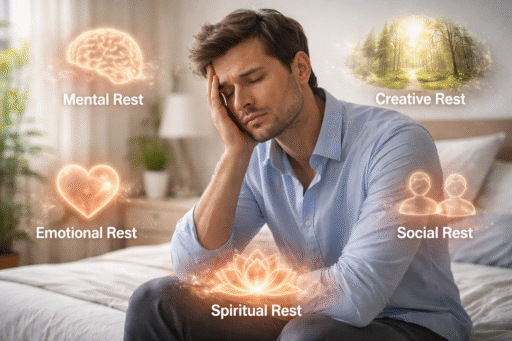
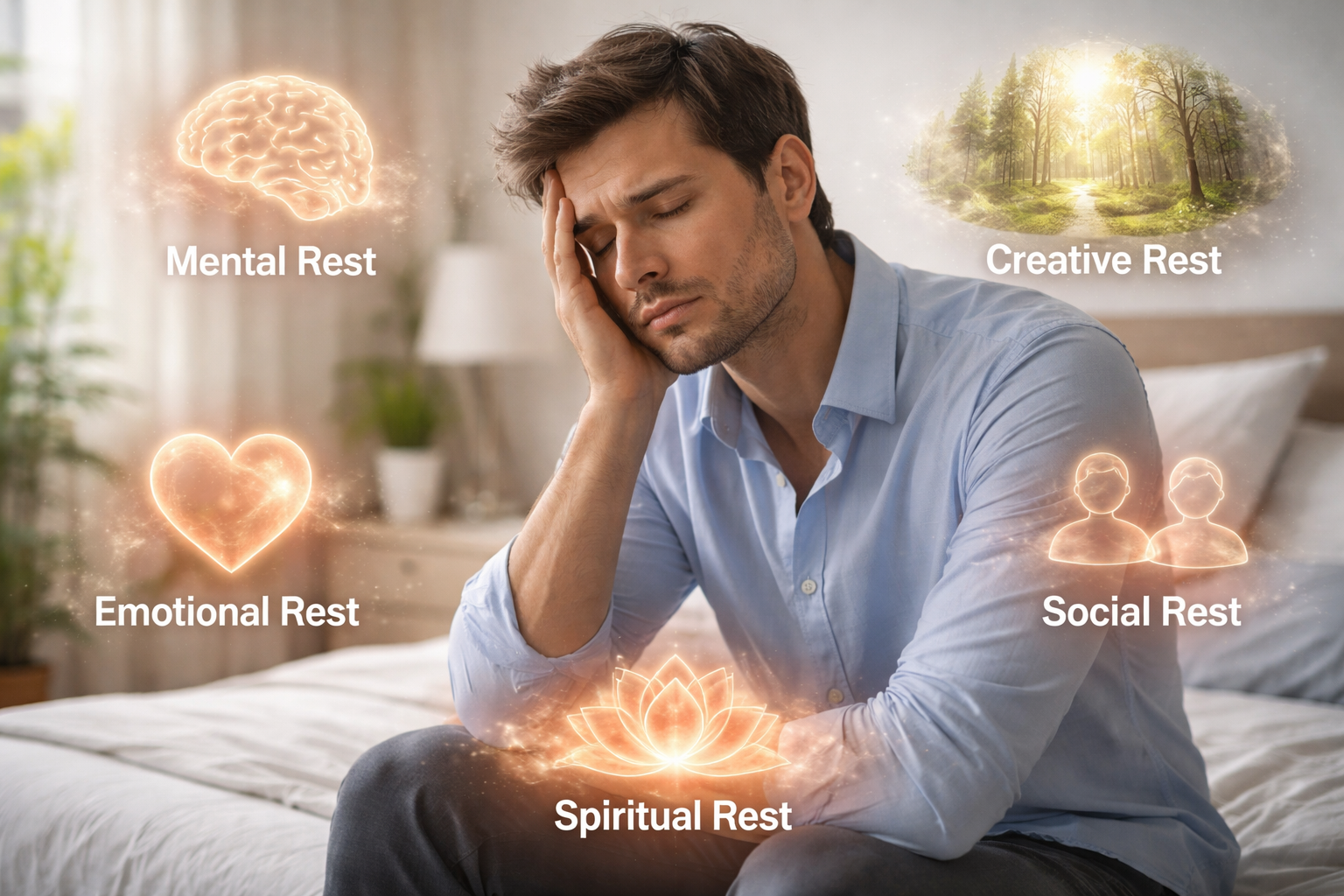

In today’s fast-paced world, many people believe that getting 7–9 hours of sleep is the ultimate solution to fatigue. Yet, countless individuals wake up feeling tired, unfocused, and emotionally drained even after a full night’s sleep. The truth is simple: sleep alone is not enough.
To achieve optimal health, productivity, and mental clarity, you need to understand the concept of the 7 types of rest. This holistic approach to recovery is gaining attention in wellness and healthcare spaces and for good reason.
In this article, we’ll explore why sleep isn’t enough, break down the 7 essential types of rest, and show you how to incorporate them into your daily life.
Why Sleep Alone Doesn’t Fix Fatigue
Sleep primarily addresses physical rest, but fatigue can stem from many other sources mental overload, emotional stress, social burnout, and even sensory overstimulation from screens.
If you:
- Feel exhausted despite sleeping well
- Struggle with focus or creativity
- Experience irritability or burnout
You may be lacking other forms of rest your body and mind require.
The 7 Types of Rest You Need
1. Physical Rest (Passive & Active)
Physical rest includes both sleep and restorative activities.
- Passive rest: Sleeping, napping
- Active rest: Yoga, stretching, massage therapy
Why it matters: Helps repair muscles, improve circulation, and reduce physical fatigue.
2. Mental Rest
Mental rest is about giving your brain a break from constant thinking and decision-making.
Signs you need it:
- Brain fog
- Forgetfulness
- Difficulty concentrating
How to get it:
- Take short breaks during work
- Practice mindfulness or meditation
- Keep a notebook to offload thoughts
3. Sensory Rest
Modern life bombards us with screens, notifications, and noise.
Signs you need it:
- Irritation from light or sound
- Feeling overwhelmed in busy environments
How to get it:
- Reduce screen time
- Close your eyes for a few minutes
- Spend time in quiet, low-stimulation environments
4. Creative Rest
Creative rest allows your mind to recharge its sense of inspiration and wonder.
Who needs it most:
People in problem-solving or creative roles
How to get it:
- Spend time in nature
- Enjoy art, music, or design
- Take breaks from constant output
5. Emotional Rest
Emotional rest means having the space to express your true feelings without pressure.
Signs you need it:
- People-pleasing tendencies
- Emotional exhaustion
- Feeling unheard
How to get it:
- Talk to a trusted friend or therapist
- Set healthy boundaries
- Practice honest self-expression
6. Social Rest
Not all social interactions are equal. Some energize you, while others drain you.
Signs you need it:
- Feeling tired after socializing
- Avoiding interactions
How to get it:
- Spend time with supportive people
- Limit toxic or draining relationships
- Balance alone time with meaningful connections
7. Spiritual Rest
Spiritual rest involves connecting with something greater than yourself whether through religion, purpose, or values.
Benefits:
- Increased sense of peace
- Greater life satisfaction
- Reduced stress
How to get it:
- Meditation or prayer
- Community involvement
- Reflecting on purpose and meaning
How to Know Which Type of Rest You Need
Instead of assuming you just need more sleep, ask yourself:
- Am I physically tired or mentally drained?
- Do I feel emotionally overwhelmed?
- Am I overstimulated or socially exhausted?
Identifying the root cause helps you choose the right type of rest.
Practical Tips to Incorporate Rest Into Your Daily Life
- Schedule short breaks throughout your day
- Create a screen-free evening routine
- Prioritize self-care without guilt
- Spend time in nature regularly
- Set boundaries at work and in relationships
The Link Between Rest and Long-Term Health
Chronic lack of proper rest can contribute to:
- Burnout
- Anxiety and depression
- Reduced productivity
- Weakened immune system
On the other hand, balanced rest improves overall well-being, focus, and performance making it essential for both personal and professional success.
Final Thoughts
Sleep is important, but it’s only one piece of the puzzle. By understanding and incorporating the 7 types of rest, you can address the deeper causes of fatigue and unlock a more energized, balanced life.
If you’ve been feeling constantly tired despite getting enough sleep, it may be time to rethink your approach to rest and give your body and mind what they truly need.