

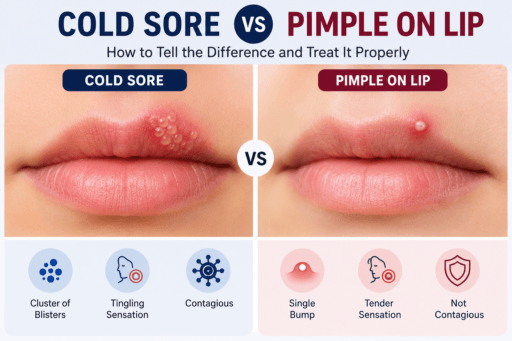

A sore spot near the mouth can change within hours, so early observation matters. In a cold sore vs pimple on lip comparison, the best clues are not simply redness or swelling. Notice where the bump sits, whether tingling came first, and whether it develops into a head or a cluster of tiny blisters. Cold sores come from the herpes simplex virus, while pimples begin inside blocked, inflamed hair follicles. They need different care, and squeezing either one usually makes matters worse.
Start With Location, Sensation, and Timing
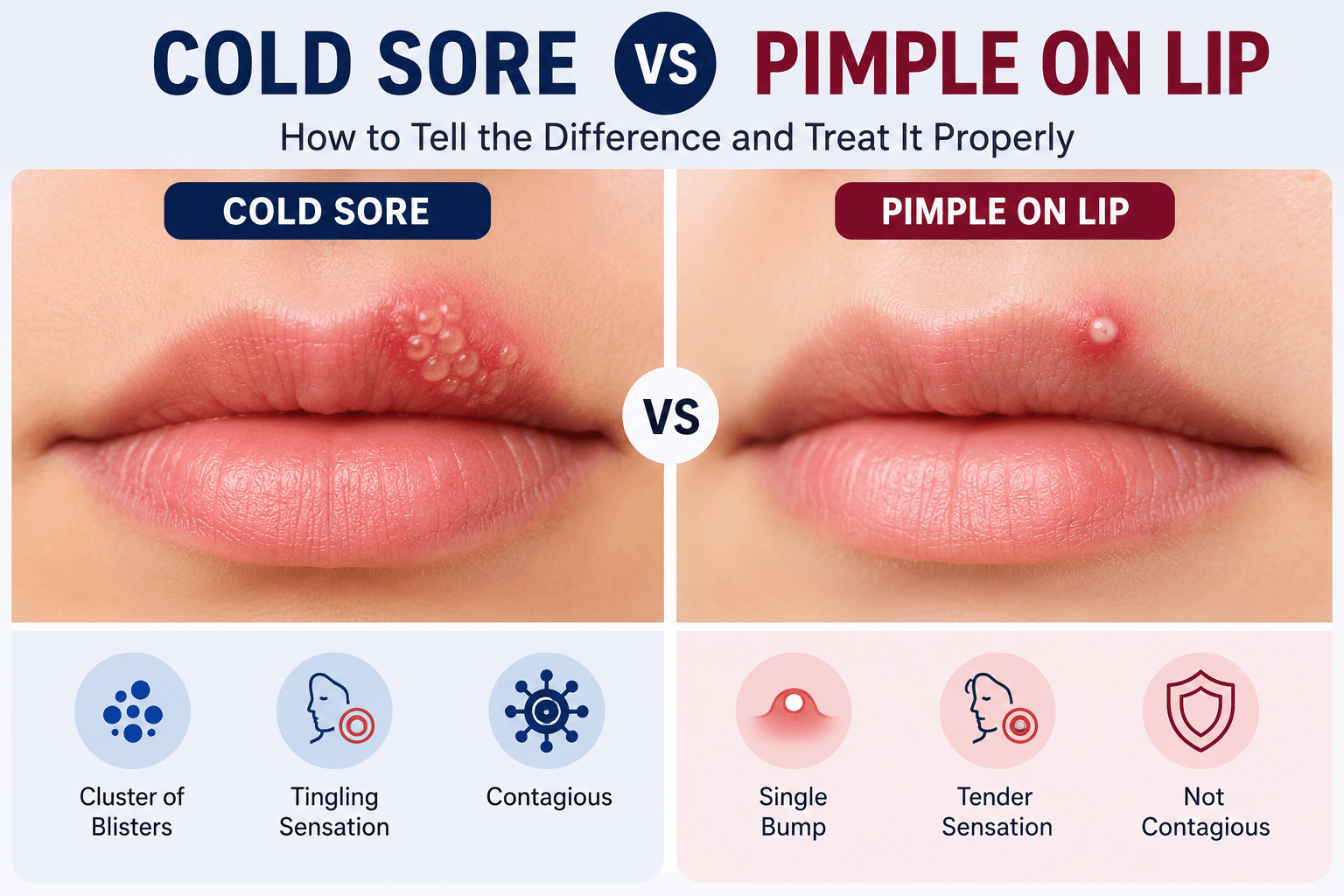
Usually, a pimple would grow on the skin next to the lip, where there are hair follicles and oil glands. It may feel tender and can develop a white or yellow centre. A cold sore often starts along the lip border or nearby skin. Before anything obvious appears, the area may burn, itch, tingle, or feel unusually sensitive.
That warning phase is one of the most useful cold sore symptoms. Within a day or so, several closely packed, fluid-filled blisters may appear. They can break, weep, crust, and then heal. A pimple tends to remain a single raised spot. Cold sores are contagious. Ordinary acne is not.
| Feature | Cold sore | Pimple |
| Early feeling | Tingling, itching, or burning | Tenderness or pressure |
| Appearance | Cluster of small blisters | Single bump, sometimes with a whitehead |
| Usual position | Lip edge or nearby skin | Hair-bearing skin around the mouth |
| Spread to others | Yes | No |
| Course | Blisters, crust, healing | Swelling, possible drainage, flattening |
What Is Happening Under the Skin?
Cold sores and pimples may look similar on the surface, but they develop through completely different biological processes. One begins with viral activity along a nerve pathway, while the other starts with blockage and inflammation inside a hair follicle. Understanding that difference makes the next signs much easier to interpret.
Cold Sores Begin With a Reactivated Virus
Most oral cold sores are linked to herpes simplex virus type 1. After infection, the virus remains inactive in nearby nerve tissue. It may reactivate if the person is ill, under emotional stress, tired, exposed to strong sunlight, going through hormonal changes or has a weakened immune system.
Viral activity injures surface cells, producing delicate blisters filled with clear fluid. This explains why a lip pimple vs cold sore judgment becomes easier once several blisters appear together. Touching the area and then touching the eyes can also transfer infection, so handwashing matters.
Pimples Start Inside a Follicle
Oil, dead skin cells, and bacteria can collect inside a follicle near the mouth. Friction from masks, lip products on surrounding skin, shaving, sweating, and repeated touching may contribute to pimple on lip causes.
A true pimple does not form on the pink, hairless part of the lip because that tissue has no hair follicles. A bump directly on that surface may be a cold sore, irritation, a cyst, or another lesion rather than acne.
Treatment Depends on the Cause
For a suspected cold sore, begin care during the tingling stage when possible. Antiviral creams may offer modest benefit when used early. Severe, frequent, widespread, or long-lasting outbreaks may need prescription oral antiviral medicine. A cool compress and plain petroleum jelly can reduce cracking and discomfort.
Avoid kissing, oral sex, and sharing cups, razors, towels, cosmetics, or lip balm until the area heals. Apply medicine with clean hands or a cotton swab. Cold sores often clear within one to two weeks, although timing varies.
For a pimple, use a warm compress and leave the bump alone. Do not pop it. Pressure can increase swelling and leave discoloration or a scar. Acne products containing benzoyl peroxide or salicylic acid may help the surrounding skin, but keep them off the moist lip surface.
Mistakes That Blur the Difference
The hardest herpes vs pimple cases are often lesions that have already been squeezed, covered with makeup, or treated with several products. This changes the surface and removes useful clues.
Watch for:
- Repeated blisters in the same place
- Painful sores close to an eye
- Fever, swollen glands, or several mouth lesions
- A bump that bleeds or does not heal
- Rapid swelling after a cosmetic or medicine
- Frequent outbreaks or reduced immunity
A clinician may diagnose the lesion by examining it. When the appearance remains uncertain, a swab from a fresh blister can help with lip bump identification. Seek urgent care for eye pain, light sensitivity, blurred vision, or a spreading rash.
Final Perspective
A careful cold sore vs pimple on lip assessment starts before the bump fully develops. Tingling followed by grouped blisters suggests a cold sore, while a tender, isolated bump on hair-bearing skin points more toward acne. Neither should be picked. My Healthy Topics encourages readers to notice timing, texture, location, and recurrence rather than relying on one photograph. When a lip lesion is painful, persistent, unusual, or close to the eye, consider speaking with a primary care physician before starting a new treatment regimen.
FAQ’s
- How can I tell if I have a cold sore or a pimple on my lip?
A cold sore usually starts with tingling or burning and develops into a cluster of small blisters. A pimple is typically a single red bump with or without a whitehead that forms on the skin around the lip. - Can I pop a pimple or cold sore on my lip?
No. Popping either a pimple or a cold sore can increase irritation, delay healing, and raise the risk of infection or scarring. - Are cold sores contagious while pimples are not?
Yes. Cold sores are caused by the herpes simplex virus and can spread through close contact. Pimples are not contagious. - What is the best treatment for a cold sore on the lip?
Cold sores often respond best to antiviral medications started early. Keeping the area clean and avoiding direct contact with others can also help prevent spreading the virus. - When should I see a doctor for a sore or bump on my lip?
Seek medical advice if the sore is very painful, lasts longer than two weeks, keeps coming back, spreads near the eyes, or shows signs of infection.