
Women’s nutritional needs change throughout life. The foods that support a teenager going through puberty may not be exactly the same foods a woman needs during pregnancy, after menopause, or later in life. But the basic idea of healthy eating remains surprisingly simple: eat a variety of whole and minimally processed foods, get enough protein and fiber, and make sure important vitamins and minerals are not missing from your diet.
There is no single food that can provide everything the body needs. Instead, a combination of vegetables, fruits, whole grains, beans, fish, eggs, dairy or fortified alternatives, nuts, seeds, and healthy fats can form the foundation of a nutritious eating pattern.
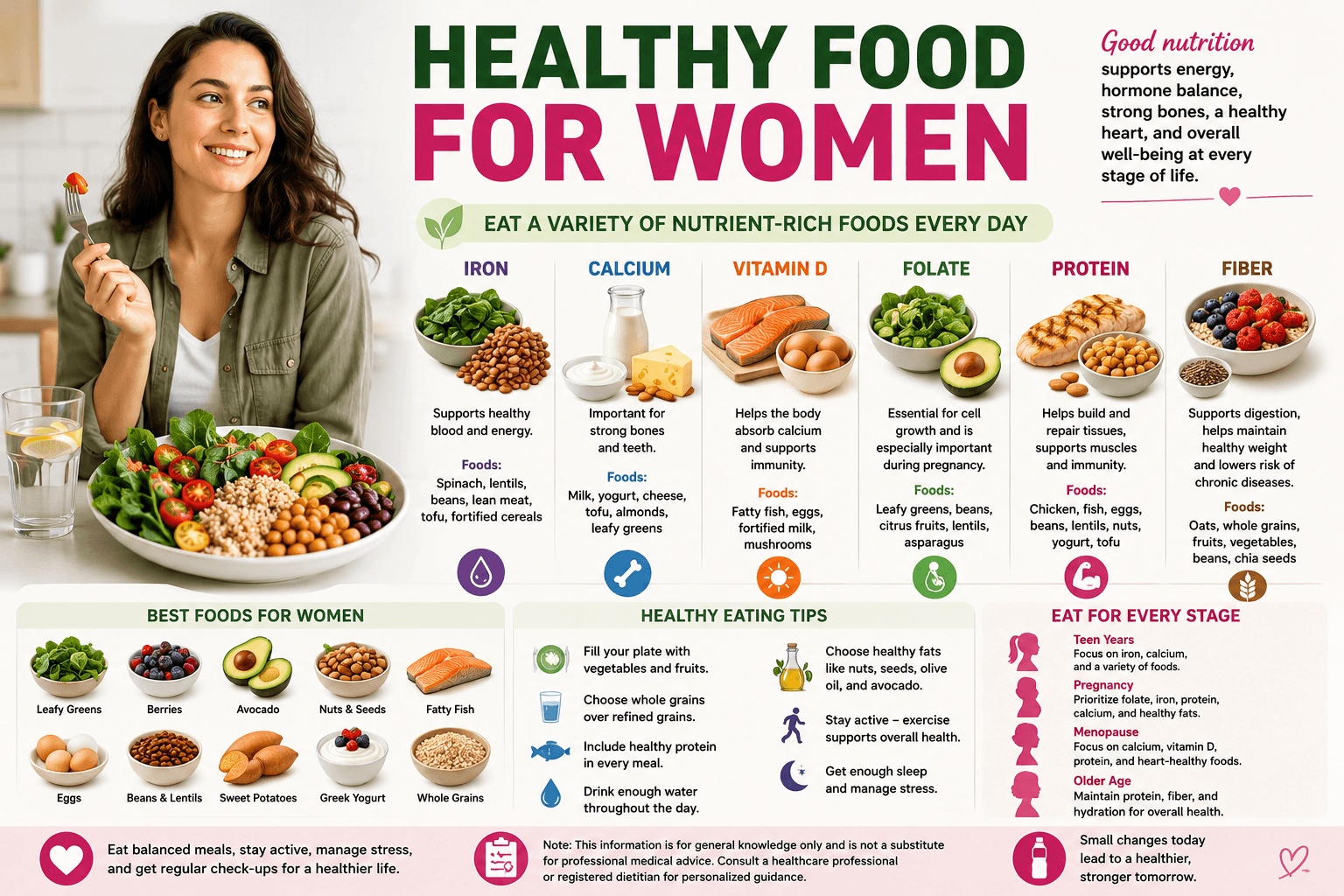
For women, it’s really important to get enough of certain nutrients like iron, calcium, and vitamin D. Also, folate, protein, and fiber are crucial. If you know where to find these nutrients, eating healthy can be a lot simpler. You can get them from various food sources, making it easier to plan your meals and stay healthy.
Medical disclaimer: This article is for general educational purposes and is not a substitute for individualized medical advice, diagnosis, or treatment. Nutritional needs vary from person to person. Pregnant or breastfeeding women and people with medical conditions should discuss their dietary needs with a qualified healthcare professional.
Why women need a nutrient-rich diet
Food is more than just something that gives us energy. Our body uses the good things in food to make us strong, keep our muscles and bones healthy, and help our blood cells work properly. It also helps our body fight off sickness and do all the things it needs to do every day.
Women’s nutritional needs can also be influenced by menstruation, pregnancy, breastfeeding, and menopause. For example, women who have menstrual periods can lose iron through blood loss, while pregnancy increases the need for several nutrients. Later in life, maintaining adequate calcium, vitamin D, and protein becomes increasingly important for bone and muscle health.
Eating a healthy diet is not just about cutting calories to lose weight. Even if you’re not eating a lot, you can still be missing out on important nutrients that your body needs to function properly.
Start with vegetables and fruit
If you’re trying to improve your diet, adding more vegetables and fruit is one of the simplest places to start.
Leafy greens such as spinach, kale, and collard greens provide fiber, folate, vitamin K, and other nutrients. Broccoli, carrots, peppers, tomatoes, and sweet potatoes can add even more variety. Fruits such as berries, oranges, apples, kiwi, and bananas provide fiber and a range of vitamins and naturally occurring plant compounds.
You don’t have to spend a lot of money on fancy fruits and vegetables to eat healthy. Frozen options can be just as good for you and are really convenient, especially when you can’t find fresh produce.
Making veggies a regular part of your meals, like lunch and dinner, is a good idea. Also, having fruits on hand for snacks is a great way to go.
Iron is especially important for many women
Iron-rich foods for women deserve particular attention during the reproductive years. Iron is needed to make hemoglobin, the protein in red blood cells responsible for carrying oxygen around the body.
Lean meat and seafood are good sources of iron, but women who eat little or no meat have plenty of plant-based options. Lentils, beans, tofu, spinach, and iron-fortified cereals can all contribute to iron intake.
Pairing plant sources of iron with foods rich in vitamin C may help the body absorb more of that iron. A lentil salad with tomatoes and bell peppers, for instance, is an easy combination.
If you’re someone who gets really heavy periods, you might be at a higher risk of not having enough iron in your body. Now, if you’re always feeling tired, weak, dizzy, or like you can’t catch your breath, don’t just think you need to take some iron pills. You should really talk to a doctor or a healthcare professional to figure out if you’re actually low on iron and what’s causing it. They can help you get to the bottom of it and make sure you’re getting the right treatment. It’s not just about taking supplements, it’s about understanding what’s going on with your body and finding the best solution.
Calcium and vitamin D matter throughout adulthood
It’s a good idea to start thinking about keeping your bones healthy well before any issues come up.
Calcium is needed to maintain strong bones and teeth, while vitamin D helps the body absorb calcium. Dairy products such as milk, yogurt, and cheese can provide calcium, as can calcium-fortified plant beverages and calcium-set tofu. Sardines and some other fish eaten with their bones are also useful sources.
Vitamin D is not found in a lot of foods, but some things like fatty fish and egg yolks have it. We can also get it from foods that have been fortified with vitamin D.
As women approach menopause, their bone health becomes a major concern. This is because the changes in estrogen levels during this time can cause bones to lose density faster. While a healthy diet is crucial, it’s not the only factor – exercise also plays a significant role in keeping bones strong. Specifically, weight-bearing and resistance exercises can help maintain bone strength, making them an essential part of a woman’s health routine during this time.
Don’t overlook protein
Protein is sometimes associated primarily with athletes, but it is important for everyone. It helps maintain muscles and supports the repair and maintenance of tissues.
Women can get protein from many different foods, including eggs, fish, poultry, yogurt, cottage cheese, beans, lentils, tofu, tempeh, nuts, and seeds.
As women get older, it’s really important to keep their muscle mass from decreasing. One way to do this is by eating protein throughout the day, instead of having most of it in one big meal. This approach can help make sure they’re getting enough protein in their diet.
Whole grains can make meals more satisfying
White bread, regular pasta, and other refined grains aren’t necessarily “bad,” but choosing whole grains more often can increase fiber and nutrient intake.
Oatmeal, brown rice, quinoa, barley, whole-wheat bread, and whole-grain pasta are examples of foods that can fit into a healthy diet for women.
Fiber is particularly useful for digestive health and can help with regular bowel movements. It is also found in beans, vegetables, fruit, nuts, and seeds.
If you’re not used to eating much fiber, increase your intake gradually. A sudden change can cause bloating and gas, which may make it harder to stick with the healthier habit.
Healthy fats are part of a balanced diet
Eating healthy doesn’t mean eliminating fat. The body needs dietary fat, and some types are more beneficial than others.
Avocados, walnuts, almonds, chia seeds, flaxseeds, olive oil, and fatty fish provide unsaturated fats. Fatty fish such as salmon, sardines, and trout also contain omega-3 fatty acids.
These foods can be nutritious additions to meals, although portion sizes still matter because fats are relatively high in calories.
What women eat during menopause may need some adjustment
Menopause doesn’t require a special diet, but it can be a good time to reassess eating habits.
Changes in hormones, muscle mass, body composition, and activity levels can affect health during and after menopause. A diet that includes adequate protein, vegetables, fruit, whole grains, calcium-rich foods, and healthy fats can support overall nutrition.
Some women also notice changes in appetite or body weight during this period. Rather than turning to severe calorie restriction, focusing on nutrient-dense foods and regular physical activity is generally a more sustainable approach.
If menopause symptoms are significantly affecting your quality of life, discuss them with a healthcare professional rather than relying on dietary supplements or restrictive diets marketed as hormone “balancing” solutions.
Healthy eating doesn’t have to be perfect
One of the biggest misconceptions about nutrition is that healthy eating means never eating dessert, fast food, or your favorite comfort foods.
It doesn’t.
A healthy eating pattern is determined by what you do consistently, not by one meal. Having pizza with friends doesn’t undo an otherwise nutritious diet, just as eating one salad doesn’t make an unhealthy eating pattern healthy.
Instead of trying to follow a perfect diet, look for small changes that are realistic. Drink water more often, add vegetables to meals, choose whole grains when you can, include a source of protein, and keep nutritious snacks within easy reach.
These habits may seem ordinary, but ordinary habits repeated over time are often more useful than dramatic diets that are difficult to maintain.
A simple way to build a healthy meal
You don’t need to calculate every nutrient on your plate.
Think about combining a few basic components: vegetables or fruit, a protein source, a whole grain or other carbohydrate, and a source of healthy fat.
For breakfast, oatmeal with berries, walnuts, and plain yogurt provides a combination of fiber, protein, and healthy fats. Lunch might be a salad containing chickpeas, vegetables, avocado, and whole-grain bread. Dinner could be salmon with roasted vegetables and brown rice.
If you prefer plant-based meals, lentils, beans, tofu, and tempeh can provide protein while vegetables and whole grains round out the meal.
The exact foods don’t matter as much as the overall pattern.
Healthy food for women during pregnancy
Pregnancy is one time when nutritional needs deserve particular attention. The need for certain nutrients, including folate and iron, increases during pregnancy.
Women who are pregnant or planning to become pregnant should speak with their healthcare provider about prenatal vitamins and folic acid. Food safety also becomes especially important, including choosing lower-mercury fish and avoiding foods that carry an increased risk of foodborne illness.
Pregnancy is not the right time for restrictive weight-loss diets unless specifically recommended and supervised by a healthcare professional.
When supplements may be appropriate
A nutritious diet is the best starting point, but some women may need supplements because of pregnancy, dietary restrictions, a diagnosed deficiency, certain medical conditions, or other circumstances.
That doesn’t mean more supplements are better. Taking large doses of vitamins or minerals without a demonstrated need can sometimes cause harm or interfere with medications.
If you’re considering an iron, vitamin D, calcium, or other supplement, discuss it with a healthcare professional, particularly if you take prescription medications or have an underlying health condition.
Frequently Asked Questions
What are the best healthy foods for women?
There isn’t one best food. A varied diet containing vegetables, fruits, whole grains, beans, fish, eggs, lean proteins, nuts, seeds, and healthy fats can provide a broad range of important nutrients.
What foods are good for women’s energy?
Foods containing complex carbohydrates, protein, iron, and other nutrients can support normal energy metabolism. Whole grains, beans, eggs, fish, vegetables, fruit, and nuts are examples of nutritious choices.
Persistent or unexplained fatigue should not automatically be blamed on diet. Conditions such as anemia, thyroid disorders, sleep problems, and other health issues can also cause fatigue.
What are good iron-rich foods for women?
Lean meat, seafood, lentils, beans, tofu, spinach, and fortified cereals are useful sources. Women with heavy periods may be particularly vulnerable to iron deficiency.
What foods are good for women’s bones?
Calcium-rich foods such as yogurt, milk, fortified plant beverages, calcium-set tofu, and certain fish can contribute to bone health. Vitamin D is also important for calcium absorption.
What should women eat after menopause?
A balanced diet with adequate protein, vegetables, fruits, whole grains, calcium-rich foods, and healthy fats can support health after menopause. Regular physical activity, particularly resistance and weight-bearing exercise, is also important for maintaining muscle and bone strength.
The Bottom Line
The best healthy food for women isn’t a trendy ingredient or an expensive supplement. It’s a varied diet built around nutritious foods that provide the body with the nutrients it needs.
Pay particular attention to iron, calcium, vitamin D, folate, protein, and fiber, while continuing to eat a broad selection of vegetables, fruits, whole grains, legumes, fish, and other protein sources.
Most importantly, healthy eating should be realistic. You don’t have to completely change your diet overnight. Small improvements that you can maintain for months and years are more valuable than a restrictive plan you can follow for only a few weeks.
If you are pregnant, breastfeeding, experiencing heavy menstrual bleeding, have symptoms of a nutritional deficiency, or have a medical condition that affects your diet, seek personalized advice from a healthcare professional or registered dietitian.