

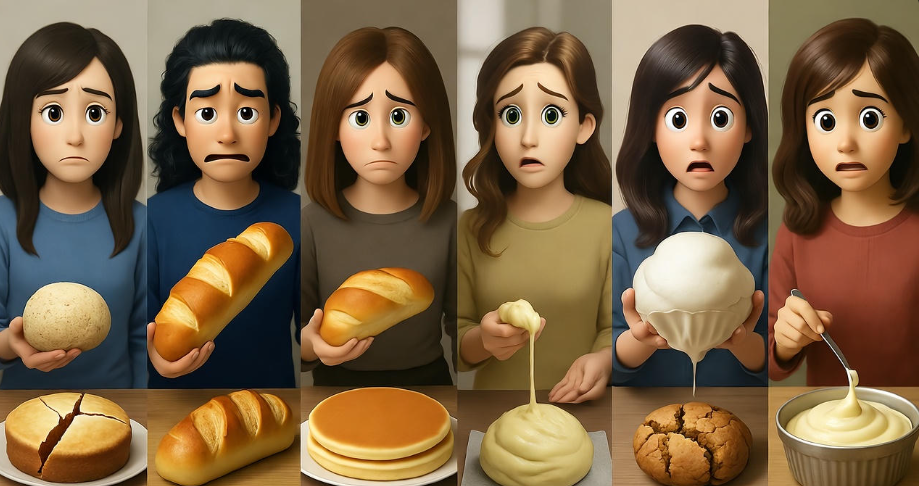

Let’s be honest — baking looks easy when you see those perfect cakes and cookies online. But when you actually get in the kitchen, things don’t always turn out that way. The cake sinks, the cookies spread too much, or the bread turns out dense instead of fluffy. We’ve all been there!
The truth is, baking is a science — one small mistake can make a big difference. But the good news? Every problem has a fix. So today, let’s go over 7 common baking mistakes and how you can fix them once and for all.
1. Measuring Ingredients Incorrectly 🧁
This is probably the biggest reason why baked goods fail. When you don’t measure ingredients correctly, the whole recipe balance goes off.
For example, adding too much flour can make your cake dry, while using too little sugar can make it bland. Even using different cup sizes can throw things off.
How to fix it:
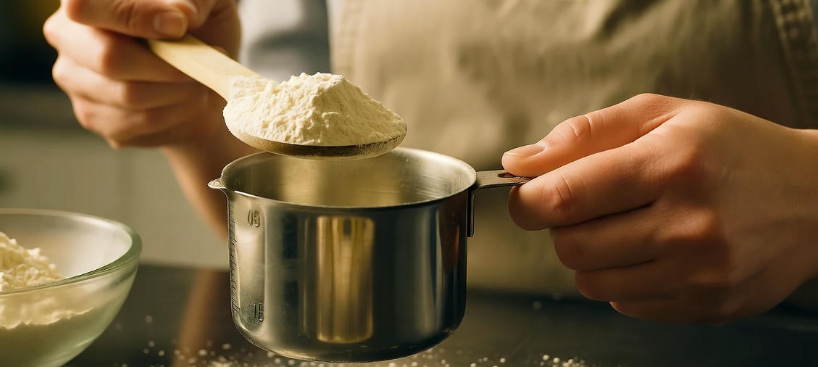
Always use proper measuring cups for dry and liquid ingredients. For flour, spoon it into the cup and level it off — don’t scoop directly from the bag (that packs in too much flour). A kitchen scale is even better — it gives precise results every time.
| Ingredient | Common Mistake | Correct Method |
|---|---|---|
| Flour | Scooping directly with the cup | Spoon & level off |
| Sugar | Packed tightly | Fill loosely |
| Butter | Guessing by eye | Use weight or stick markings |
| Milk/Water | Using dry measuring cups | Use liquid measuring cup |
2. Overmixing the Batter 🍪
Ever wondered why your muffins or cupcakes come out tough or rubbery? That’s usually because the batter was overmixed. When you mix too much, you develop the gluten in the flour, which makes the final product chewy instead of soft and fluffy.
How to fix it:
Mix just until the ingredients are combined — once you stop seeing streaks of flour, stop mixing! If you’re using an electric mixer, keep it on a low speed. Remember, less is more here.
A good rule of thumb:
👉 Mix cake batters lightly.
👉 Mix cookie doughs only till combined.
👉 Mix bread doughs well (they actually need gluten).
3. Opening the Oven Too Early 🔥
We’ve all done it. You’re excited to see how your cake is rising… so you open the oven door to take a peek. But when you do, the cake collapses right in front of your eyes.
Why? Because sudden temperature changes make the air inside escape too fast, and your cake can’t hold its shape anymore.
How to fix it:
Avoid opening the oven for the first 20–30 minutes of baking. If you really need to check, use the oven light instead of opening the door. Once you reach the recommended baking time, test with a toothpick — if it comes out clean, it’s done!
4. Not Preheating the Oven 🍞
This one seems small, but it’s actually very important. When you put your batter in a cold oven, it doesn’t rise properly. Instead of getting a nice fluffy texture, you get dense or uneven results.
How to fix it:
Always preheat your oven for at least 10–15 minutes before baking. Most ovens have an indicator light that turns off when the set temperature is reached.
Here’s a quick temperature guide to help you out:
| Type of Bake | Temperature (°C) | Temperature (°F) |
|---|---|---|
| Cakes & Cupcakes | 170–180°C | 340–360°F |
| Cookies | 175°C | 350°F |
| Bread | 190–200°C | 375–400°F |
| Pastries | 200–220°C | 400–425°F |
5. Using Ingredients at the Wrong Temperature 🧈
If you’ve ever mixed cold butter into your cake batter and wondered why it turned out uneven — this one’s for you. Temperature matters more than you think in baking.
Cold butter doesn’t cream properly with sugar, and cold eggs can make the batter curdle. On the other hand, warm butter can make cookies spread too much.
How to fix it:
Bring ingredients like butter, eggs, and milk to room temperature before baking. For most recipes, this helps everything blend smoothly.
Here’s a little trick:
If you forgot to take the butter out of the fridge — cut it into small cubes and leave it for 10–15 minutes. Or, microwave it for just 5–10 seconds (not more!).
6. Ignoring the Cooling Time ⏰
You’ve baked a perfect cake, and you’re dying to taste it… but if you cut it too soon, you’ll ruin the texture. Cooling is actually part of the baking process.
When a cake or cookie cools, the structure sets and the flavors develop. If you rush it, you’ll get crumbled slices and soggy textures.
How to fix it:
Let your baked goods cool in the pan for 10–15 minutes, then transfer them to a wire rack to cool completely. For cookies, wait 5 minutes before moving them.
Patience really does pay off here. 🍪
7. Not Following the Recipe Properly 📜
This might sound obvious, but skipping small steps or changing ingredient amounts can easily ruin a recipe. Baking isn’t like cooking — you can’t just “eyeball” it.
How to fix it:
Read the entire recipe before you start. Make sure you understand each step and prepare all ingredients in advance (this is called mise en place in baking).
Also, try not to make substitutions unless you’re sure they’ll work — for example, using oil instead of butter can change the texture completely.
| Common Substitution | Result |
|---|---|
| Oil for butter | More moist, less flavor |
| Honey for sugar | Denser texture |
| All-purpose flour for cake flour | Heavier cake |
| Skipping eggs | Dry, crumbly texture |
Bonus Tip: Always Check Expiry Dates! 🧂
Old baking powder, baking soda, or yeast can ruin even the best recipe. These ingredients lose their strength over time, which means your cake might not rise at all.
Quick test:
Mix a spoon of baking powder with hot water. If it bubbles, it’s good to use. If not, toss it.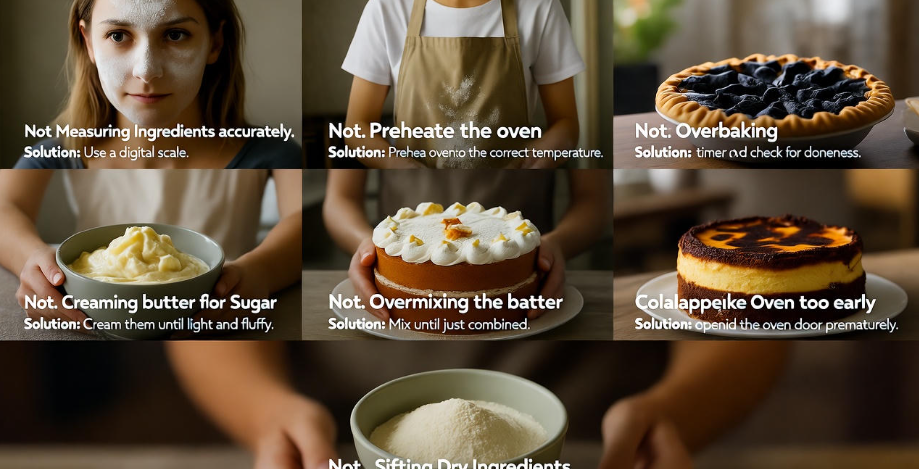
Common Baking Problems and Quick Fixes Table 🍰
| Problem | Likely Cause | Quick Fix |
|---|---|---|
| Cake sank in the middle | Opened oven too early or underbaked | Don’t open door early, bake a few minutes longer |
| Cookies spread too much | Butter too warm | Chill dough before baking |
| Bread too dense | Not enough kneading or proofing | Let dough rise properly |
| Cupcakes dry | Overbaked or too much flour | Bake shorter time, measure carefully |
| Muffins cracked on top | Oven too hot | Lower temperature slightly |
FAQs About Baking Mistakes 🧁
Q1: Why does my cake crack on top?
This usually happens when the oven is too hot or the pan is placed too high. Lower the temperature slightly and bake in the center rack.
Q2: My cookies are flat — what did I do wrong?
Most likely, your butter was too soft or the dough wasn’t chilled. Try chilling the dough for at least 20–30 minutes before baking.
Q3: Can I use salted butter instead of unsalted?
Yes, but reduce the added salt in the recipe. Salted butter can change the flavor slightly.
Q4: My cupcakes always stick to the liners — how do I prevent that?
Let them cool completely before removing, and use good-quality liners. You can also lightly spray them with cooking oil before filling.
Q5: How can I make my cake more moist?
Use room-temperature ingredients, don’t overbake, and add a small spoon of oil or yogurt for extra moisture.
Final Thoughts 🌸
Baking doesn’t have to be stressful — it’s all about practice, patience, and understanding how ingredients work together. Once you start noticing these little details, your results will dramatically improve.
And remember: even if something doesn’t turn out perfect, it’s still homemade — and that’s something to be proud of ❤️
So next time you bake, keep these simple tips in mind. You’ll thank yourself when that first bite tastes just right.







AAA999bet is where the real action is. I love the variety of games and the payouts are pretty sweet. Definitely worth a look at aaa999bet.