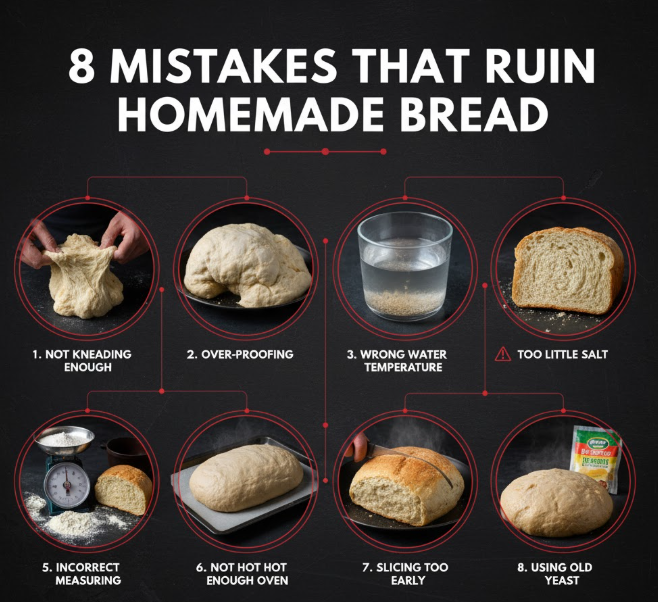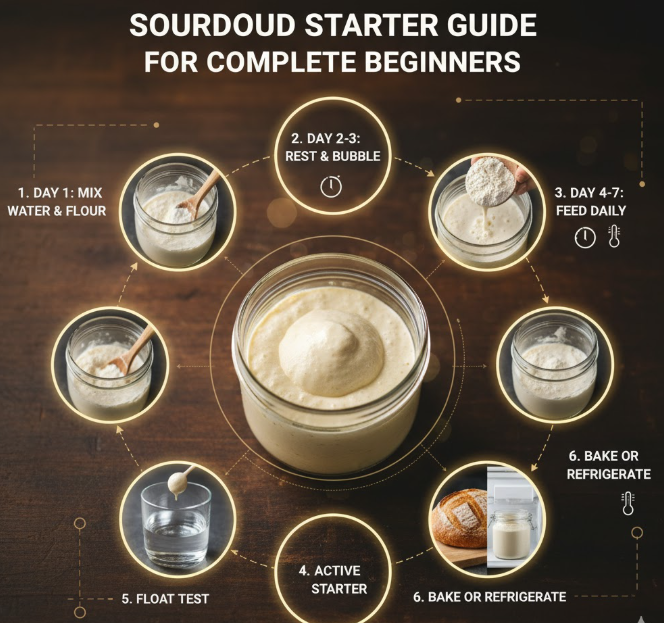



There’s something almost miraculous about biting into a croissant perfectly made. How it shatters into a thousand buttery flakes, how its deeply golden-brown surface crackles ever so slightly, how it smells of nothing but fresh-baked (breaded) butter and yeast—it is pure heaven. For years, the idea of making homemade croissants seemed ridiculous — not just difficult for the home cook to pull off, but something only a professional baker in little Parisian shop has the skill to perfect. But here’s the truth: You can most definitely make croissants that rival your favorite bakery from your kitchen.
Yes, you do need time and patience for croissants. Yes, there are particular moves you should make. But after you learn the process and practice a couple of times, you can be producing glistening, flaky golden croissants that will give anything in Paris a run for its money. This guide will tell you everything you need to know, from choosing a butter and mastering the famous lamination technique that creates those lovely layers.
Whether you’re inexperienced or you have baked cupcakes before, this guide is designed to take you through the whole process step by step. Key to the croissant’s flakiness, common mistakes and professional tips used by French bakers every day. By the time you’re finished, you’ll have everything you need to bake croissants that will delight everyone who gets a bite.
Why Homemade Croissants Are Better Than Store-Bought
Tote bags keep frozen croissants in grocery stores by the dozens, all of them promising convenience. Pop in the oven, wait fifteen minutes and you’re ready to go. But those mass-produced pastries are no match for what you’ll make from scratch. Store-bought croissants usually contain vegetable oil or margarine, rather than real butter, so they don’t last as long — and lack that deliciously rich taste.
When you try croissants yourself, it’s up to you what the ingredients will be. You select the good imported butter, with that high fat content. You choose how brown you’d like to get them. You make pastries without preservatives, artificial flavors or shortcuts that can impact the finished product’s texture. And the difference isn’t subtle—homemade croissants are more flavorful, better textured, and include that satisfying shatter that can only be achieved through proper lamination (the act of covering or lining with a thin layer.)
It’s just satisfying — and not just in the taste itself. By making croissants, you learn patience, precision and how to handle dough. Each step is built on the one before, and by the time you pull that first batch from the oven, you’ll know a sense of accomplishment no store-bought pastry can match.
The Building Blocks Every French Baker Knows
Good croissants begin with good ingredients. French bakers set high standards for what they place in their pastries, and for good reason. Each component has its own job in achieving that ideal texture and taste.
Flour: Easy all purpose or bread flour ideally protein level 11-13%. This provides your dough with enough form to be able to roll and fold it without falling apart. Type 55 flour is often used in France, and type one flour is recommended if using Australian flour bag ratings, however plain or standard bread making flour can also be used.
Butter: This is an area where you can have no compromise. Use European-style butter at least 82 percent butterfat. Brands like Kerrygold, Plugrá or any French butter are perfect. A higher butterfat content will have less water, which will prevent your layers from turning sodden. The butter should be cold, but pliable to work with.
Yeast: It can be made with active dry yeast and instant yeast. Fresh yeast is classic in France, but instant yeast is easier for home bakers. Don’t skimp on the yeast — it’s what forms those air pockets that make croissants light and airy.
Milk and Water: A mix of the two hydrates best. Milk contributes richness, plus it has a browning effect; water helps develop the gluten structure.
Sugar and Salt: Sugar is to feed the yeast, as well as add a bit of sweetness. Salt regulates yeast activity and flavors. They’re both critical for a balanced flavor.
Instruments Making it a Lot Easier
Sure, it’s possible to produce croissants with nothing more than a rolling pin and willpower, but the right tools do make everything glide along a bit more smoothly.
There’s not much variation among fluted-edge French-style without-handles pins, but some are heavier — which is desirable in a rolling pin, since it allows for greater control when rolling out butter, dough and the like. A bench scraper allows you to manage sticky dough and helps keep your work surface tidy. A ruler or tape measure ensures the size of your dough are most accurate—precision matters when you’re building layers.
You’ll also require a sharp knife or a pizza cutter to trim dough and cut it into triangles. Parchment paper will make rolling and baking a snap with no sticking. A pastry brush evenly applies egg wash. Lastly, you’ll need two rimmed baking sheets and a cooling rack.
Bakers can acquire a dough spreader to ensure an even thickness, but you can achieve this with a rolling pin. Temperature control is more important than fancy equipment, so having a trustworthy oven thermometer is actually more useful than most specialty tools.
The Science (and Magic) of Those 100 Layers
Lamination is what you’re doing when you bite into a croissant. It’s a process that creates layers of dough and butter, sometimes up to 300 for one pastry. But how does this flakiness happen?
Here’s what’s going on: As your croissants bake, the water in the butter will turn to steam. It’s this steam that puffs up and pushes the dough layers apart to form those flaky sheets. Meanwhile, the butter melts and crisps up the dough, making each layer golden brown and flavorful. The yeast also makes air pockets inside the dough as it works, making the inside of the bread light and fluffy instead of leaden.
The number of layers varies depending on the amount of times the dough is folded. But most French bakers do it three or four times, and at each point the layers multiply exponentially. Three folds make 27 layers and four 81 layers. Toss in the fainter layers that are within the dough itself, and you get up to that magic number of hundreds of layers.
Here, temperature control is absolutely key. If your butter is too cold, it will shatter the dough rather than remaining in smooth sheets. If the butter bits are too warm, it will soften into the dough and disappear, instead of keeping them flaky in those delicious layers. French bakers strive for butter that’s cold but pliable — about the same feel as the dough itself.
How to Make Your Dough the Right Way
Making croissant dough isn’t particularly difficult, but timing and technique are critical. Begin by warming your milk to approximately 110°F — warm enough to activate the yeast, but not so hot that it kills it. Combine the milk with sugar and yeast; let stand five minutes until foamy. This tells you that your yeast is alive and kicking.
Add your flour and salt to a big bowl. Form a well in the center; pour yeast mixture and cool water into well. Stir everything together until it’s a shaggy mass, then dump it out onto your work surface. Knead for about 5 minutes until dough is smooth and elastic. You want a well-hydrated (not crazy-moist) dough, but you’re not looking to develop maximum gluten at this point in the process—that comes during folding.
If it’s too tacky, sprinkle with a bit more flour before shaping into a rectangle about an inch thick, then wrap the dough in plastic wrap and chill for at least one hour. This rest is important so gluten can relax and the dough will roll out easier. Some bakers refrigerate overnight, and that’s fine (it’s actually even convenient for scheduling).
The dough should be on the firm side of soft as you pull it from the refrigerator, not rock hard. If it is too cold for you to work with, let it rest at room temperature for 10 minutes before rolling. The aim is for a dough that rolls very easily and doesn’t spring back too strongly.
Make Your Butter Block Like The Pros
The butter block is the step at which many home bakers tend to flounder, but it needn’t be a hurdle. Take your cold European-style butter, and cut it up into as small of pieces as possible. Set these pieces on a sheet of parchment paper in a rough seven-inch square. Press down with a second sheet of parchment paper.
Now, for the fun part: use your rolling pin to smash butter pieces together. Do not roll yet — just beat their brains in until everything comes together into a slab of butter. To shape, roll filling into a tidy seven-inch square of even thickness. The edges need to be straight and sharp, not rounded or ragged.
The “pound” of butter technique serves two functions. First, it gives the butter pliability for rolling without breaking. Second, it promotes an even thickness so you don’t have thick spots that poke through the dough or thin spots that vanish when you bake them.
Your butter block ought to be cold but pliant. If you can just give it some bend without cracking, they are just right. If it’s too cold, and cracks as you bend it, give it a few minutes at room temperature. If it seems greasy or begins to melt at all, refrigerate it as soon as possible. The butter always wants to be just a little bit colder than the dough — that’s what will keep it from squishing out when you roll the dough.
Master Lamination From the Pros
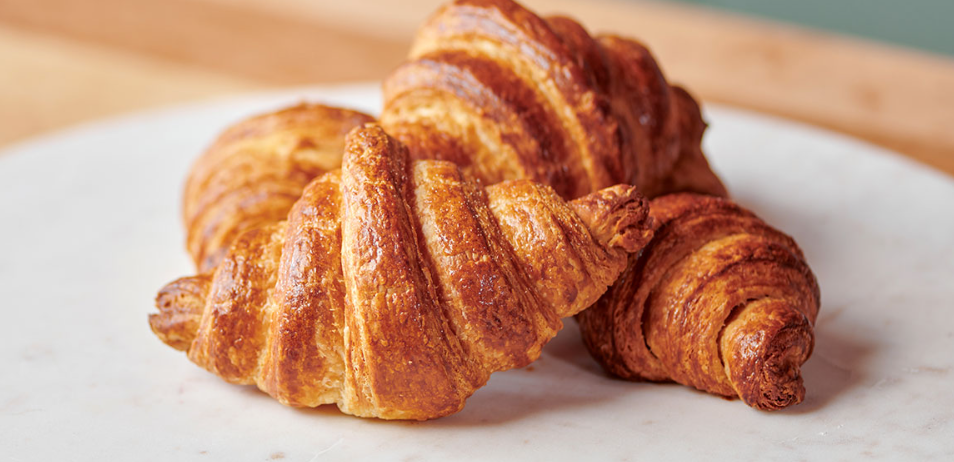
Lamination is the soul of the croissant. Turn out your chilled dough rectangle, and roll it into a wider 8- by 16-inch rectangle. Put your block of butter in the center. Fold the dough over the butter, as though you are wrapping a present, making sure all edges are sealed and there is no exposed butter. No butter should peek through.
Place the package seam side down. Now, gently pound the dough with your rolling pin, pushing from the center out. This way, the butter is spread thin without breaking. When it has been pressed down a bit, roll the dough out to a long rectangle (about 8 x 24 inches). Roll out with confidence but not aggression — you want to stretch the dough, not tear it.
Once you have the right dimensions, make your first letter fold. Brush off any excess flour. Fold the bottom third of the dough up and over toward the center, and fold the top third down over it as if you were folding a business letter. Then rotate and refrigerate for 30 minutes.
Do this two more times. Each time, roll dough into the same eight-by-twenty-four-inch rectangle, letter fold, turn ninety degrees, and refrigerate. At the end of your third fold, you will have made 27 layers of butter and dough. Some bakers do a fourth fold for 81 layers, but three are usually outstanding.
Keep an eye on the dough between folds. If the butter begins to break through, immediately halt and refrigerate. If the dough is resisting and wants to keep shrinking back, give it a little more time. Patience here prevents frustration later.
How To Shape Your Croissants for the Perfect Result
After your last fold and a nice long rest, it’s time to shape. Roll the laminated dough into a rectangle approximately 10 x 20 inches and about one-quarter-inch thick. Measure with a ruler — details count. Trim any rough edges with a sharp knife, then cut the rectangle lengthwise down the center to form two long strips.
Space three-and-a-half inches in between along the top and bottom of each strip. Cut diagonals that connect those marks to make triangles. That equation is a triangle with the base being about three-and-a-half inches wide and around ten inches tall.
To form each croissant, put a triangle on the work surface with the wide end towards you. Make a tiny notch in the center of that wide end (this is so the croissant rolls up evenly). Stretch the triangle gently, rolling it slightly longer, then roll up from the wide end to a point. Aim to roll firmly, but not too tightly, while maintaining even pressure all the way.
When you get to the tip, it should sit on the bottom of the croissant. Lay your formed croissant on a baking sheet lined with parchment paper, tucking the tip underneath. You can pull the ends inwards slightly to achieve that classic crescent shape, but perfectly straight croissants are just as good.
Space each croissant apart by at least three inches—they’re going to grow quite a bit in proofing and baking. Be gentle as you handle the formed croissants, so you don’t accidentally deflate the layers you’ve endeavored to puff into existence.
🥮 Pan size can make or break your bake! Learn How to Choose the Right Baking Pan Size before you start mixing.
The Proof Is in the Timing
Proofing is where your croissants come to life. This last rise allows the yeast to form air pockets and lets the layers spread a little bit before baking. Cover your formed croissants loosely with plastic wrap or a clean kitchen towel and let them proof at room temperature.
The best proofing temperature is 70-75 degrees. Too cold, and they will take forever to rise. If it’s too warm, your butter will begin to melt. Most French bakers proof overnight in a cool room or the refrigerator, and remove them to come to room temperature before baking.
How do you know they’re ready? A well-proofed croissant will be visibly puffy — about 1½ times its original width and twice its height. They should wobble like jelly a bit when you gently shake the baking sheet. You should be able to gently press one with your finger and have it slowly spring back, leaving a slight indentation.
Under-proofed croissants are dense and doughy inside. Over-proofed croissants will collapse when baked and they won’t be flaky. Proofing times are room-temperature dependent, but you can expect proofing to be finished in two to three hours at room temperature. It requires eight to twelve hours to cold-proof overnight, and then an hour to warm the dough up at room temperature.
Achieving That Golden-Brown Bakery Finish
Before baking, whisk up an egg and a tablespoon of milk or cream with a sprinkle of salt. The salt helps dissolve the egg wash so it can be applied more easily. Brush each croissant gently with egg wash, being careful not to let it pool or drip down the sides (it will glue the layers together and hinder rising).
Preheat the oven to 400°F with a rack in the center. Some bakers use convection setting, but regular heat will do the trick also. Make sure that your oven is fully preheated — use an oven thermometer to confirm this.
Bake the croissants for 15-20 minutes (be sure to turn the pan around halfway through so they brown evenly). Keep an eye on them in the last few minutes. You’re after a deep golden-brown, not pale-yellow. The deep brown color means the caramelization is just right, so that we get maximum flavor and doneness.
A well-baked croissant should be hollow sounding when tapped on the bottom and light for its size. The layers should be well separated, especially at the bottom where they splay during baking. When you slice one, the air pockets should be clearly visible in a honeycomb pattern.
Transfer to a wire rack and let cool at least ten minutes before eating. This lets the steam out, as well as allowing the layers to finally set. Eat croissants when they are hot or, at the very least, within a couple of hours of their popping out of the oven.
Troubleshooting Common Problems
Even seasoned bakers struggle with croissants. Knowing what you did wrong helps you do better next time.
Butter oozing during baking: Your butter was too soft during lamination, or you failed to seal the edges properly when encasing the butter. Next time, keep it colder and go faster.
Dense, doughy interior: Often the result of under-proofing. Allow your croissants a greater proofing time before baking or proof them in a somewhat warmer place.
No visible layers: This occurs when the butter melts into the dough instead of remaining in distinct sheets. Make sure your ingredients are cold, and work in a cool kitchen. If your kitchen is warm, chill the dough more frequently during lamination.
Croissants spreading flat instead of puffing: Over-proofing is usually the problem. Keep an eye on your croissants while they proof and bake them before they become too puffy.
Hard, chewy texture: Perhaps you overkneaded the initial dough or built up excess gluten during rolling. Next time, handle the dough more delicately and let it rest significantly between folds.
Storage Tips for Maximum Freshness
Croissants are best when fresh, but sometimes you need to store them. To store them for the short term (up to two days), place them in a paper bag on the counter. Paper lets them breathe, so they won’t get soggy — but they will lose some of their crispiness.
Never refrigerate baked croissants — they stale faster if you do. If you need to keep them longer, freeze them. Individually wrap cooled croissants in plastic wrap, then transfer to a freezer bag. Frozen, they’ll keep for up to two months.
To defrost frozen croissants, allow to sit at room temperature for one hour and then place in a 350°F oven for five minutes. They will not be quite as crispy as fresh, but they are still excellent.
You can also freeze shaped, unproofed croissants, then bake them off. Lay them flat on a baking sheet in the freezer until solid, and then pour them into a zipper-topped bag. When you’re ready to bake, thaw them overnight in the refrigerator, let rise at room temperature until puffy and bake as usual. This is how a lot of French bakeries handle their morning production.
Options to Try Once You Get the Hang of it
Once you get comfortable with a plain, classic croissant, the sky’s the limit. If you want to make chocolate croissants, which are called pain au chocolat, lay two strips of dark chocolate onto your triangles of dough before rolling. The quality of baking chocolate makes a difference — skip the chocolate chips.
Almond croissants are made with day-old, plain croissants. Split them horizontally, fill them with almond cream (a blend of butter, sugar, ground almonds and egg) then sprinkle sliced almonds over all and bake until golden. This is, in fact, how French bakers handle croissants that went unsold the day before.
For ham-and-cheese croissants, add a thin slice or two of nice ham and gruyere cheese to your triangle before rolling. These savory versions are great for brunch or lunch. A touch of herbs, such as thyme or rosemary, can bring a whole new dimension to savory croissants.
Sweet varieties can involve adding orange zest to your dough, or brushing them with honey after you bake, or they may be sprinkled with pearl sugar before they’re popped in to brown for some crunch. Keep in mind, however, that additions will alter weight and structure; do err on the side of conservatism when it comes to throwing ingredients into the pan.
The Mindset of the French Baker for Success
It can’t be done just by following steps; it’s something you need to feel your way through, and know what you’re supposed to get. Croissants require precision when it comes to technique, but French bakers rely on intuitive feel built from experience.
The texture of your dough at each step is important. Does it feel loose and roll easily, or is it fighting you? Is your butter the same temperature as the dough? More important than the exact timing of these tactile cues is just that they happen. Every kitchen is different, every batch of flour behaves slightly differently, and your ability to respond to what you see is the thing that separates good croissants from great ones.
If, at first, you don’t succeed in making a perfect batch, don’t be discouraged. These pastries take professional bakers years to learn. With every attempt, you learn something. Perhaps your butter was too cold, or you didn’t proof long enough. These are the lessons that add up to, before you know it, being able to sense when everything is perfect.
French bakers also emphasize patience. Hurrying each of its stages — proofing, lamination and baking — will undercut your results. Add cushion time into your schedule. If you have to let the dough rest longer in between folds in the refrigerator for some reason, don’t worry. The process should feel deliberate and unforced, not stressed and rushed.
Creating Your Own Baking Schedule
Home bakers ask, “How do I fit this into my life?” Croissants are a project for sure, though most of the time is hands off. With some smart scheduling, you can fit them into a typical schedule pretty easily.
Day One (evening): Mix the dough and make the butter block. Refrigerate overnight. Total active time: thirty minutes.
Day Two (morning): Do your first lamination fold. Total active time: fifteen minutes.
Day Two (afternoon): Second fold. Total active time: fifteen minutes.
Day Two (evening): Third fold. Total active time: fifteen minutes.
Day Three (morning): Roll and shape croissants, proof and bake. Total time: One hour, plus two hours’ proofing.
This plan spaces the work out over two-and-a-half days, but there’s only about 2 hours’ actual hands on in all of that. You can also modify it to your schedule — everything on the same day is okay, with good refrigeration in between.
Most bakers laminate on a weekend, before freezing the shaped croissants. On weekday mornings, they pull out however many they’d like for the day, proof them as they get ready, and bake them off for fresh pastries before heading to work. This is why croissants are actually possible to make outside of France, and one which can be eaten every day with ease.
Frequently Asked Questions
Can I substitute regular butter for European butter?
Yes, but they might not look as good as if you do. Regular butter has a higher water content, so your layers may be limp and harder to differentiate. All that extra fat in European butter is absolutely worth the expense when it comes to croissants.
My dough is shrinking when I attempt to roll it?
This tells you the gluten needs more time to rest. Cover the dough and refrigerate for fifteen to thirty minutes, then try again. The dough should roll out easily without bouncing back too hard.
Can I make croissants without a stand mixer?
Absolutely. There’s no need to heavily knead croissant dough, so though mixing and kneading by hand takes a little more time and patience than using both of your arms alongside an electric mixer, it works just fine. Perhaps it’ll take a few extra minutes, but the outcome will be just as delicious.
What thickness should I roll the dough when I am laminating?
Try to achieve about a quarter-inch thickness with each fold. And your last roll before shaping? Too thick and the dough will never bake through, and too thin dough will easily tear.
How can I learn to make them if I’ve never made them before?
Begin with half a batch so you’re not overwhelmed with quantity. Find video tutorials to see exactly what’s happening, and definitely check out techniques for laminating dough. You’re not likely to achieve perfection the first time — learning how to make croissants is a process, and every batch will be instructive in some way.
Could I substitute whole wheat flour to make it healthier?
You can substitute as much as 25 percent of the white flour with whole wheat without changing texture significantly. More than that, and you run the risk of ending up with a denser croissant and less defined layers. Whole wheat flour behaves in ways that are different from white flour and so that makes traditional lamination more complicated.
Your Path to Croissant Greatness Begins Here
Making croissants the French baker’s way: You don’t need a professional kitchen or secret ingredients to make croissants that will leave you smacking your lips. It is about knowing the process, respecting your ingredients and giving yourself permission to learn by doing. Every baker who now can make perfect croissants started right where you are, questioning if they’d ever be able to really make it happen.
Most of all: Begin. Pick a long weekend when you have some time to dedicate, gather the ingredients and dive in. Don’t concern yourself with creating the perfect loaf — instead pay attention to learning each step, and how the dough looks at every stage. Your first effort may not be Instagram-perfect, but they will still taste immeasurably better than anything you’d find at the grocery store, and you’ll have learned a lot of important lessons for next time.
As you become more experienced, you’ll start to get that intuitive feel that French bakers use. You’ll feel when your butter is just right. You’ll know perfectly proofed croissants just by how they look. You’ll know how to compensate if your kitchen is warm or if the ingredients are cold. These are skills, and each batch you make builds on the others.
Remember, even in France bakers don’t expect to be making croissants perfectly the next day. It’s one of the more difficult pastries to master, and it takes patience and practice. But it’s also among the most rewarding. That moment when you open the oven to see, for the first time, truly excellent croissants that are golden and flaky with visible buttery layers will make every minute worth it.
So! Get your ingredients, clear some space in your fridge, and take that croissant journey. With this guide as your basis, you’ll learn everything there is to know about baking croissants at home. The next thing you know, the scent of fresh-baked butter and yeast will begin wafting through your home, and you’ll become part of the glorious tradition of bakers who have mastered this most symbolic French pastry. Your perfect croissants are ready to be formed.