


If you’ve ever stepped into your kitchen, ready to bake something amazing, but suddenly realized you’re not quite sure what all those ingredients actually do — you’re not alone! Baking can look like magic, but in truth, it’s pure science mixed with a bit of love. Each ingredient has its own special job. Once you understand what each one does, you’ll bake with more confidence (and fewer failed cakes!). So, let’s explore the world of baking ingredients in a way that’s fun, clear, and easy to remember.
Flour – The Foundation of Baking 🥖
Think of flour as the structure of your baked goods. It’s what gives bread its chew, cookies their body, and cakes their shape. When you mix flour with water, it forms gluten — a stretchy network that traps air and helps things rise.
But not all flours are the same. Here’s a quick breakdown:
| Type of Flour | Protein Content | Best For |
|---|---|---|
| All-purpose flour | Medium (10–12%) | Cookies, cakes, muffins |
| Bread flour | High (12–14%) | Breads, pizza dough |
| Cake flour | Low (7–9%) | Soft cakes, cupcakes |
| Whole wheat flour | Medium-high | Healthy loaves, dense bakes |
| Gluten-free flour | Varies | Celiac-friendly recipes |
👉 Tip: If your cake feels heavy, you probably used a flour that’s too strong (too much gluten). Use cake flour for soft and airy textures.
Sugar – The Sweet Scientist 🍬
We all know sugar makes things sweet — but that’s not its only job. Sugar also keeps baked goods moist, helps them brown beautifully, and even tenderizes gluten (so your cake doesn’t get tough).
Common types of sugar and what they do:
| Type of Sugar | Flavor & Texture | Common Use |
|---|---|---|
| White granulated | Sweet & crisp | Cookies, cakes |
| Brown sugar | Moist, caramel flavor | Chewy cookies, muffins |
| Powdered sugar | Fine & smooth | Frosting, icing |
| Raw sugar | Crunchy | Toppings, rustic bakes |
Fun fact: If you replace white sugar with brown, your cookies will turn chewier and darker.
Butter – The Flavor Hero 🧈
Butter adds flavor, tenderness, and richness. It’s what makes cookies melt in your mouth and pie crusts flaky.
When creamed with sugar, butter traps air — helping cakes rise. Cold butter, on the other hand, gives pastries their crisp, layered texture.
Different forms of butter:
Unsalted butter: Best for baking; you control the salt level.
Salted butter: Good for spreading, not ideal for recipes.
Melted butter: Used in brownies or quick breads for dense texture.
🧁 Baker’s tip: Always use butter at room temperature when mixing for cakes — it blends better!
Eggs – The Binder and Riser 🥚
Eggs are the multitaskers of baking. They bind ingredients, add moisture, give structure, and help with leavening.
Egg whites create structure and volume (think meringues).
Egg yolks add richness, flavor, and color.
If a recipe calls for two eggs, that balance of white and yolk is important — don’t mess with it unless you know what you’re doing!
Substitute tip for vegans:
1 tablespoon flaxseed meal + 3 tablespoons water = 1 egg
Mashed banana or applesauce can also work for moisture.
Leavening Agents – The Puff Masters 🎂
Without leavening agents, your baked goods would be dense and flat. These are the magical ingredients that make dough rise and batters expand.
| Leavening Agent | How It Works | Common Uses |
|---|---|---|
| Baking powder | Reacts twice (with liquid and heat) | Cakes, muffins |
| Baking soda | Needs acid to react | Cookies, pancakes |
| Yeast | Ferments sugar to produce CO₂ | Bread, rolls |
🧠 Remember: Baking soda needs an acidic ingredient like lemon juice or yogurt. Baking powder already contains acid, so it can work on its own.
Milk and Other Liquids – The Moisture Makers 🥛
Liquids bring the dry ingredients together and start gluten formation. They also add flavor and tenderness.
Common liquids used in baking include:
Milk: Adds richness and helps browning.
Water: Simple and clean, used in bread.
Buttermilk: Adds tang and helps leavening with baking soda.
Plant-based milk: Almond, oat, soy – lighter texture and vegan-friendly.
💧 Pro tip: If your batter feels too thick, add a little more milk a tablespoon at a time.
Salt – The Silent Enhancer 🧂
Salt doesn’t just add flavor — it balances sweetness and strengthens gluten. Without it, baked goods can taste bland or “off.”
Even sweet recipes need a pinch of salt. A little can go a long way in bringing out the buttery or chocolaty notes.
Chocolate and Cocoa – The Happiness Ingredient 🍫
Chocolate transforms baking. Cocoa powder gives intensity; chocolate chips add bursts of joy.
| Type | Fat Content | Use |
|---|---|---|
| Cocoa powder | Low | Brownies, cakes |
| Unsweetened chocolate | 100% cocoa | Intense chocolate flavor |
| Semi-sweet | Balanced sweetness | Cookies, cakes |
| White chocolate | No cocoa solids | Sweet desserts |
Mix cocoa powder with a bit of hot water first to “bloom” it — it deepens the flavor.
Vanilla and Flavor Extracts 🌸
Vanilla is the soul of many desserts. It enhances flavor even when you can’t directly taste it. Other extracts — almond, lemon, peppermint — can bring variety and personality.
👉 Always go for pure vanilla extract instead of imitation. It’s more aromatic and gives that classic bakery scent.
Fats and Oils – The Texture Masters 🥮
While butter adds richness, oils bring moistness. Oil-based cakes (like carrot cake) stay soft for days.
| Fat Type | Texture Result | Example |
|---|---|---|
| Butter | Rich, firm | Cookies, shortbread |
| Oil | Moist, soft | Muffins, cakes |
| Shortening | Flaky | Pie crusts, biscuits |
🍰 Note: If you substitute butter with oil, use about ¾ of the butter amount — oil is 100% fat, while butter contains water.
Nuts, Seeds, and Dried Fruits 🌰
These are your texture and nutrition boosters. They add crunch, flavor, and even protein.
| Ingredient | Texture | Adds To |
|---|---|---|
| Almonds | Crunchy | Cookies, biscotti |
| Walnuts | Soft, rich | Brownies, banana bread |
| Raisins | Chewy sweetness | Muffins, bread |
| Chia seeds | Moisture-binding | Vegan bakes |
Tip: Always toast nuts before adding them to batter — it deepens the flavor.
Spices – The Aroma Artists 🌿
Spices like cinnamon, nutmeg, and ginger make baked goods smell like home. They add warmth and depth.
Common combos:
Cinnamon + nutmeg → apple pie, coffee cake
Ginger + cloves → festive cookies
Cardamom + rose → exotic breads
🌸 Tip: Ground spices lose their punch over time — replace them every 6 months for best flavor.
Fruits and Vegetables in Baking 🍌🥕
Yes, veggies and fruits aren’t just for salads! Bananas, apples, carrots, zucchini — they add natural sweetness and moisture.
| Ingredient | Use | Texture Effect |
|---|---|---|
| Banana | Cakes, muffins | Moist, dense |
| Carrot | Carrot cake | Soft, flavorful |
| Zucchini | Bread, brownies | Moist, light |
| Apple | Pies, cakes | Juicy, fresh |
🥕 Bonus: Using fruits or veggies can help you reduce sugar and fat in recipes while keeping texture perfect.
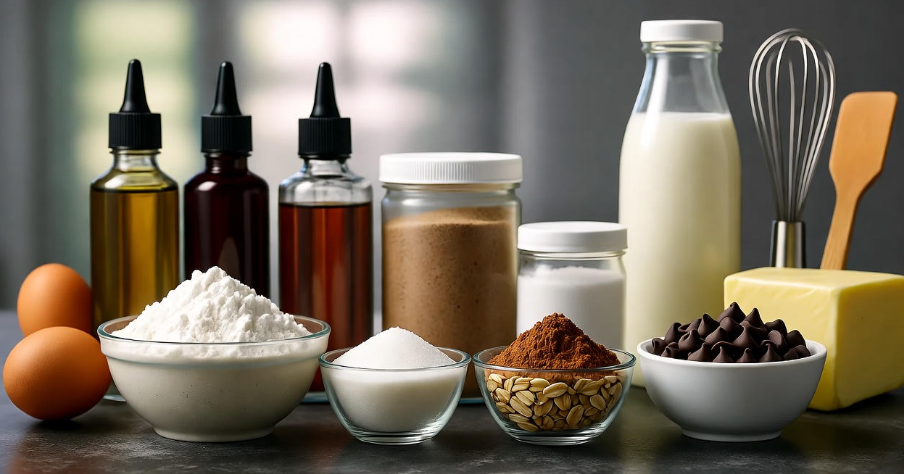
Common Baking Substitutions Table 🍰
| If You Don’t Have | Use Instead |
|---|---|
| Buttermilk | Milk + 1 tbsp vinegar or lemon juice |
| Brown sugar | White sugar + 1 tbsp molasses |
| Cake flour | 1 cup all-purpose – 2 tbsp + 2 tbsp cornstarch |
| Butter | ¾ cup oil for every 1 cup butter |
| Egg | 1 tbsp flaxseed meal + 3 tbsp water |
These swaps can save your baking day!
Storage Tips for Baking Ingredients 🏡
Keeping ingredients fresh is key to great results.
Store flour and sugar in airtight containers.
Keep yeast in the fridge or freezer.
Store nuts and seeds away from light and heat (they can go rancid).
Use spices within a year for best flavor.
🧺 Organization helps too — label jars with purchase dates!
Final Thoughts 🍰
Baking isn’t just about following recipes — it’s about understanding your ingredients. Once you know why each item matters, you can adjust, substitute, and even create your own recipes confidently. Whether you’re baking a loaf of bread or a batch of cookies, every ingredient plays a part in making something special.
So, next time you preheat your oven, take a moment to appreciate that bag of flour or that pat of butter — because that’s where the magic begins. 💫
FAQs About Baking Ingredients 🍪
Q1: Can I use salted butter in baking?
Yes, but it’s best to reduce or skip the added salt in the recipe. Unsalted butter gives more control over flavor.
Q2: Why do my cakes turn out dry?
You may be using too much flour or baking for too long. Also, make sure you’re not skipping liquids like milk or oil.
Q3: What’s the difference between baking soda and baking powder?
Baking soda needs an acid (like yogurt) to activate. Baking powder already has acid inside, so it works on its own.
Q4: Can I replace sugar with honey?
Yes, but use less (about ¾ cup honey for 1 cup sugar) and reduce other liquids slightly since honey adds moisture.
Q5: Why do my cookies spread too much?
Too much butter or sugar, or too little flour, can cause spreading. Chill your dough before baking to fix this!






333betcasino seems to be becoming one of my favourite places. It’s worth checking out if you need a betting website. Good luck! 333betcasino