
There’s something magical about a warm stack of fluffy pancakes in the morning, right? That golden-brown, soft texture that almost melts in your mouth—yeah, that’s what we’re aiming for. But the truth is, not everyone gets it right the first time. Sometimes they come out flat, rubbery, or too dense.
So, how do you make pancakes that are soft, light, and fluffy every single time? Let’s uncover the secret to that perfect bite of cloud-like goodness.
Why Fluffy Pancakes Matter
Let’s be real—pancakes are more than just breakfast food. They’re comfort food. A good pancake should feel light when you pick it up, springy when you press it, and tender when you bite into it. Fluffiness makes every bite feel soft and satisfying without being heavy.
If you’ve ever wondered why restaurant pancakes seem softer than yours at home, the answer lies in the science of batter, mixing techniques, and timing. Don’t worry, though—we’ll break it all down step by step.
Start with the Right Ingredients 🧂
Before you even heat up your pan, get your ingredients right. The ingredients themselves aren’t fancy, but how you use them makes all the difference. Here’s what you’ll need for classic fluffy pancakes:
| Ingredient | Quantity | Why It’s Important |
|---|---|---|
| All-purpose flour | 1 ½ cups | Provides structure |
| Baking powder | 3 ½ tsp | The key to fluffiness |
| Sugar | 1 tbsp | Adds light sweetness |
| Salt | ¼ tsp | Balances flavors |
| Milk | 1 ¼ cups | Keeps the batter moist |
| Egg | 1 large | Adds richness and helps bind |
| Butter (melted) | 3 tbsp | Gives a smooth texture |
| Vanilla extract (optional) | ½ tsp | Adds aroma and flavor |
These are your base ingredients. Simple, right? But how you mix them—and when—is what transforms them from “okay” pancakes into “oh my god, this is amazing” pancakes. 😋
Use Fresh Baking Powder
Here’s a small but powerful tip: always check your baking powder’s freshness.
If it’s been sitting in your pantry for over six months, it might not work properly. You can test it easily—add a little baking powder to some hot water. If it fizzes immediately, it’s good. If not, it’s time to replace it.
Old baking powder = flat pancakes.
Don’t Overmix the Batter 🙅♀️
This is where most people go wrong. When you mix too much, you develop gluten—the same thing that makes bread chewy. That’s the last thing you want in pancakes.
Here’s the trick:
When combining wet and dry ingredients, stir just until you no longer see dry flour spots. It’s okay if the batter looks a bit lumpy—that’s actually a good sign.
Those little lumps? They’re tiny air pockets that help the pancakes rise when cooked.
Let the Batter Rest ⏳
You might be tempted to start cooking right away, but give your batter a 5–10 minute rest. This short break allows the baking powder to activate and gives the gluten time to relax. The result? Airier and softer pancakes.
Think of it as letting your batter “breathe.”
Choose the Right Pan or Griddle 🍳
You can’t get restaurant-style pancakes with the wrong pan. Non-stick pans or cast-iron skillets are the best choices. They retain even heat and make flipping easier.
Before pouring your batter, lightly grease your pan with butter or oil and wipe away the excess with a paper towel. You want it slightly coated, not greasy.
Pro Tip: Medium-low heat is your best friend. Too high, and your pancakes will burn outside but stay raw inside.
Getting the Perfect Pour 🥄
How much batter should you pour?
Use about ¼ cup per pancake for that perfect size—not too small, not too big.
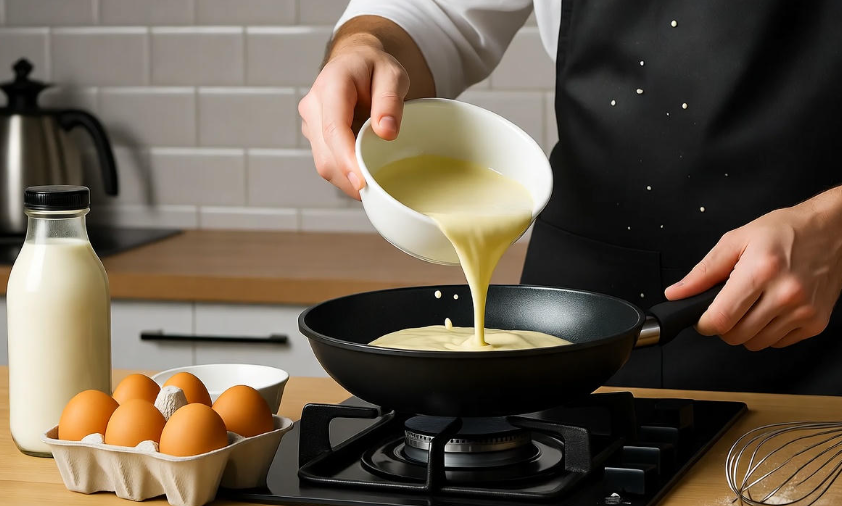
Pour the batter gently in the center and let it naturally spread. Don’t try to flatten it with a spoon. The less you touch it, the fluffier it will become.
When to Flip (Timing is Everything) ⏰
This is the moment of truth.
Wait until you see bubbles forming on the surface of the pancake and the edges start looking slightly dry. That’s your cue—it’s time to flip!
Use a flat spatula, slide it under smoothly, and flip it confidently (no hesitation!). Then cook the other side for about a minute or so until it’s golden brown.
Butter or No Butter on the Pan?
Some chefs swear by butter for its flavor, while others prefer oil for consistency. Here’s a balanced approach:
-
Use butter for the first batch to add that rich flavor.
-
Switch to oil or a butter-oil mix for the next ones—it prevents burning and keeps the color even.
The Secret to Extra Fluffiness 🫧
Want your pancakes to be as soft as clouds? Try these little secrets:
-
Separate the egg whites and yolks.
Beat the egg white until it’s frothy, then fold it gently into the batter. This adds extra air. -
Use buttermilk instead of regular milk.
The acidity in buttermilk reacts with baking powder, giving your pancakes more lift. -
Avoid pressing the pancakes while cooking.
Pressing them flattens the air bubbles—basically undoing all your hard work. 😅
Toppings That Take It to the Next Level 🍓
Fluffy pancakes are delicious on their own, but toppings can turn them into a showstopper breakfast.
| Type | Examples | Flavor Impact |
|---|---|---|
| Sweet | Maple syrup, honey, whipped cream | Classic and comforting |
| Fruity | Blueberries, strawberries, banana slices | Fresh and juicy |
| Nutty | Almonds, walnuts, peanut butter | Adds crunch |
| Savory | Bacon bits, fried egg, cheese | A fun twist |
Don’t be afraid to get creative! You can even layer your pancakes with yogurt and fruit to make a breakfast stack that looks like a dessert.
Common Mistakes to Avoid ❌
Even good cooks slip up sometimes. Here are a few traps to watch out for:
-
Batter too thin: Add a little more flour.
-
Batter too thick: Add a splash of milk.
-
Uneven color: Your pan heat isn’t consistent—lower it slightly.
-
Flat pancakes: Old baking powder or overmixed batter.
-
Burnt edges, raw center: Heat’s too high—reduce it a bit.
Serving Ideas That Impress 🧁
If you’re serving family or guests, presentation matters. Stack the pancakes, drizzle syrup slowly over them, and top with a small pat of butter that melts naturally. Sprinkle powdered sugar for that café-style look.
For a fancier touch, add a side of fresh berries and a dust of cinnamon.
Storage Tips (Because Leftovers Happen)
Yes, pancakes can be saved for later!
-
Fridge: Store in an airtight container for up to 3 days.
-
Freezer: Place wax paper between each pancake and store in a zip-lock bag. They last up to 2 months.
-
Reheat: Use a toaster or pan—not a microwave (it makes them soggy).
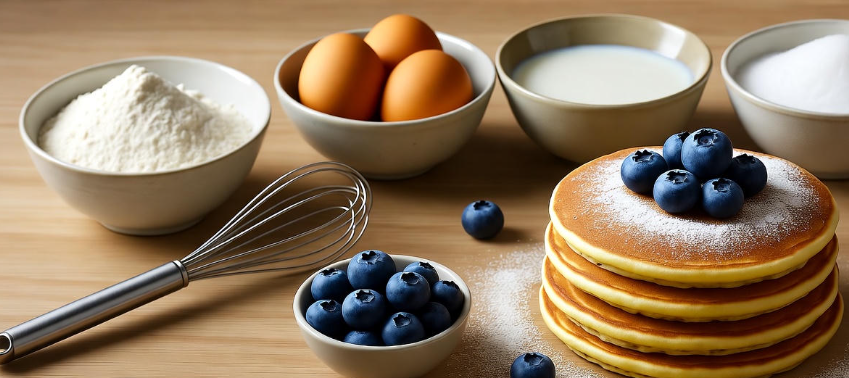
How to Make Fluffy Pancakes Like a Pro 🥞
Simple Pancake Variations You Can Try 🍫
| Flavor | What to Add | When to Add |
|---|---|---|
| Chocolate Chip | ½ cup chips | Sprinkle after pouring batter |
| Banana | 1 mashed banana | Mix into wet ingredients |
| Blueberry | ½ cup fresh berries | Fold gently before cooking |
| Cinnamon | 1 tsp powder | Add to dry ingredients |
| Protein Boost | 1 scoop protein powder | Add before milk |
A few small twists can make your pancakes taste brand new every time.
Pancake Pro Tips (From the Experts)
-
Keep cooked pancakes warm in a low oven (around 200°F or 90°C) while finishing the batch.
-
Use a ladle or squeeze bottle for consistent sizes.
-
Always preheat your pan for at least 2–3 minutes before cooking.
-
Flip once—only once! Repeated flipping flattens them.
-
Want perfect rounds? Use a ring mold.
A Quick Look at Perfect Pancake Ratios
| Ingredient | Ratio |
|---|---|
| Flour : Milk | 1 : 1 |
| Baking powder : Flour | 1 tsp per ½ cup |
| Egg : Flour | 1 per 1½ cups |
| Butter : Flour | 2 tbsp per cup |
Keeping these ratios in mind makes it easy to scale your recipe up or down anytime.
Final Touch: The Pancake Mindset 🧘♂️
Believe it or not, great pancakes are part technique, part patience, and part mindset. Don’t rush it. Take your time. Enjoy the process—the smell of butter melting, the sound of batter sizzling, the sight of bubbles forming.
Cooking, especially breakfast, should feel relaxing, not stressful. When you’re calm and focused, you’ll naturally make better pancakes.
Quick Recap (for When You’re in a Rush):
-
Measure accurately.
-
Mix gently.
-
Let the batter rest.
-
Cook on medium heat.
-
Flip once, then enjoy.
That’s the core formula to making fluffy pancakes like a pro.
☕ Need a quick treat fix? Check out Simple Mug Cake Recipes That Actually Work — ready in minutes!
FAQs About Making Fluffy Pancakes
Q1: Why are my pancakes always flat?
They’re probably overmixed or your baking powder is old. Mix gently and check your ingredients’ freshness.
Q2: Can I use water instead of milk?
You can, but they’ll turn out less rich and less fluffy. Try adding a spoon of melted butter if using water.
Q3: Why are my pancakes raw inside?
You’re cooking on too high heat. Lower the flame so they cook evenly.
Q4: Can I make the batter ahead of time?
Yes, but only for about 24 hours in the fridge. Just stir lightly before using.
Q5: What’s the best flour for pancakes?
All-purpose flour works best for classic fluffiness. Whole wheat flour makes them denser.
Final Thoughts 🌞
Making fluffy pancakes isn’t about fancy ingredients or expensive tools—it’s about the small details. Mix with care, rest your batter, and cook with patience. Once you get the hang of it, you’ll never go back to boxed mixes again.
So, next time you wake up on a Sunday morning, grab your whisk, heat that pan, and make yourself a batch of homemade, fluffy, golden-brown pancakes. You’ll thank yourself later. ❤️