
Imagine this: You’ve brought your ingredients together, preheated your oven and measured out everything with precision so that you can make the perfect cake. You mix the whole thing together, throw it in the oven and you wait eagerly. It tastes sweet, creamy and crisp — ideas that make perfect sense in your head, but wrong in your mouth. So, instead of the light and fluffy cake that you had hoped for, it is dense, chewy and disappointing. What went wrong? If you have, chances are you overmixed your batter.
Baking comes with a long list of potential mistakes, but overmixing is among the most common and also one of the easiest to prevent (once you understand what’s going on). Whether you are preparing pancakes for Sunday breakfast, muffins to sell at a bake sale or a birthday cake for someone special, the ability to know when to stop mixing can mean all the difference between baking success and baking disaster. The good news? You do not have to be a professional baker to pull this off. With a few simple tricks and a better sense of what’s going on inside your mixing bowl, you’ll make perfectly textured baked goods every single time.
In this post, we’ll cover all you need to know about how to mix batter the right way. You’ll learn the science behind why overmixing can ruin your baked goods, how to know when you’ve got that just-right batter and tips for applying it in different types of recipes. Now, let’s go ahead and change the way you bake forever.
What Happens When You Over Mix Batter?
But before we go deeper into avoiding overmixing, let’s look at what actually happens when you overmix. When you add flour to liquid ingredients, something hugely important takes place on a microscopic level. Flour has two proteins in it that you slap together and knead: glutenin and gliadin. When you get them wet and start moving them around, they link up into long, elastic strands—gluten.
Gluten itself is not the enemy — it plays a vital structural role in baked goods. Bread requires a ton of gluten to deliver the satisfying chew that makes leavened dough rise high. But you don’t want a ton of gluten development for delicate cakes, soft muffins and fluffy pancakes. Every time you stir up your batter, those strands of gluten grow and gain strength. Mix too long and you’ll produce tough, rubbery or dense results where a light tender crumb is best.
Overmixed batter contributes to other issues. It can overaerate certain batter or deflate a carefully beaten egg in others. You might see tunnels or holes in your muffins, find your pancakes textureless and gummy, or spot a cake that rises unevenly then sinks in the site. All of these are signs that overmixing has hit.
Signs Your Batter Is Overmixed
You can save your own recipe by discerning overmixed batter before you get to the oven. Here are the signs to look for:
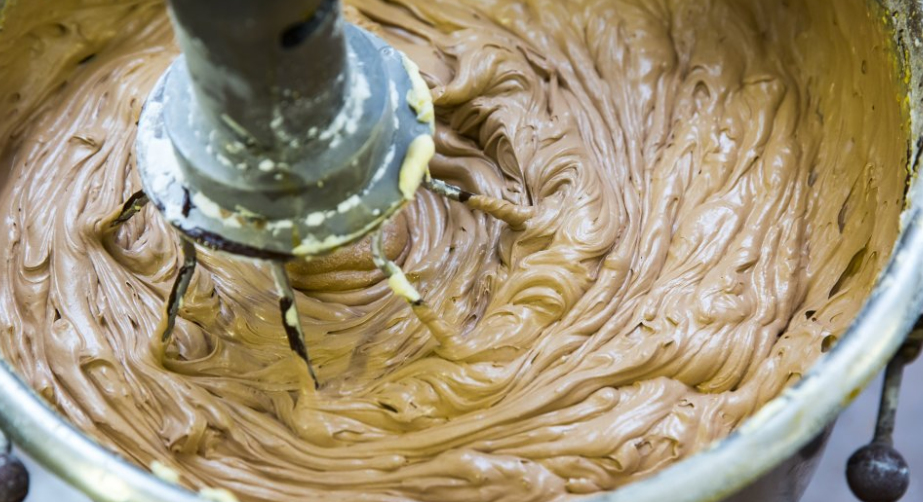
The batter is going to be super smooth and elastic, it will remind you of taffy or bread dough. Good cake batter and muffin batter should be a little lumpy and thick, not smooth and elastic. If you lift your spoon or spatula and the batter falls back into the bowl in long ribbons that hold their shape for several seconds before melting back into the mass, then you’ve likely mixed too much.
The color could also look off. Overmixed batter tends to look paler or more homogenous, since you’ve added unnecessary air. You may also realize that the highest quality batter is now more watery or thinner than it ought to be.
The signs get even clearer after baking. Overmixed muffins grow pointed tops instead of the domed ones, with their characteristic tunnel-like holes inside. Cakes will emerge dense and heavy, rather than light and airy. Pancakes come out tough and chewy, not fluffy. Cookies can spread too thin and get crunchy rather than thick and soft.
How to Mix Different Batters Properly
All batters are not created equal and each one gets a unique mixing method. Here’s how to do the most common types correctly.
Muffin and Quick Bread Batter
Muffins and quick breads are two of the most common recipes to overmix, as they belong to a similar category where both use the “muffin method” of mixing. Here’s how to do it correctly:
Combine all of your dry ingredients in a bowl and all of your wet ones in another. Create a well in the center of your dry ingredients and then pour in all of your wet ingredients.
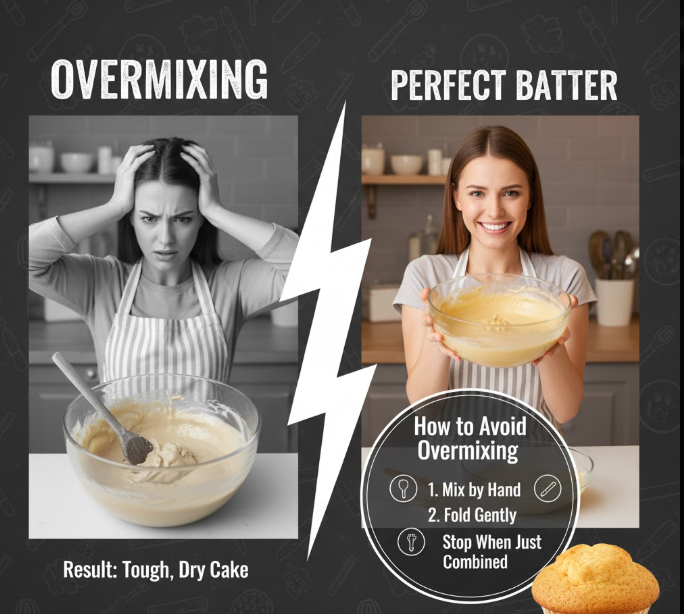
Now here comes the important part: a rubber spatula or wooden spoon (not an electric mixer for this step) and gently fold, folding, folding — just until the flour disappears into the batter. Begin at the bottom of the bowl, bringing spatula up and over in a circular motion. Turn the bowl as you go. When you can still see a few small lumps of flour (they should be around the size of peas), stop mixing. You’re going for a total of just 10 to 15 strokes. Yes, really! It just feels off to leave lumps, but trust the situation. Those little lumps will rehydrate and vanish during baking.
Cake Batter
Cake mixing is all about the method your recipe calls for. There’s more leeway in the creaming method (beating the butter and sugar first) since you’re building structure via the action of the butter and eggs rather than through gluten formation. In the case of these cakes you can cream butter and sugar until light, beat in eggs one at a time. But after you add flour, it’s all different. Turn your mixer down to low speed or hand fold and mix just until the flour is no longer visible: 20 to 30 seconds.
Be especially gentle with cakes that employ the reverse creaming method or dump method. They are techniques based on gentle mixing that has us loading loose crumbs. Mix just on low speed, and look out! Cease action the second you no longer notice dry flour.
Pancake and Waffle Batter
Maybe it’s the most forgiving, but you can ruin pancake batter. Stir together your wet and dry ingredients separately, then mix them with a whisk or fork in about 10 to 12 mild strokes. The batter will be lumpy — very lumpy. Some clumps should be the size of a marble. These will flatten out as the batter rests and the pancakes cook. You don’t want to over-mix, or your pancakes will be heavy and flat — you’re looking for lumps, then stop.
Cookie Dough
I’d just like to point out that cookie dough is sort of the exception to a lot of overmixing rules, because it is so thick and has substantially less liquid. You can beat cookie dough more than cake batter. That being said, once you’re beating the flour into your creamed butter and sugar, low is good — as long as you stop once the flour has disappeared. Excess cookie-dough mixing and you get spread thin, tough cookies.
Tools That Help Prevent Overmixing
The tools you use help prevent overmixing a ton. Here are some good choices, and how to use them:
Your best friend for quick breads and muffins: a rubber spatula or wooden spoon. That’s because these tools require that you mix slowly and deliberately, so it is almost impossible to overmix. In particular, the rubber spatula’s soft edge allows one to remove ingredients from a bowl easily as well as gently fold together perishable ingredients.
A stand mixer or hand mixer fitted with a paddle attachment is great for cake batters, but you have to use it the right way. Once flour comes into play, give your mixer a low speed setting workout. Some bakers may also choose to add the final addition of flour by hand — mixed in gently with a spatula or rubber scraper, for example — so that they don’t overwork the dough and let it develop gluten.
A whisk is just right for pancakes or waffles. Stirring with big but rather delicate strokes is preferable to hard beating. The whisk’s motion through the batter should be pretty smooth, with not much resistance.
Don’t use a food processor or high-speed blender for most batters. These aids are too efficient and too thorough and result in overmixing almost every time. Reserve them for recipes that require them.
The Importance of Ingredient Temperature
Temperature has a much bigger effect on mixing than many people realize. It’s important to properly combine cold ingredients such as butter and eggs, but they require more mixing. This additional mixing time puts you at risk for overdeveloping the gluten.
To achieve the best results, bring your butter, eggs and milk to room temperature before baking. Room temperature ingredients combine more easily and require less mixing to obtain a smooth batter. This becomes especially clear when creaming butter and sugar: Cold butter just won’t incorporate without beating it forever.
If you do forget to take your eggs out in advance, let them sit in a bowl of warm (not hot) water for roughly 5 minutes. They’ll thaw fast, yet they won’t cook. For butter, chop it up into small chunks to bring it to room temperature more quickly.
Let Your Dough Rest: A Secret Weapon
There’s a trick most home bakers don’t know: resting your batter. And once it is all mixed together, allow your batter a good 5 to 10 minutes of rest time before baking. A few good things happen during this brief time.
The flour hydrates completely, so those tiny lumps you left in your batter will mostly dissolve on their own. The chains of gluten that did come together will relax a bit, and the end result is going to be more tender. (If you did use baking powder or soda, they will begin their leavening action, which is actually more effective after the batter has a little time to rest.)
For pancakes in particular, resting is key. A 5-minute lounge converts a lumpen, thick batter into one you can just pour without thinking twice, light enough to puff up into the fluffiest pancakes. Professional chefs sometimes allow pancake batter to rest 30 minutes before using it or refrigerate it overnight.
Muffin batter also likes a little rest, but 5 minutes is ample. Cake batter, however, should typically be baked immediately unless your recipe says otherwise; you don’t want the leavening agents to deflate before the oven action should make them puff instead.
Visual Guide: Proper Batter Consistency
Because overmixing is to a large extent a matter of judgment, here’s what acceptable dough should look like in various recipes:
| Recipe Type | Ideal Texture | What to Look For | How Long to Mix |
|---|---|---|---|
| Muffins | Thick, lumpy | Pea-sized lumps show, batter falls in clumps | 10-15 strokes |
| Pancakes | Pourable but lumpy | Marble-sized lumps, some dry flour visible | 10-12 strokes |
| Layer Cake | Smooth but not elastic | No chunks of dry flour and still looks slightly thick | 20-30 seconds after adding flour |
| Pound Cake | Thick and smooth | Fully mixed, ribbons that quickly disappear | 1-2 minutes after adding flour |
| Brownies | Very thick, fudgy | Completely combined; batter is glossy | 50-60 strokes or until just combined |
| Cookies | Crumbly first then cohesive | No streaks of flour, dough comes together | Mix until just combined |
Common Myths About Mixing Batter
Here we demystify some of the muddiest mixing myths.
Myth 1: All lumps are bad. False! Having small lumps in quick bread or pancake batter is normal and they will bake out. Only big clumps of bone dry flour are bad.
Myth 2: You always need to use an electric mixer. Not true. Hand mixing is superior for most recipes since it affords you greater control and helps to prevent overmixing.
Myth 3: The more you mix, the more air and fluffiness you get. Wrong. Initial mixing will bring some air down with it, but if you keep on mixing, you also build gluten, and that toughens things up. It’s not mixing a lot; it’s mixing just enough. That’s what gives you the lightest results.
Myth 4: You can salvage overmixed batter. Once you’ve made too much gluten, however, you can’t unmake it. This is why it’s so important to learn how to identify the proper mixing.
Notes for Different Baking Methods
The optimal level of mixing may depend on the mixing procedures employed.
The muffin method (mixing all wet and all dry separately then everything together) is the method that’s most easily overmixed because everything comes together at once. Stroke it gently, the fewer times the better, and don’t apologize for those lumps.
The more forgiving creaming method — in which you beat together butter and sugar before adding eggs and flour — coats flour particles with fat, slowing gluten development. That said, once flour is added, mix lightly.
In fact, the reverse creaming method (mixing flour with butter first and adding liquids later) is intended to minimize overmixing. The butter also coats the flour proteins before they meet any liquid, which is why longer mixing won’t result in excessive gluten development.
Dump or one-bowl methods are time-efficient but dangerous. There’s a lot of stuff that goes in all at once, so it’s easy to overmix while trying to get rid of lumps. Combine these on low speed and be careful!
Solving Overmixing Issues for Baked Goods
It’s true that when you’ve overmixed the batter there isn’t a good fix — but all is not lost. Overmixed muffins are still edible — they just will not have the ideal texture. (Or you could make a trifle, layering cubes of muffin with pudding and fruit.) A dense cake can be turned into cake pops or cubed to use as the base for a trifle. Hard pancakes can be sliced into strips, and baked crispy to use as a breakfast cereal.
The better way, of course, is to not overmix in the first place and adhere to the guidelines we’ve talked about.
Teaching Kids to Mix Without Going Overboard
If you are baking with kids, teaching correct mixing technique can be a fun mini-lesson. Let them know how many stirs they should take (count out loud with them). And then make a game of finding the lumps and cheering them on rather than trying to stamp them out. Let them utilize tools — like wooden spoons, designed, in a way, to prevent overmixing. The key here is to let them see before and after shots so they can grasp what properly mixed batter looks like.
The Science Behind Gluten Development
If you want to be a great baker, you need to learn about gluten. Glutenin supplies the elasticity, and gliadin grants the extensibility. Together, they form a matrix that snags gas bubbles released by leavening agents. In bread, you need strong gluten development in order to trap a lot of gas and get just enough of an open structure that it’s also sturdy enough to slice.
Except that cakes, muffins and quick breads require tenderness, not chewiness. The less gluten development, the tenderer the crumb. This is why recipes that contain more fat (such as pound cake) can take more mixing — the fat interferes with gluten development. It’s why delicate cakes are best made with cake flour that has less protein than all-purpose flour.
For more information on understanding gluten development in baking, check out comprehensive baking resources.
Recipe Adjustments for High Altitude
If you’re at high altitude (over 3,000 feet), overmixing is all the more problematic. With the lower air pressure, though, baked goods will rise faster and higher than they do at sea level, and if the gluten structure is overdeveloped beforehand, it could support so much rising that they pop or collapse. High altitude bakers should be especially cautious with gentle mixing, and may need to slightly decrease leavening.
Professional Baker Techniques
There are a few tricks of the trade that you can use, if you’re a professional baker and want to get consistent results. They time for precision, not look — if the recipe says “mix for 20 seconds,” they have a timer set and they stop at precisely that. They feature scraper blades that mix while ensuring ingredients are continually being moved, without overmixing. If you work with ratios, weighing the ingredients can be helpful as mixing will be pretty predictable if you always use the same ratio.
Another pro technique: the “fold and turn” approach. Instead of stirring in circles, they cut down through the center and into the batter with a spatula, scraping along the bottom, then bringing the spatula up one side. Then they rotate the bowl a quarter turn and do it again. This method ensures ingredients are distributed evenly and gluten doesn’t develop very much.
Frequently Asked Questions
Once I’ve beaten the batter, how will I know if it’s overmixed or not before baking?
Watch for batter that’s too smooth and elastic, forms long ribbons when dropped from a spoon or is thinner than you expect. The batter will be a few clumps here and there (for quick breads) or relatively thick and able to hold its shape when scooped into the pans (for cakes). If your batter looks capable of stretching like taffy, you’ve overmixed.
Can I prepare all batters in a stand mixer?
A stand mixer works for most batters, but when you add the flour, use its lowest speed and keep a close eye on it. For muffins and quick breads — in particular — hand mixing is actually preferable; it’s more difficult to overmix. Stand mixers are great for cakes (creaming) but never on high.
What if my recipe tells me to mix until smooth?
This is the slippery language that confuses a great many bakers. In most baking recipes “smooth” means very little besides no large lumps of dry flour rather than “smooth, like pudding.” Small lumps are still okay. Mix until there are no longer any dry flour streaks or large pockets of unmixed flour, do not fret over small lumps.
Why do my muffins have tunnels with pointed tops?
Tunnels and peaked tops are both classic indicators of overmixed muffin batter. The overactive gluten develops these channels through which steam escapes, creating tunnels. The batter is also overly elastic and doesn’t rise evenly, peaks are formed instead of rounded domes. For next time, mix for fewer strokes and leave more lumps.
Does flour matter in how much I mix it?
Absolutely! Cake flour has lower protein than all-purpose flour, so it forms less gluten and is more forgiving if you mix a bit more. Bread flour has more protein and forms gluten like nobody’s business, so if you use it in cake recipes (which you shouldn’t), you need to be extra careful. Always use the kind of flour your recipe specifies.
How long should pancake batter sit?
Pancake batter needs to rest for at least 5 minutes and up to 30, at room temperature. This will give the flour time to fully hydrate and the gluten to relax. You can also make pancake batter the night before, and keep it in the refrigerator — just bring to room temperature before cooking.
Can you undermix batter?
Yes, although far less common than overmixing. Undermixed batter will have big patches of dry flour, or identifiable streaks of egg. They won’t hydrate completely while baking, and will form dry, floury pockets in your finished product. You don’t want them to disappear into the batter, you’re going for even distribution.
Is it taste that overmixing affects or just texture?
It doesn’t have much to do with flavor so much as texture, and leads to baked goods that are tough, dense or rubbery. But it can have an indirect impact on taste, because texture affects how we experience flavor. A heavy, dense muffin is just not as delicious as a tender, light one — even if the flavor is the same.
Bringing It All Together
Learn how to mix properly and you’ve got fabulous baking at your fingertips straight away. I want to remind you that lumps in quick bread batters are your friends, not enemies. Embrace them. Stop if anything, earlier than you think you should — what you consider your gut instinct to smooth everything out is also working against you. Have faith that those little lumps will bake up just fine.
Use the right tools for the right job! Mixing by hand may seem old-school, but it allows you to maintain full control over the process. When you do use electric mixers, keep the speed set as low as possible and watch the batter like a hawk. Count strokes for muffins and quick breads, time cakes — less is nearly always more in the world of mixing.
The difference between overmixed and perfectly mixed batter may be 10 or 15 extra seconds of mixing time, but the outcome in your final product will be drastic. You will see your muffins lift higher with perfectly rounded tops. Your cakes will be lighter and tenderer. Pancakes will be billowy clouds of deliciousness, not rubbery discs.
Baking is a blend of magic and science, but mixing is the realm of science. By learning what’s taking place with gluten formation and spotting the symptoms of a well-mixed dough, you give yourself the building blocks for baking success. All your future recipes will taste better and — at long last! — you’ll understand why those recipe instructions specify “mix until just combined” or “do not overmix.”
So, haul out that mixing bowl and try again. Mix less than you feel like you ought to. Leave those lumps. Stop when it feels too soon. Then just see that your baked goods emerge from the oven looking and tasting exactly as they should: light, tender and simple to perfection.