

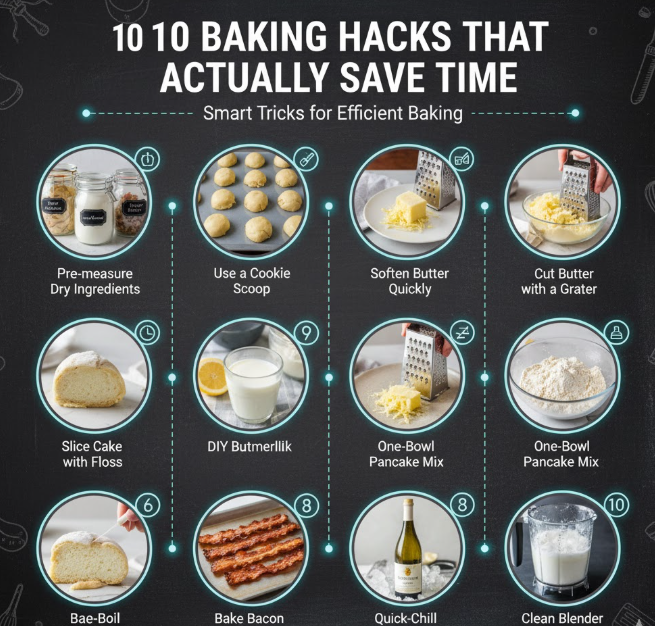

Few things are more delightful than the smell of fresh cookies filling your kitchen, or the satisfaction of pulling a perfect cake out of the oven. But let’s face it: Baking can easily consume an entire day. Between the measuring, waiting for butter to soften and cleaning up afterward, what should be a sweetly fun activity all too often feels like a marathon.
The good news? You don’t have to be slow and lowering quality. Whether you’re a novice baker or someone who bakes every weekend, these ten tricks are game-changers and will help you bake smarter, not harder. And we’re not just talking about culinary gimmickry: We want solid, practical tricks that both professional bakers and home cooks have tested and endorsed. No fancy equipment, no tricky techniques — just quick simple shortcuts that actually work.
In this guide, you’ll learn how to slash your prep time in two (and I’m going to tell you what not to do if you want the cookies that come out of your oven to differ from those that went into it), stay clear of any baking disaster attempts and still whip up a cookie so good everyone will be asking for seconds. So let’s get into these time-saving hacks that’ll change the way you bake for good.
The Microwave Trick for Softening Butter
We’ve all been there: You’re psyched to bake cookies or cakes and the recipe calls for softened butter but your sticks are straight from the fridge and harder than rocks. It’s annoying if you have to wait 30-60 minutes for butter to soften naturally, and you’re ready to go!
Here’s the trick: put your cold butter on a microwave-safe plate and zap it for 5-8 seconds on full power in the microwave. Turn it over and cook another 5 seconds. The butter should be soft enough to press a finger into, but not melting and pooling. This technique is less than a minute as opposed to the waiting game!
Why this method works: The microwave heats from the inside out, which means the food in question is heated more quickly and uniformly than if it were heated only from the outside (as in stovetop or oven cooking). Just be careful not to take it too far — too-melty butter can mess up recipes that call for creamed butter, like cookies and cakes.
Pro tip: If you accidentally melt the butter, it’ll be all right! Stash it in the fridge for a bit until you get to the right consistency again (10-15 minutes). It’s still perfectly usable.
Prepare Your Dry Goods in Bulk
Consider how frequently you dip into the same stocks and bonds — flour, sugar, baking powder, salt. Rather than having to measure the peanut butter, flax seeds and whatever else you added each time you make these, why not have pre mixed bags of them ready to go?
Set aside an afternoon to portion your most-used dry ingredient combinations into ziplock bags or airtight containers. For instance, make a few bags of your basic cookie dry mix (flour, baking soda, salt) or the pancake mix that’s always in rotation at breakfast. Label each bag with what’s in it and the date you mixed it.
Times saved: This hack will save you 10-15 minutes a session. When you’re prepared to bake, you simply grab your pre-mixed bag, dump it in the bowl and get down with the fun part.

Most Popular Mixes You Can Make in Advance:
| Type | Ingredients to Mix Together | Storage Time |
|---|---|---|
| Basic Cookie Mix | 2 cups flour, 1 tsp baking powder, ½ tsp salt | 3 months |
| Pancake Mix | 3 cups flour, 2 tbsp sugar, 2 tbsp baking powder | 3 months |
| Muffin Base | 2 cups flour, ½ cup sugar, 1 tbsp baking soda and salt | 3 months |
Substitutes to avoid: Don’t substitute baking soda for baking powder (they’re not the same thing chemically), don’t swap oil for butter in a cookie recipe (it’ll be wrong) and don’t use margarine instead of butter in pastries or croissants (for flavor and texture).
Keep a sub cheat sheet: Slip printed lists of substitutions into the inside of your kitchen cabinet doors. When you want something, you can look it up without stopping the flow of your pen to go online. This way you will be working with a comfortable flow and without stress.
For more detailed information about baking fundamentals and techniques, check out comprehensive baking resources online.
Bringing It All Together
Baking doesn’t need to take all afternoon or make your kitchen resemble a disaster zone. They’re the top 10, because they are fixes to the biggest time-wasters: waiting for stuff to come to room temperature, measuring too much at once or too many things (gah dishes), and running out for one more thing.
Begin with one or two of these tricks the next time you bake. Perhaps give the parchment paper prep or warm water egg a whirl. Once these habits start to take hold, add even more time-savers. Before you realize it, you’ll be baking more efficiently without even having to try.
The best part is, these hacks don’t really impact quality—your cookies will still be chewy, your cakes still fluffy and your bread will retain its yummy flavor. You’re just working smarter, applying tricks that professional bakers have been using for years. Now you can save time on the boring parts of baking and get straight to the fun and creative part—and your tasty treats.

Frequently Asked Questions
Is it all right to use salted butter if I cut down on the salt in the recipe?
Yes, though it can be tricky to nail the proportions since different brands of salted butter contain different levels of salt. The extra-safe approach is to use unsalted butter and add your salt to order. But if all you’ve got is salted butter, decrease the salt in this recipe by about ¼ teaspoon per stick of butter.
How can I tell if my baking powder and baking soda are still good?
Test the baking powder by stirring a teaspoon of it into hot water — it should bubble energetically if it’s fresh. For baking soda: combine a teaspoon of it with vinegar or lemon juice. The baking soda, if fresh, will fizz right away. If neither reacts strongly, they are spent and you’ve got to buy new ones. Both tend to hang on for about 6 months after they are opened.
What is the best way to measure flour accurately when you don’t have a scale?
Fluff the flour in its container with a spoon or scoop it out and gently transfer to your measuring cup without compressing. Smooth it with a straight edge such as a knife. Never plunge the measuring cup into the flour bag — this compacts it and gives you 25 percent more than the recipe had in mind.
Can you use Greek yogurt instead of oil when baking?
In many recipes, you can replace oil with Greek yogurt at a 1:1 ratio, producing a slightly denser and more moist option that is considerably lower in calories. This is magic in muffins, quick breads and brownies. It’s a little less convincing in cookies or recipes that lean on oil for a particular crispy texture.
Why are my cookies too puffy?
A few things will influence the spread of your cookies: The temperature of your butter (too warm = too much spread), the amount of flour you use (not enough = too much spread), the temperature of your oven (not hot enough = too much spread). Ensure that your butter is properly softened but not melted, measure out flour correctly and double-check your oven temperature with an oven thermometer.
For how many days can I store cookie dough in the refrigerator before baking?
In fact, most cookie dough is even better after at least 24-72 hours chilling where the flavors continue to develop and the flour has a chance to fully hydrate. It can be stored in the refrigerator for up to 5 days. If it gets too hard to scoop, just let it sit at room temperature for 10 to 15 minutes.
Can I open the oven door to see if my baking is done?
For cookies or a pan of brownies, cracking the door open briefly is A-OK. But with cakes, souffles and breads to bake, open doors during the first half of baking could lead them to fall due to loss in heat. If you feel compelled to check, do so briefly during the final quarter of the baking time and close the door gently.
What is the difference between natural and Dutch-process cocoa powder?
Natural cocoa (powder) is acidic, so it’s a part of batter that reacts with baking soda to help baked goods rise. Dutch-process cocoa has been treated to neutralize the acid, which gives it a mellower flavor and a darker color than natural cocoa, but it is not acidic enough to react with baking soda. They are not always interchangeable: Look at your recipe to see which kind it asks for, as using the wrong one can impact rising and texture.








I.jogo.com, simple and straight to the point. Had a peek inside, and you know what? It wasn’t half bad. Give it a whirl, dudes. i.jogo.com